Join us on a literary world trip!
Add this book to bookshelf
Grey
Write a new comment Default profile 50px
Grey
Subscribe to read the full book or read the first pages for free!
All characters reduced
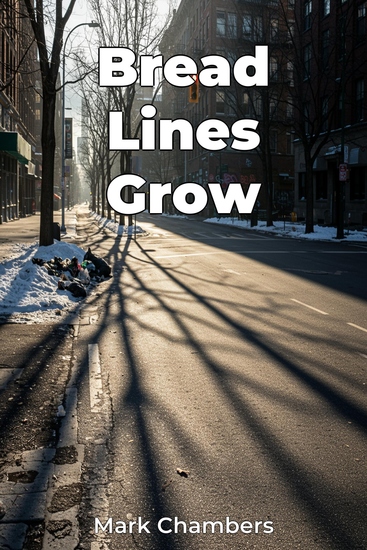
Bread Lines Grow - cover

Bread Lines Grow

Mark Chambers

Translator A AI

Publisher: Publifye

  • 0
  • 0
  • 0

Summary

Bread Lines Grow examines the profound crisis of urban hunger in the United States during 1932, a pivotal year in the Great Depression. It analyzes the political, social, and economic factors that led to widespread food insecurity, and investigates the diverse strategies employed to combat it. The book highlights that existing social safety nets were woefully inadequate, and the scale of suffering forced a re-evaluation of the government's role in providing for its citizens, laying the groundwork for the New Deal.

 
The book progresses by first establishing the economic and social landscape of 1932, then comparing the effectiveness of various local hunger relief efforts across cities like New York and Chicago. Finally, it explores the political debates surrounding government intervention versus individual responsibility.

 
By focusing on 1932, Bread Lines Grow provides an in-depth look at the intersection of individual suffering, community responses, and governmental actions during a crucial period in American history, making it valuable for understanding the origins of American social welfare and the ongoing challenges of poverty.
Available since: 02/27/2025.
Print length: 56 pages.

Other books that might interest you

  • Iron Catastrophes - A Global History of Train Disasters - cover

    Iron Catastrophes - A Global...

    P Agrawal

    • 0
    • 0
    • 0
    This audiobook is narrated by an AI Voice.   
    From the dawn of the railway age to the sleek high‑speed trains of the twenty‑first century, the story of the railroad has always carried a double edge—an instrument of triumph and transformation, and at the same time an arena of grief and devastation. Iron Catastrophes: A Global History of Train Disasters is a sweeping chronicle of how progress raced forward on steel tracks while continually stumbling into tragedy. 
    This book journeys across continents and centuries to chart the history of railway disasters in all their complex dimensions. Beginning with the earliest accidents of the nineteenth century, when untested locomotives burst their boilers or derailed on fragile tracks, it shows how railway travel was stamped by peril from its very birth. The death of British politician William Huskisson in 1830, struck down on the Liverpool and Manchester line’s opening day, symbolized how quickly innovation could turn lethal. Soon after came infernos, collisions in the fog, bridge collapses, and explosions that shocked a society intoxicated by speed yet horrified by risk. 
    The narrative then widens to explore disasters across Europe, America, Asia, Africa, and the colonial world. Chapters recount Europe’s notorious horrors—from Britain’s Harrow collision to France’s Versailles fire and Spain’s Torre del Bierzo tragedy—where crashes shattered faith in modernity. In America, endless expansion created reckless improvisations: wooden bridges that collapsed, locomotives that burned, collisions that littered small towns with wreckage. In Asia, the disasters grew on an almost unimaginable scale. India’s catastrophic wrecks, Japan’s cultural trauma at Amagasaki, Sri Lanka’s tsunami train engulfed by waves, and China’s modern tragedy at Wenzhou illustrate that even regions most reliant on the rails suffered losses measured in the thousands.
    Show book
  • Jesus and the Abolitionists - How Anarchist Christianity Empowers the People - cover

    Jesus and the Abolitionists -...

    Terry J. Stokes

    • 0
    • 0
    • 0
    Isn't anarchy just chaos? How could it possibly relate to Christianity? 
    Countless people, including (and sometimes especially) those from religious backgrounds, are exploring radical ideas. The pandemic, the Black liberation movement, climate disaster--all these concerns are leading us to ask, "Does our system actually work? Is capitalism ethical? Is this the only way to build a society?" 
    Questions like these led author and pastor Terry Stokes to the political philosophy of anarchy. Now, we all have a scary picture in our minds about anarchy: that it calls for chaos, violence, and disorder. But anarchy actually calls for the end of rulership, not violence in the streets. Anarchy seeks to empower small communities of people to take care of their own needs at the local level, thereby making the state obsolete. It's all about constructing societies in which people are placed above profit and systems are built on ethics of justice and equality. To Stokes, that sounded a whole lot like the building blocks of Christian faith. 
    In Jesus and the Abolitionists, Stokes introduces readers to the ancient practice of anarchy and how it intersects with Christian beliefs and values. We see how beliefs about God, humanity, divine-human interaction, the Bible, and more can be illuminated and faithfully reformulated through an anarchist lens. This view, which Stokes calls anarchist Christianity, seeks to abolish tyrannical systems that do not recognize the changing values of our times and that disempower the people. Stokes's vision of an anarchist Christian future charts a caring theology and practice of living, one based in our voluntary cooperation, the goodness of all people, and faith in God. We can build an ethical world--one built on structures of care--and anarchy might just be the unlikely key.
    Show book
  • Knights Templars at the priory of Sion - cover

    Knights Templars at the priory...

    Jean-Patrick Pourtal

    • 0
    • 0
    • 0
    The dissolution of the Order of the Temple and the persecution of the Knights Templar are still fresh in people's minds. Why did King Philip the Fair and Pope Clement V set out to destroy them? What secrets did the Knights Templar hold? Just as the Da Vinci Code revealed the existence of the Order of the Priory of Sion and left its mark on the world, Jean-Patrick Pourtal takes you on an investigative journey from the 14th century to the present day. The author develops his hypotheses on the historical implications of the Knights Templar, mixing royal dynasty and hidden messages. He returns to mythical sites such as Arginy, Gisors and Rennes-Le-Château, and meets the characters who were instrumental in bringing about the so-called Templar resurgence.
    Show book
  • African Americans and the Revolutionary War: The History of Black Soldiers in the American Revolution - cover

    African Americans and the...

    Editors Charles River

    • 0
    • 0
    • 0
    The American Revolution is replete with seminal moments that every American learns in school, from the “shot heard ‘round the world” to the Declaration of Independence, but the events that led up to the fighting at Lexington & Concord were borne out of 10 years of division between the British and their American colonies over everything from colonial representation in governments to taxation, the nature of searches, and the quartering of British regulars in private houses. From 1764-1775, a chain of events that included lightning rods like the Townshend Acts led to bloodshed in the form of the Boston Massacre, while the Boston Tea Party became a symbol of nonviolent protest.  
    	The political and military nature of the Revolutionary War was just as full of intrigue. While disorganized militias fought the Battles of Lexington & Concord, George Washington would lead the Continental Army in the field while men like Thomas Jefferson drafted the Declaration of Independence in Philadelphia and Benjamin Franklin negotiated overseas in France. Benedict Arnold would become one of his nation’s most vital war heroes and its most notorious traitor, French forces would play a crucial role at the end of the war, and the Treaty of Paris would conclude the Revolution with one last great surprise.  
    	Perhaps not surprisingly, the Revolution was far more complex than often depicted, both demographically and politically. Not all the British colonies in North America joined the rebel colonies - East and West Florida remained British (although Britain almost lost both to Spain), while the Bahamas, Bermuda, and the Caribbean colonies remained in the empire. The colonies in what is now Canada also remained loyal, namely Quebec, Newfoundland, Nova Scotia, and Rupert’s Land. 
    Show book
  • The Book of Grief and Hamburgers - cover

    The Book of Grief and Hamburgers

    Stuart Ross

    • 0
    • 0
    • 0
    Winner of the 2023 Trillium Book Award
    		 
    A poignant meditation on mortality from a beloved Canadian poet
    		 
    A writer friend once pointed out that whenever Stuart Ross got close to something heavy and “real” in a poem, a hamburger would inevitably appear for comic relief. In this hybrid essay/memoir/poetic meditation, Ross shoves aside the heaping plate of burgers to wrestle with what it means to grieve the people one loves and what it means to go on living in the face of an enormous accumulation of loss. Written during the second wave of the COVID-19 pandemic, shortly after the sudden death of his brother left him the last living member of his family and as a catastrophic diagnosis meant anticipating the death of his closest friend, this meditation on mortality — a kind of literary shiva — is Ross’s most personal book to date. More than a catalogue of losses, The Book of Grief and Hamburgers is a moving act of resistance against self-annihilation and a desperate attempt to embrace all that was good in his relationships with those most dear to him.
    Show book
  • Good and Evil: 12 Philosophers on How to Live - cover

    Good and Evil: 12 Philosophers...

    Andrew Irwin

    • 0
    • 0
    • 0
    *Introduced by Rory Stewart* 
    What makes a person good? What does it mean to be evil? And what does it tell us about being human? 
    Philosophers have been grappling with these questions for thousands of years, and they remain as vital as ever in our present moment. Here, in a selection of essays each written by a different world expert, we explore the ideas of twelve strikingly different philosophers. From Hannah Arendt’s 'banality of evil' to Nietzsche’s embrace of suffering, from John Stuart Mill’s ethics of happiness to the ruthless realism of Machiavelli, there is an approach for readers of all persuasions. This is the book for anyone trying to understand how humans can sometimes behave so badly, and how we can all be better. 
    Get ready to pre-order this non-fiction book that explores the latest themes in philosophy. It's a top choice for individual readers interested in subjects that have been the focus of criticism among the best minds, offering a unique moral perspective on good and evil. 
    nan 
    HarperCollins 2025
    Show book