¡Acompáñanos a viajar por el mundo de los libros!
Añadir este libro a la estantería
Grey
Escribe un nuevo comentario Default profile 50px
Grey
Suscríbete para leer el libro completo o lee las primeras páginas gratis.
All characters reduced
Belinda - Regency Romance Classic - cover

Belinda - Regency Romance Classic

Maria Edgeworth

Editorial: Good Press

  • 0
  • 0
  • 0

Sinopsis

In her groundbreaking novel "Belinda," Maria Edgeworth intricately weaves a narrative that explores the complexities of gender, class, and the institution of marriage in early 19th-century England. Utilizing a keen satirical style, Edgeworth crafts characters that highlight societal expectations and the quest for individual identity. The novel's structure aligns with the emerging trends of the novelistic form during the Romantic period, employing moral didacticism to provoke thought in her audience about the virtues of reason, virtue, and self-control. Maria Edgeworth, an esteemed figure in the realm of English literature, was an early proponent of the novel as a vehicle for social commentary. Raised in an Anglo-Irish family, her experiences navigating the socio-political landscapes of Ireland and England greatly informed her writing. Edgeworth's commitment to education and women's rights is evident in "Belinda," as she seeks to empower her protagonist by challenging traditional norms and advocating for intellectual and moral growth. Readers looking for a nuanced exploration of female agency and societal critique will find "Belinda" to be a compelling and thought-provoking read. Edgeworth's articulate prose and rich characterizations invite readers to reflect on the ongoing discourse surrounding gender and morality, making this novel essential for those interested in the evolution of feminist literature.
Disponible desde: 25/12/2023.
Longitud de impresión: 443 páginas.
Otros libros que te pueden interesar

  • August Heat - From their pens to your ears genius in every story - cover

    August Heat - From their pens to...

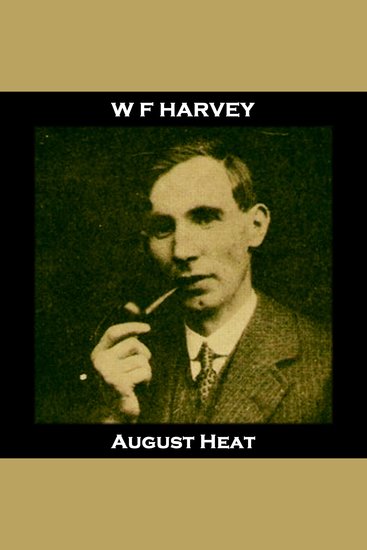
    W F Harvey

    • 0
    • 0
    • 0
    William Fryer Harvey AM was born on 14th April 1885 into a wealthy Quaker family in Leeds, West Yorkshire. 
    He was educated at the Quaker Bootham School in Yorkshire and Leighton Park School in Reading before university at Balliol College, Oxford.  
    His health was fragile and he poured his energies into writing short stories and in 1910 published his first collection ‘Midnight House’. 
    In the Great War he was with the Friends' Ambulance Unit and then served as a surgeon-lieutenant in the Royal Navy.  There he received the Albert Medal for Lifesaving but lung damage received at that time troubled him for the rest of his life. 
    He continued to write short stories, and even a memoir, but by 1925 ill health had forced his retirement to any outside work.  Three years later he published his second collection which contained his macabre classic ‘The Beast with Five fingers’, only one more collection would come from his pen in his lifetime. 
    For many years of his life he now lived in Switzerland with his wife but a yearning to be home saw them come back to England in 1935. 
    W F Harvey died in Letchworth on the 4th June 1937. He was 52.
    Ver libro
  • Romeo and Juliet - cover

    Romeo and Juliet

    William Shakespeare

    • 0
    • 0
    • 0
    Romeo and Juliet is a tragedy written by William Shakespeare early in his career about two young star-crossed lovers whose deaths ultimately reconcile their feuding families. It was among Shakespeare's most popular plays during his lifetime and along with Hamlet, is one of his most frequently performed plays. Today, the title characters are regarded as archetypal young lovers.
    Romeo and Juliet had a profound influence on subsequent literature. Before then, romance had not even been viewed as a worthy topic for tragedy. In Harold Bloom's words, Shakespeare "invented the formula that the sexual becomes the erotic when crossed by the shadow of death". Of Shakespeare's works, Romeo and Juliet has generated the most—and the most varied—adaptations, including prose and verse narratives, drama, opera, orchestral and choral music, ballet, film, television, and painting. The word "Romeo" has even become synonymous with "male lover" in English. 
    The most famous and inspirational works of William Shakespeare include: Hamlet, Othello, King Lear, Macbeth, Orpheus, Romeo and Juliet, Julius Caesar, Troilus and Cressida, The Tempest, Venus and Adonis, Antony and Cleopatra, Measure for Measure, The Winter's Tale and many more.
    Ver libro
  • The Daughter of Lilith - From their pens to your ears genius in every story - cover

    The Daughter of Lilith - From...

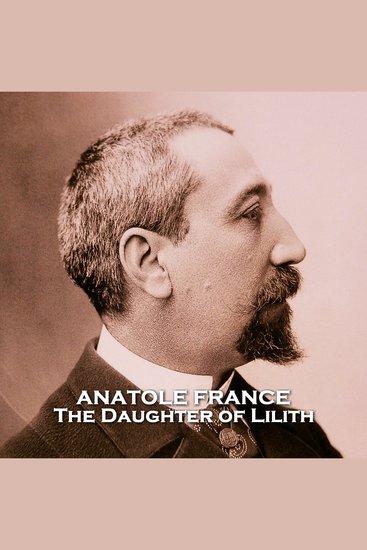
    Anatole France

    • 0
    • 0
    • 0
    François-Anatole Thibault was born on the 16th April 1844 in Paris, France, the son of a bookseller and bibliophile. 
    He studied at the Collège Stanislas, a private Catholic school, and after graduating joined his father in the bookstore, which specialised in works on the French Revolution.  Several years later he secured a position as cataloguer at Bacheline-Deflorenne and at Lemerre before being appointed librarian for the French Senate in 1876. 
    His literary career had begun as a journalist and as a poet before publishing his novel ‘Le Crime de Sylvestre Bonnard’ in 1881.  Praised for its elegant prose, it won him a prestigious prize from the Académie Française, which later elected him to its storied ranks. 
    His works were profound and thoughtful and often couched in surreal and outlandish expressions; whether penguins baptized by a near-blind Abbott transformed themselves into humans or of a guardian angel who becomes an atheist, his stories turned established thought into startling literature. 
    His short stories run in the same vein.  The premise may seem plausible but his distinctive style turns them into an individual viewpoint which invokes both discussion and admiration. 
    In his private life his relationships with women were often turbulent.  A Socialist, he was a fervent supporter of the Russian Revolution and the early years of the French Communist party. 
    He was awarded the Nobel Prize in 1921 but the following year his entire canon of works was placed on the prohibited list of the Catholic Church, which he thought of as a credit to his name. 
    Anatole France died on the 12th October 1924 in Tours.  He was 80.
    Ver libro
  • The collected works of Ambrose Bierce - cover

    The collected works of Ambrose...

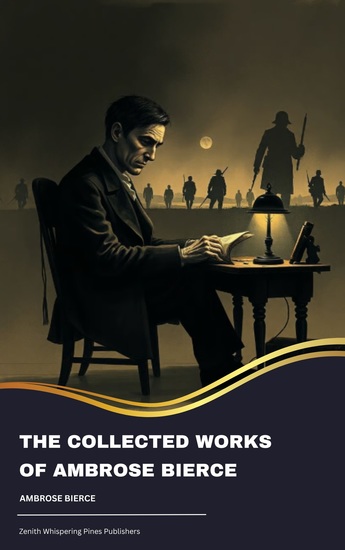
    Ambrose Bierce

    • 0
    • 0
    • 0
    Step into the Macabre and Brilliant Mind of "Bitter Bierce."
    
    Ambrose Bierce was a master of the unexpected, a veteran of the Civil War whose scars fueled some of the most cynical, sharp-witted, and terrifying prose in American history. This comprehensive collection brings together his vast body of work, showcasing a writer who refused to look away from the darkness of the human heart.
    
    This collection captures the diverse brilliance of his career:
    
    Unflinching War Stories: Experience the psychological tension of his Civil War fiction, known for its grim realism and shocking, non-linear twists that influenced modern filmmaking.
    
    The Master of Satire: Explore his legendary, caustic wit—where he redefines the English language through a lens of profound cynicism and dark humor.
    
    Supernatural and "Weird" Tales: Chilling stories of the occult and the unexplained that paved the way for Lovecraft and modern psychological horror.
    
    The Master of the Twist: Bierce's signature style of blending high-stakes irony with a sudden, devastating finale.
    
    Whether he is mocking the hypocrisies of society or describing the eerie silence of a haunted forest, Bierce's prose is lean, mean, and utterly unforgettable. This volume is an essential addition for fans of Gothic literature, military history, and classic satire.
    
    Face the "Bitter" truth. Buy "The Collected Works of Ambrose Bierce" today and discover a true original of American letters.
    Ver libro
  • Cymbeline King of Britain - cover

    Cymbeline King of Britain

    William Shakespeare

    • 0
    • 0
    • 0
    Cymbeline, also known as The Tragedie of Cymbeline or Cymbeline, King of Britain, is a play by William Shakespeare set in Ancient Britain (c. 10–14)[a] and based on legends that formed part of the Matter of Britain concerning the early Celtic British King Cunobeline. Although listed as a tragedy in the First Folio, modern critics often classify Cymbeline as a romance or even a comedy. Like Othello and The Winter's Tale, it deals with the themes of innocence and jealousy. While the precise date of composition remains unknown, the play was certainly produced as early as 1611.
    Cymbeline, the Roman Empire's vassal king of Britain, once had two sons, Guiderius and Arvirargus, but they were stolen twenty years earlier as infants by an exiled traitor named Belarius. Cymbeline discovers that his only child left, his daughter Imogen (or Innogen), has secretly married her lover Posthumus Leonatus, a member of Cymbeline's court. The lovers have exchanged jewellery as tokens: Imogen with a bracelet, and Posthumus with a ring. Cymbeline dismisses the marriage and banishes Posthumus since Imogen — as Cymbeline's only child — must produce a fully royal-blooded heir to succeed to the British throne. In the meantime, Cymbeline's Queen is conspiring to have Cloten (her cloddish and arrogant son by an earlier marriage) married to Imogen to secure her bloodline. The Queen is also plotting to murder both Imogen and Cymbeline, procuring what she believes to be deadly poison from the court doctor. The doctor, Cornelius, is suspicious and switches the poison with a harmless sleeping potion. The Queen passes the "poison" along to Pisanio, Posthumus and Imogen's loving servant — the latter is led to believe it is a medicinal drug. No longer able to be with her banished Posthumus, Imogen secludes herself in her chambers, away from Cloten's aggressive advances.
    Although the play is named Julius Caesar, Brutus speaks more than four times as many lines as the title character; and the central psychological drama of the play focuses on Brutus' struggle between the conflicting demands of honour, patriotism, and friendship. 
    Among the most significant works William Shakespeare: Hamlet, Othello, King Lear, Macbeth, Orpheus, Romeo and Juliet, Julius Caesar, Troilus and Cressida, The Tempest, Venus and Adonis, Antony and Cleopatra, Measure for Measure, The Winter's Tale and many more.
    Ver libro
  • Little Women (Part 1) - cover

    Little Women (Part 1)

    Louisa May Alcott

    • 0
    • 0
    • 0
    Little Women (Part 1): Four sisters and their mother, whom they call Marmee, live in a new neighborhood (loosely based on Concord) in Massachusetts in genteel poverty. Having lost all his money, their father is serving as a chaplain for the Union Army in the American Civil War, far from home. The mother and daughters face their first Christmas without him. When Marmee asks her daughters to give their Christmas breakfast away to an impoverished family, the girls and their mother venture into town laden with baskets to feed the hungry children. When they return, they discover their wealthy, elderly neighbor Mr. Laurence has sent over a decadent surprise dinner to make up for their breakfast. The two families become acquainted following these acts of kindness.
    Little Women is a coming-of-age novel written by American novelist Louisa May Alcott, originally published in two volumes in 1868 and 1869. The story follows the lives of the four March sisters—Meg, Jo, Beth, and Amy—and details their passage from childhood to womanhood. Loosely based on the lives of the author and her three sisters, it is classified as an autobiographical or semi-autobiographical novel.
    Ver libro