



Band Camp Coloring Book
Marcy Schaaf
Editora: Books By Schaaf
Sinopse
Companion to WIllow and Walter Rock Band Camp Storybook
Disponível desde: 12/06/2025.
Comprimento de impressão: 50 páginas.

Editora: Books By Schaaf
Companion to WIllow and Walter Rock Band Camp Storybook
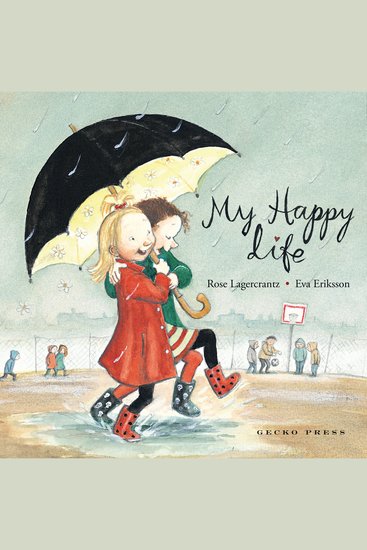
A New York Times Notable book and first in the acclaimed series for beginning readers.

Dani is probably the happiest person she knows. She’s happy because she’s going to start school. Dani has been waiting to go to school her whole life. Then things get even better—she meets Ella Frida by the swings. After that, Dani and Ella Frida do everything together and become best friends. But then something happens that Dani isn’t prepared for…

A perfect first chapter book for children aged five and up, full of social-emotional learning and sweet and funny illustrations, from one of the world’s greatest illustrators, Eva Eriksson.

Young independent readers who like Kate DiCamillo or the Ivy & Bean series will be hooked on the 7-book series once they start.

"If only all early chapter books were this beautifully conceived."—The New York Times

Rose Lagercrantz is a popular Swedish author of books for children as well as for adults. She has received many of the top Swedish literary awards, including the August Prize and the Astrid Lindgren Prize.

Praise for My Happy Life

"Working beautifully with the text and usually given more space on the page, these sensitive ink drawings feature clean lines that express emotions through every character’s stance, gesture, and expression. A quietly compelling book for young readers."—Booklist, Starred

“Sweet and salty – umami for the emerging reader.”—The Horn Book

Read all the My Happy Life series:
My Heart is Laughing
When I Am Happiest
Life According to Dani
See You When I See You
Where Dani Goes, Happy Follows
All’s Happy That Ends Happy
Ver livro

Pregnant. Shunned. Heartbroken. This is Eirene's true story of how she left the Amish. Like most Amish children, Eirene had a carefree childhood in a tight-knit family life in the Old Order Amish community where she grew up in Indiana. Though she had no indoor plumbing, no electricity, and no modern conveniences, her young life was full of joy. Horseback riding, reading, working with her father, and singing while making noodles and quilts with her sisters filled her days as she grew up.
When Eirene becomes pregnant and marries at the tender age of 17, the harsh reality of her new life sets in. From getting snowed in by 10 feet of snow to carrying icy buckets of water inside just to make coffee or wash dishes, Eirene remains steadfast in providing the best care she can for her son. As she has four more children, her world revolves around them, and they bring her more joy than she could have ever imagined. Though she loves being a mother, and she loves her family, Eirene knows there has to be more to life than just being a housewife confined to her home with no money, no phone, and no transportation. Doesn’t God have a bigger purpose for her? Wasn’t she meant for more? When Eirene makes a Christian friend, she is hungry to learn more about the loving God who died for her and rose again, a God so unlike the one she’d learned about growing up Amish.
Ver livro

Exhibit Piece by Philip K. Dick - As curator of the Twentieth Century Exhibit, George Miller felt that to do a good job he had to live his work. Then, one day, somebody got into his exhibit and he went to investigate...
That's a strange suit you have on," the robot pubtrans driver observed. It slid back its door and came to rest at the curb. "What are the little round things?"
"Those are buttons," George Miller explained. "They are partly functional, partly ornamental. This is an archaic suit of the twentieth century. I wear it because of the nature of my employment."
He paid the robot, grabbed up his briefcase, and hurried along the ramp to the History Agency. The main building was already open for the day; robed men and women wandered everywhere. Miller entered a PRIVATE lift, squeezed between two immense controllers from the pre-Christian division, and in a moment was on his way to his own level, the Middle Twentieth Century.
"Gorning," he murmured, as Controller Fleming met him at the atomic engine exhibit.
"Gorning," Fleming responded brusquely. "Look here, Miller. Let's have this out once and for all. What if everybody dressed like you? The Government sets up strict rules for dress. Can't you forget your damn anachronisms once in awhile? What in God's name is that thing in your hand? It looks like a squashed Jurassic lizard."
"This is an alligator-hide briefcase," Miller explained. "I carry my study spools in it. The briefcase was an authority symbol of the managerial class of the latter twentieth century."
Ver livro

An Unlikely Hero.
Every bug can make a difference.
Get ready for playful fun...
“I loved it. I will buy it for all my great grand kids.” Sheryl Eastabrook
When a dapper Mr. Mosquito arrives at the insect ball hosted by the Queen Bee, he joins all the elegantly attired guests in having a splendid time.
Suddenly a big-footed intruder - Gasp! A bear! - threatens to stomp out all the six-legged fun.
Dare Mr. Mosquito go to the rescue? Might he have a special talent that will make him a hero?
Andrew Thiriot’s masterful reading of this children’s book will have you chuckling and cheering for Mr. Mosquito.
And as for that pesky question - Will the festivities go on? – be bugged no more.
A royally good answer awaits.
“Well done with the English accent. The story was cleverly written with some great rhyming and fun twists.” Stephen Münzer, author of Agnes and the Birdman
FeaturesAuthor's Note at the endContagious Intro/Outro Music by Andrew Thiriot
Original Book was the recipient of the 2010 Juvenile Literary Award presented by Friends of American Writers.
#UnlikelyHero #Witty #Underdog #Clever #Funny #Insect #Camping #Children #Spider #Mosquito
Ver livro
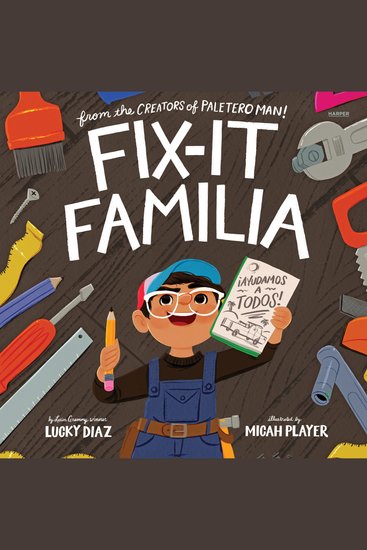
From the creators of Paletero Man and La Guitarrista—Latin Grammy–winning musician Lucky Diaz and celebrated artist Micah Player—comes a rollicking and rhyming story about a boy and his family who have all the right tools to help their community.
No job is too big, no task is too small. We’re the Fix It Familia. We help one, we help all!
Chavo and his family are always there to lend a helping hand. So when the main parade float crashes at a neighborhood fiesta, Chavo has the perfect plan to help his community. With a load of creativity and a truck full of love, nothing can stop Chavo’s ideas from becoming reality!
This empowering tale of resilience, community, and the power of creativity is perfect for lovers of all things construction tools and trucks. Fans of Saturday by Oge Mora, The Artivist by Nikkolas Smith, and Maybe Something Beautiful by F. Isabel Campoy, Theresa Howell, and Rafael López will also love this story.
The book includes Spanish words and phrases throughout and an author’s note from Lucky Diaz about his inspiration behind the story.
Ver livro

Mantis shrimp and lionfish are two coral reef predators with special weapons. Dive into the pages of this book to find engaging leveled text and colorful photography that highlights these unique ocean creatures. Profiles show off their weapons and habitats, and a final battle scene will keep readers gripping the pages until the very end. Can you guess who will come out on top?Ver livro





