


Cicero Collection
Marcus Tullius Cicero
Editorial: Logos
Sinopsis
Cicero Collection includes three masterworks by the Roman statesman: On Friendship, On Old Age, and On the Commonwealth.
Disponible desde: 23/09/2022.

Editorial: Logos
Cicero Collection includes three masterworks by the Roman statesman: On Friendship, On Old Age, and On the Commonwealth.
In a world filled with stress and uncertainty, Joyful Living offers a transformative roadmap to reclaim your sense of joy and well-being. This insightful guide delves into the art of cultivating a positive mindset amidst life's challenges, equipping you with practical strategies to enhance your mental health and foster resilience. Fiona Zenith shares her personal journey from despair to empowerment, illustrating how simple shifts in perspective can lead to profound changes. Each chapter provides actionable techniques—from identifying negative thoughts and practicing gratitude to integrating mindfulness into daily routines. Discover how to build emotional resilience, create joyful habits, and embrace an optimistic outlook that will illuminate your path through adversity. With relatable stories, reflective exercises, and a wealth of practical advice, Joyful Living invites you to embark on a journey of self-discovery and growth. Whether you seek to enhance your personal happiness or support others in their quest for positivity, this book serves as your companion in navigating the complexities of life with grace and confidence. Transform your life today—embrace the power of positivity and unlock the joy within.Ver libro
For the past several decades, politicians and economists thought that high levels of inequality were good for the economy. But because America’s middle class is now so weak, the US economy suffers from the kinds of problems that plague less-developed countries. As Hollowed Out explains, to have strong, sustainable growth, the economy needs to work for everyone and expand from the middle out. This new thinking has the potential to supplant trickle-down economics—the theory that was so wrong about inequality and our economy—and shape economic policymaking for generations.

"The director of economic policy at the Center for American Progress argues that it is time to mount a political challenge to the economic theories—namely, supply-side, or trickle-down economics—that have provided cover for the unparalleled growth in inequality over the past three decades. … A dramatic and clearly delineated outline of 'how the stage has been set for transformative political conflict.'"—Kirkus
Ver libro
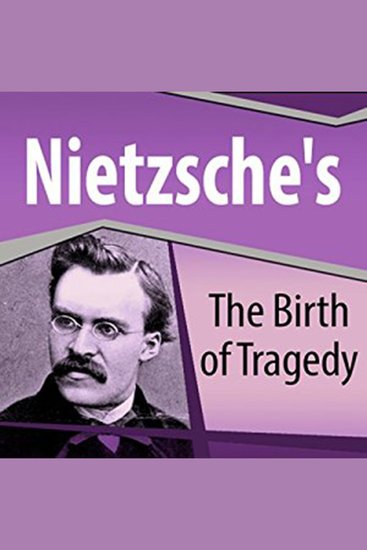
In this, his first book, Nietzsche developed a way of thinking about the arts that unites the Greek gods Apollo and Dionysus as the central symbol of human existence. Although tragedy serves as the focus of this work, music, visual art, dance, and the other arts can also be viewed using Nietzsche's analysis and integration of the Apollonian and the Dionysian. The Birth of Tragedy stands alongside Aristotle's Poetics as an essential work for all who seek to understand poetry and its relationship to human life.© Agora PublicationsVer libro
Dark, inhuman thirst rages within me—an unquenchable craving for masculinity.
They transformed me…but I’m not a normal vampire.
I feed on something far filthier than blood.
Tonight, the fraternity took me on my first hunt. We crashed the Halloween party and set up shop in the bathroom. One by one, players from the baseball team entered to feed me through a hole in the stall.
What have I become? What kind of dark, vile power now festers within my veins?
---
CONTAINS EXPLICIT GAY SEXUAL CONTENT.
For exclusive stories, visit www.ArcherVale.com.
Ver libro

Feedback spielt eine entscheidende Rolle im Lernprozess. Doch welche Möglichkeiten gibt es, Lernprozesse durch digitales Feedback zu unterstützen? Dieses Buch bietet Lehrenden und Studierenden ein wissenschaftlich fundiertes Orientierungs- und Anwendungswissen zu digitalen Feedbackmethoden. Diese können nicht nur im Online- oder Hybridunterricht eingesetzt werden, sondern auch den Präsenzunterricht bereichern. Die Vorzüge und Grenzen der jeweiligen digitalen Feedbackmethoden werden diskutiert und Umsetzungsempfehlungen abgeleitet. Dies umfasst u.a. schriftliches Feedback im Texteditor, in Cloud-Dokumenten, in Chats, Diskussionsforen, Wikis, Umfragen und E-Mails sowie multimodales Feedback in Videokonferenzen und per Audio-, Video- und Bildschirmaufnahme. Darüber hinaus werden Vorschläge gegeben, um verschiedene Methoden sinnhaft miteinander zu kombinieren und Lerndialoge anzuregen.Ver libro
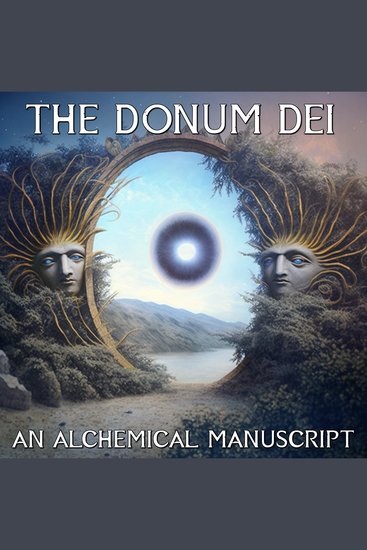
The Pretiosissimum Donum Dei, 'the most precious gift of God', is an important early alchemical work, with a famous series of 12 illustrations. There have been identified over 60 manuscripts of the Donum Dei, the earliest dating from the 15th century. Some of these versions ascribe the work to Georgius Aurach de Argentina [sometimes 'Anrach'] and date it to 1475, though this unverified. There are versions in Latin, German, French and Italian, and one in English in the British Library.Ver libro





