¡Acompáñanos a viajar por el mundo de los libros!
Añadir este libro a la estantería
Grey
Escribe un nuevo comentario Default profile 50px
Grey
Suscríbete para leer el libro completo o lee las primeras páginas gratis.
All characters reduced
The Ivory Coast - cover

The Ivory Coast

Marcus Blackwell

Editorial: Publifye

  • 0
  • 0
  • 0

Sinopsis

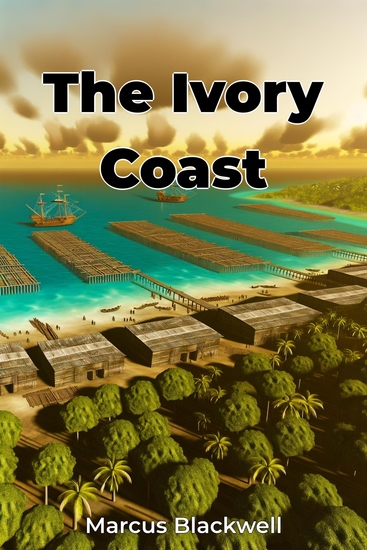
'The Ivory Coast' offers a compelling exploration of how colonial naming practices and the ivory trade fundamentally shaped the identity and political landscape of modern West Africa. This comprehensive study weaves together three centuries of history, examining the transformation of a region from a hub of ivory commerce to a complex nation grappling with its colonial legacy.

 
Through a masterful blend of trade records, colonial archives, and oral histories, the book reveals how European economic interests literally named and defined African territories based on their commercial value. The narrative unfolds across three main themes, beginning with the establishment of the ivory trade and its profound impact on coastal communities. Readers discover how trading ports evolved into centers of political power, permanently altering the region's social structure.

 
The book's unique approach combines quantitative analysis of historical trade data with personal accounts and colonial correspondence, providing both a broad economic perspective and intimate insights into the human experience of this transformation.

 
The book's significance lies in its revelation of how commodity-based colonial naming practices influenced national identity formation and political development in West Africa. By examining why some nations maintain colonial names while others adopt indigenous ones, it provides crucial context for understanding contemporary debates about cultural identity and political sovereignty.

 
This comprehensive analysis serves both academic audiences and general readers interested in understanding the complex historical forces that continue to shape modern African nation-states.
Disponible desde: 05/01/2025.
Longitud de impresión: 100 páginas.

Otros libros que te pueden interesar

  • Hitler's Banker - cover

    Hitler's Banker

    Jean-François Bouchard

    • 0
    • 0
    • 0
    1932. The economic crisis in Germany was unprecedented—a severe recession, 6 million unemployed, and a collapse in the popularity of Chancellor Brüning, who was criticized for his lack of foresight and who stubbornly focused on a single objective—reducing public deficits and restoring the state's finances under pressure from other European countries. All the while far-right parties, which would soon take power, were experiencing an irrepressible rise.
    How can one not be struck by the similarity between the economic and political situation in Germany in 1932 and that of some Western countries in 2022?
    In a fictionalized biography tracing the astonishing career of Hjalmar Schacht, a German financial genius of the last century, Jean-François Bouchard indirectly highlights the interest in drawing inspiration from the economic methods that worked at that time. With this perspective, the current economic situation does not seem to be without a solution.
    It was the end of unemployment that became the factor of social stabilization for Adolf Hitler, and of consolidation of his power and of military hegemony. In this regard, sadly, the incredible story of Hjalmar Schacht is the most painful demonstration of this process.
    Ver libro
  • Radical Brown - Keeping the Promise to America’s Children - cover

    Radical Brown - Keeping the...

    Margaret Beale Spencer, Nancy E....

    • 0
    • 0
    • 0
    In Radical Brown, renowned developmental scholar Margaret Beale Spencer and critical legal analyst Nancy E. Dowd offer a fresh perspective on the Brown v. Board of Education decision. Noting that decades of flawed implementation have subverted Brown's great promise of educational equality for K–12 public school students, Spencer and Dowd propose a bold framework for a new interpretation of the Supreme Court decision, one that is inclusive, identity affirming, and culturally sensitive. 


    Even as they envision a more equitable future for US students, Spencer and Dowd look critically at the historical context of Brown v. Board of Education, examining the roots of the inequality and segregation the ruling attempted to address, the resistance that the resulting school integration met, and the legacy of attempts to enforce the ruling. They trace the ways in which post-Brown policies have reinforced race privilege for white students and race subordination for Black and marginalized students and show how structural and cultural racism in education have impeded youth development and caused collective identity injury for all. 


    Radical Brown offers suggestions for action to help legislators, school boards, scholars, and educators correct course and enact the decision's true intent—of safeguarding rights based on a common humanity.
    Ver libro
  • Becoming a Marihuana User - cover

    Becoming a Marihuana User

    Howard S. Becker

    • 0
    • 0
    • 0
    Marijuana has come a long way since its seedy days in the back parking lots of our culture. So has Howard S. Becker, the eminent sociologist, jazz musician, expert on “deviant” culture, and founding NORML board member. When he published Becoming a Marihuana User more than sixty years ago, hardly anyone paid attention—because few people smoked pot. Decades later, and it’s clear—marijuana isn’t just an established commodity, it’s an entire culture. And that’s just the thing—Becker totally called it: pot has everything to do with culture. It’s not a blight on culture, but a culture itself—in fact, you’ll see in this book the first use of the term “users,” rather than “abusers” or “addicts.” Come along on this short little study—now a famous timestamp in weed studies—and you will be astonished at how relevant it is to us today. 
     
    Becker doesn’t judge, but neither does he holler for legalization. Instead, he looks at marijuana with a clear sociological lens—as a substance that some people enjoy, and that some others have decided none of us should. From there he asks: so how do people decide to get high, and what kind of experience do they have as a result of being part of the marijuana world? What he discovers will bother some: chemistry isn’t everything—the important thing about pot is how we interact with it. We learn to be high. We learn to like it. And from there, we teach others, passing the pipe in a circle that begins to resemble a bona fide community.
    Ver libro
  • When Everything Falls Apart - Osamu Dazai's The Setting Sun - cover

    When Everything Falls Apart -...

    Osamu Dazai

    • 0
    • 0
    • 0
    What happens when everything you've ever known disappears? 
     
    A once-proud family is falling apart. The world they grew up in no longer exists, and every passing day forces them to confront loneliness, regret, and the painful search for purpose. 
     
    Through the eyes of Kazuko, The Setting Sun explores the collapse of a family struggling to survive in postwar Japan. As traditions fade and hope grows fragile, each character must decide whether to surrender to despair or keep moving forward. 
     
    Widely regarded as one of Osamu Dazai's greatest works, this timeless psychological novel examines identity, loss, love, and the quiet resilience needed to face an uncertain future. 
     
    If you've ever wondered how people find the strength to continue when everything falls apart, this story will stay with you long after the final chapter.
    Ver libro
  • Gettysburg Campaign The: The History and Legacy of the Civil War’s Most Famous Campaign - cover

    Gettysburg Campaign The: The...

    Editors Charles River

    • 0
    • 0
    • 0
    “The failure to crush the Federal army in Pennsylvania in 1863, in the opinion of almost all of the officers of the Army of Northern Virginia, can be expressed in five words: the absence of the cavalry.” – Confederate General Henry Heth 
    Without question, the most famous battle of the American Civil War took place outside of the small town of Gettysburg, Pennsylvania, which happened to be a transportation hub, serving as the center of a wheel with several roads leading out to other Pennsylvanian towns. From July 1-3, Robert E. Lee’s Confederate Army of Northern Virginia tried everything in its power to decisively defeat George Meade’s Union Army of the Potomac, unleashing ferocious assaults that inflicted nearly 50,000 casualties in all. 
    Day 1 of the battle would have been one of the 25 biggest battles of the Civil War itself, and it ended with a tactical Confederate victory. But over the next two days, Lee would try and fail to dislodge the Union army with attacks on both of its flanks during the second day and Pickett’s Charge on the third and final day. Meade’s stout defense held, barely, repulsing each attempted assault, handing the Union a desperately needed victory that ended up being one of the Civil War’s turning points. 
    After the South had lost the war, the importance of Gettysburg as one of the “high tide” marks of the Confederacy became apparent to everyone, making the battle all the more important in the years after it had been fought. While former Confederate generals cast about for scapegoats, with various officers pointing fingers at Robert E. Lee, James Longstreet, and James Stuart, historians and avid Civil War fans became obsessed with studying and analyzing all the command decisions and army movements during the entire campaign. Despite the saturation of coverage, Americans refuse to grow tired of visiting the battlefield and reliving the biggest battle fought in North America.
    Ver libro
  • English Vocabulary - The Basics - cover

    English Vocabulary - The Basics

    Michael McCarthy

    • 0
    • 0
    • 0
    English Vocabulary: The Basics offers a clear, non-jargonistic introduction to English vocabulary, the way linguists classify and explain it, and the place of vocabulary in our overall picture of the language, and in society. Introducing a range of terminology for discussing vocabulary, the listener is provided with a coherent, structured description of what we know about words and their meanings. 


    Key features of this book include: 


    ● Analysis of historical roots of present-day words 


    ● Coverage of the differences between speech and writing and between formality and informality 


    ● Understanding of the social implications of choices that readers make to use standard or non-standard (e.g., regional/dialect) vocabulary 


    ● A focus on British English with reference to a wide range of varieties of English that include North American English, Irish English, Indian English, Malaysian English, Nigerian English, and Caribbean English 


    This book is an engaging and thought-provoking listen for anyone with an interest in English vocabulary.
    Ver libro