Junte-se a nós em uma viagem ao mundo dos livros!
Adicionar este livro à prateleira
Grey
Deixe um novo comentário Default profile 50px
Grey
Assine para ler o livro completo ou leia as primeiras páginas de graça!
All characters reduced
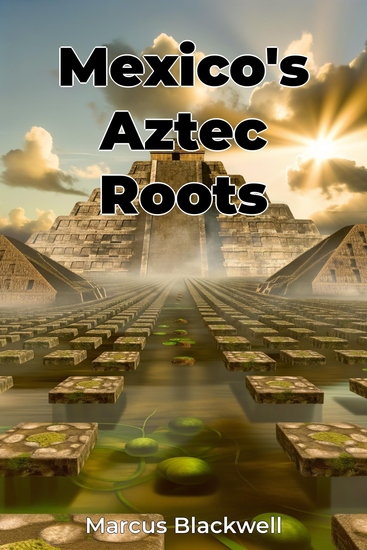
Mexico's Aztec Roots - cover
LER

Mexico's Aztec Roots

Marcus Blackwell

Editora: Publifye

  • 0
  • 0
  • 0

Sinopse

"Mexico's Aztec Roots" explores the fascinating transformation of Mexican society from the height of the Aztec Empire through the colonial period, revealing how the collision of two distinct worlds created modern Mexico's unique cultural identity. The book masterfully weaves together archaeological evidence, colonial documents, and indigenous records to present a comprehensive view of this crucial historical period.

 
Through careful examination of recent discoveries at the Templo Mayor site, readers gain unprecedented insights into daily life in Tenochtitlan, from its sophisticated urban planning to its complex market systems and religious ceremonies. The narrative progresses through three major phases, beginning with a detailed examination of pre-Columbian Aztec civilization, challenging simplified historical accounts with evidence of their advanced diplomatic and educational systems.

 
Moving beyond traditional conquest narratives, the book explores the nuanced role of indigenous allies and political dynamics in the Spanish conquest, before delving into the emergence of mestizo culture. Throughout each section, the author draws upon multidisciplinary sources, including linguistics, anthropology, and archaeology, to provide a well-rounded understanding of Mexico's cultural evolution.

 
What sets this work apart is its balanced approach to examining cultural transformation, using regional case studies to demonstrate how indigenous communities maintained their identity while adapting to new systems. The book's accessible academic style makes complex historical processes understandable for both scholars and general readers, while its integration of recent archaeological findings and revised interpretations of historical documents offers fresh perspectives on Mexico's rich cultural heritage.
Disponível desde: 08/01/2025.
Comprimento de impressão: 96 páginas.


Outros livros que poderiam interessá-lo

  • The Art of Public Speaking - cover

    The Art of Public Speaking

    Dale Carnegie

    • 0
    • 2
    • 0
    The bestselling author of How to Win Friends and Influence People shares the essentials for public speaking in this classic self-help guide.Good oral communication skills are critical in life. Whether you’re speaking to an audience of one at a party or one hundred at a business conference, you must be able to get your point across effectively. In order to do that, you need a worthwhile topic and the knowledge of what makes a great public speaker.In The Art of Public Speaking, authors Dale Carnegie and J. Berg Esenwein lay out what readers need to improve their communication skills in both personal and professional settings. They offer advice on a multitude of topics, including overcoming stage fright, avoiding monotony, and showing enthusiasm. Learn about methods of delivery and the power of pitch, pace, and gestures. They also discuss strengthening your memory and expanding your vocabulary.The Art of Public Speaking was first published in 1915, but its message is still relevant today. With the help of practice and the lessons herein, readers will be on their way to wowing audiences.
    Ver livro
  • Quiet Confidence - Leverage Your Quiet Strengths — The Introvert’s Practical Guide to Confident Socializing Authentic Connection and Sustainable Energy - cover

    Quiet Confidence - Leverage Your...

    Claire Donnelly

    • 0
    • 0
    • 0
    Ever leave a party exhausted and wondering what’s wrong with you? 
    Quiet Confidence proves there’s nothing “wrong” at all—you’re an introvert whose real power is waiting to be unlocked. Drawing on the latest research and decades of coaching experience, author Claire Alistair shows you how to turn observation, deep listening, and thoughtfulness into social super-powers—without faking extroversion or burning out. 
    You’ll learn how to … 
    ✔️ Decode the introverted brain and finally validate your need for strategic solitude  
    ✔️ Calm social anxiety with proven mindset & breathing techniques before it hijacks the moment  
    ✔️ Spark engaging dialogue using “listen-first” questions that build instant rapport 
    ✔️ Navigate small talk, group chats, and networking events—and leave with energy to spare  
    ✔️ Implement the 4-step Social-Battery Plan to pace, recharge, and thrive in any setting 
    ✔️ Apply “Quiet Leadership” skills to influence meetings and manage teams authentically  
    Imagine entering a room feeling prepared, connecting on your terms, and exiting with genuine satisfaction—not exhaustion. 
    Perfect for: 
    • Introverts craving deeper connections without the energy hangover 
    • Professionals who need low-stress networking strategies 
    • Shy or socially anxious readers ready for a science-backed confidence boost 
    Stop forcing extroverted tactics—start leveraging your quiet strengths. Scroll up and click Buy Now to cultivate your own Quiet Confidence today.
    Ver livro
  • The Subjection of Women - cover

    The Subjection of Women

    John Stuart Mill

    • 0
    • 0
    • 0
    "The Subjection of Women" is an essay written by John Stuart Mill in 1869. The essay is a critique of the social and legal status of women in Victorian England and argues for gender equality. Mill argues that the subjugation of women is not only morally wrong but also results in negative consequences for both men and women. 
    In the essay, Mill examines the various ways in which women are subjugated, including their lack of legal rights, their exclusion from education and professional opportunities, and their relegation to the domestic sphere. He argues that these societal restrictions prevent women from fulfilling their potential and living full, autonomous lives. 
    Mill also argues that the subjugation of women is not a natural or inevitable state of affairs but is instead a result of historical and cultural factors. He contends that by removing legal and social barriers to gender equality, society can create a more just and harmonious social order. 
    "The Subjection of Women" was a groundbreaking work in its time and helped to lay the groundwork for the feminist movement. Mill's arguments continue to be influential to this day, and the essay remains a key text in the history of feminist thought.
    Ver livro
  • The Synesthesia Experience - Tasting Words Seeing Music and Hearing Color - cover

    The Synesthesia Experience -...

    Maureen Seaberg

    • 0
    • 0
    • 0
    A violinist sees a scarlet form when he plays a certain note; a rock star sees waves of blue and green as he composes a ballad; an actress tastes cake when she utters the word "table." Described by some as a superpower this mingling of the senses is called "synesthesia," and the people who possess this amazing gift are called "synesthetes." 


    What happens when a journalist turns her lens on a mystery happening in her own life? Maureen Seaberg did just that and lived for a year exploring her synesthesia. The wondrous brain trait is often described as blended senses, but for Maureen, synesthesia is not an idle "brain tick" that can be explained away by science (although it does offer some important clues). It is a unique ability to tap into and reveal a greater creative universe and even the divine. 


    Join her as she visits top neuroscientists, rock stars, violinists, other synesthetes, philosophers, savants, quantum physicists, and even Tibetan lamas in her journey toward the truth. 


    Step into Maureen's shimmering alternate universe as she explores this fascinating subject, combining clear explanations of groundbreaking scientific research with an exploration of deeper understanding of our senses.
    Ver livro
  • The Roman Empire and Its Enemies - Conquests and Conflicts - cover

    The Roman Empire and Its Enemies...

    Rogan Fish

    • 0
    • 0
    • 0
    The rise of Rome is a story of resilience, military strength, and strategic diplomacy. Emerging from a small settlement along the Tiber River, Rome transformed into a dominant power that would shape the ancient world for centuries. The foundation of Rome’s success lay in its political adaptability, disciplined military, and ability to integrate conquered peoples into its expanding empire. 
    Rome began as a monarchy, but after the expulsion of its last king in 509 BCE, it became a republic governed by elected officials and a system of checks and balances. This new structure allowed Rome to expand without being solely reliant on a single ruler. The Roman Republic was marked by a strong Senate, magistrates, and popular assemblies, which provided a balance of power. However, as Rome grew, internal conflicts between the patrician elite and the plebeian class led to significant social and political reforms, further strengthening the state’s stability. 
    The backbone of Rome’s expansion was its formidable military. The Roman legions, composed of disciplined and well-trained soldiers, were unmatched in organization and adaptability. Unlike other ancient armies that relied heavily on individual heroism, Rome’s military success stemmed from its ability to fight as a cohesive unit. Roman soldiers were rigorously trained, equipped with superior weapons, and organized into flexible formations such as the manipular system, which allowed them to adapt to various battle conditions. This military efficiency enabled Rome to conquer neighboring territories, including the Latin League, the Etruscans, and the Samnites, solidifying its control over central Italy.
    Ver livro
  • Caligula - The Cruel Unpredictable Roman Leader - cover

    Caligula - The Cruel...

    Kelly Mass

    • 0
    • 0
    • 0
    Gaius Caesar Augustus Germanicus, better known as Caligula, served as the third Roman Emperor from 37 to 41 AD. Born into the illustrious Julio-Claudian dynasty, he was the son of Germanicus, a beloved Roman general, and Agrippina the Elder, Augustus' granddaughter. His lineage placed him firmly within the first reigning family of the Roman Empire, setting the stage for his eventual rise to power. 
    The Roman Empire had already undergone significant transitions by the time Caligula entered the world. Tiberius, his great-uncle, succeeded Augustus as emperor in 14 AD, adopting Germanicus as his son. Caligula’s early years were shaped by the Roman military campaigns under Germanicus in Germania, where he earned the nickname “Caligula,” meaning “little boot,” due to the small military boots he wore as a child during these campaigns with his father’s troops. 
    When Germanicus died under mysterious circumstances in Antioch in 19 AD, Caligula’s family was plunged into turmoil. Agrippina, now a widow, returned to Rome with her six children, only to become embroiled in a bitter conflict with Tiberius. Her family’s tragic fall resulted in the deaths or exile of most of her children, leaving Caligula as the only surviving male. In 26 AD, Tiberius withdrew to the island of Capri, where he lived in seclusion. Caligula followed him in 31 AD, and after Tiberius' death in 37 AD, Caligula ascended to the throne as emperor.
    Ver livro