¡Acompáñanos a viajar por el mundo de los libros!
Añadir este libro a la estantería
Grey
Escribe un nuevo comentario Default profile 50px
Grey
Suscríbete para leer el libro completo o lee las primeras páginas gratis.
All characters reduced
Israeli Culture - cover

Israeli Culture

Marcus Blackwell

Traductor A AI

Editorial: Publifye

  • 0
  • 0
  • 0

Sinopsis

"Israeli Culture" presents a comprehensive exploration of the intricate relationship between Israel and the United States since 1948, revealing how this unique partnership has shaped global geopolitics, cultural exchange, and international security.

 
The book delves into three fundamental aspects: diplomatic relations, military cooperation, and cultural influences, offering readers a multifaceted understanding of this crucial alliance that extends far beyond traditional diplomatic ties.

 
Drawing from declassified government documents, diplomatic archives, and firsthand accounts, the book traces the evolution of US-Israel relations from Truman's immediate recognition of the newly established state to contemporary challenges in Middle Eastern politics. Particularly fascinating is how this relationship has influenced technological innovation and regional stability, with both nations developing deep connections in military strategy, intelligence sharing, and economic development.

 
The book's structure progresses logically through historical developments, military partnerships, and cultural exchanges, providing readers with a balanced perspective from both American and Israeli sources. What sets this work apart is its accessible approach to complex topics, combining academic rigor with clear explanations that serve both policy professionals and general readers interested in international relations.

 
By examining both official policy and cultural dynamics, it offers valuable insights into one of the most significant international partnerships in modern history.
Disponible desde: 05/01/2025.
Longitud de impresión: 107 páginas.


Otros libros que te pueden interesar

  • Ice Age The: The History and Legacy of the Glacial Period during the Pleistocene Era - cover

    Ice Age The: The History and...

    Editors Charles River

    • 0
    • 0
    • 0
    The early history of Earth covers such vast stretches of time that years, centuries, and even millennia become virtually meaningless. Instead, paleontologists and scientists who study geochronology divide time into periods and eras.  
    	What humans commonly refer to as the “Ice Age” is actually a series of fluctuating climate events that have occurred throughout the planet’s history. These ongoing historical phenomena are difficult to conceptualize because of both the time frame involved and the natural process by which they cyclically unfold. The Earth’s climatic clock repeats the maneuver over millions of years per occurrence, a number that is intellectually graspable, but not viscerally well-perceivable by most members of the human race. The process by which ice ages form is not relevant to any societal function, and therefore remains a mystery. Those who attempt to define it are often met with either apathy or defiant superstition. 
    	As a basic definition, it may be said that an ice age is simply a period of time during which thick ice sheets cover vast areas of land. These sheets have advanced and retreated, at times taking over the entire planet, and conversely disappearing nearly altogether. Glacial ice formed by this regularly occurring process does not sit in a state of inertia, but moves dynamically, reshaping the geological features of the continents. Again, the time frame for glacial movement is far longer than any involving human activity, so close attention must be paid in order to correctly measure and interpret it for the modern day. 
    Ver libro
  • Royalty - cover

    Royalty

    Kelly Mass

    • 0
    • 0
    • 0
    This book consists of 3 titles, which are about the following topics:1 - Eleanor of Aquitaine is a controversial figure in history. Many have referred to her in a different light. Some with some opinions, others with others. Today, you will learn more about those and get as many facts straight as possible. Though meant to represent the extension of the unbroken line of Emperors from Augustus to Constantine VI, Charlemagne's crowning led to the facility of 2 different (and usually competing) Empires and claims to royal authority. It led to war in 802, and for centuries later, the Emperors of the West and the East would contend for supremacy over the whole continent.2 - From June twentieth, 1837, to her death in the year 1901, Victoria ruled as Queen of the UK of Great Britain and Ireland. Her rule of 63 years and 7 months, called the Victorian period, was the longest of any British emperor before her. It was a period of considerable commercial, social, technical, and army development in the U.K., and also a period of great British Empire growth. The British Parliament gave her the additional title of Rule and Empress of India in the year 1876.3 - Richard I ruled as King of England from 1189 to 1199. He also governed as Duke of Normandy, Aquitaine, and Gascony, Lord of Cyprus, and Count of Poitiers, Anjou, Maine, and Nantes, and also being ruler of Brittany at different periods. He was the 3rd of 5 sons of King Henry II of England and Eleanor of Aquitaine, and he appeared not likely to prosper his dad as king, but all of his brothers had passed away before him, other than the youngest, John.
    Ver libro
  • The War of 1812 - cover

    The War of 1812

    Harry L. Coles

    • 0
    • 0
    • 0
    This compact history of the War of 1812 attempts to separate myth from reality. Harry Coles narrates the main operations on both land and sea of the three-year struggle. He examines the conflict from the British (and Canadian) as well as the American point of view, relating events in America to the larger war going on in Europe.
     
    “A balanced analysis of tactics and strategy, this book also summarizes succinctly and clearly recent scholarship on causes and describes briefly the war’s military, economic, and political consequences. Coles has surveyed thoroughly the existing literature but arrives at a number of independent judgments. It is the best single-volume account of the war in all its aspects. In recounting sea battles, Coles puts aside the patriotic blinders that have for so long prevented a sensible understanding of American capabilities and strategic necessities; thus American naval victories are put in a proper perspective. And in dealing with land engagements, he has shunned the mocking and amused attitude which has so often passed for historical judgment. Undergraduates will be stimulated by the hints of modern parallels and will find useful the excellent annotated bibliography and simple maps.”—Choice
    Ver libro
  • Liberalism - Individual Liberty and the Modern State - cover

    Liberalism - Individual Liberty...

    Hector Davidson

    • 0
    • 0
    • 0
    Liberalism is a political and philosophical ideology rooted in the principles of individual liberty, equality, and limited government. At its core, liberalism emphasizes the autonomy of the individual, arguing that each person has the right to pursue their own life and happiness, free from unnecessary interference by the state or society. Emerging in the Enlightenment period, liberalism challenged the traditional structures of monarchies and feudal systems, advocating for the rights of the individual and the importance of reason, tolerance, and democratic participation. 
    The roots of liberal thought can be traced back to the works of early modern philosophers such as John Locke, whose ideas on natural rights and government by consent laid the foundation for liberal political theory. Locke’s assertion that individuals possess inherent rights to life, liberty, and property formed the basis for much of liberal thought, influencing the development of constitutionalism and democratic governance. Over time, thinkers like Montesquieu, Rousseau, and later John Stuart Mill contributed to the evolution of liberalism, expanding its focus to issues of civil liberties, political freedoms, and social equality. 
    A defining characteristic of liberalism is its emphasis on individual freedom. This includes both personal liberty—the freedom to make choices about one’s own life—and political liberty—the right to participate in the democratic process and have a say in the laws and policies that govern society. Classical liberals advocated for minimal government interference in the economy and individual affairs, emphasizing free markets, private property, and limited state power. The role of the state, in this view, is to protect the rights of individuals and maintain social order, but not to intervene in the private lives or economic transactions of citizens.
    Ver libro
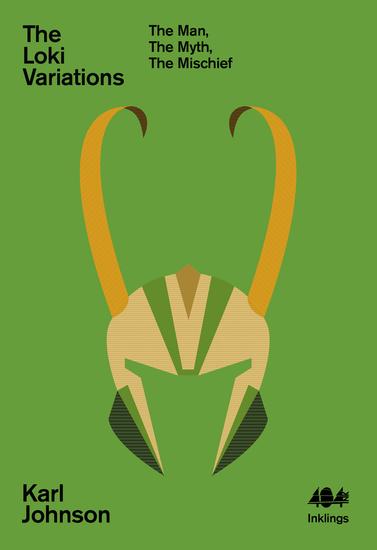
  • The Loki Variations - The Man The Myth The Mischief - cover

    The Loki Variations - The Man...

    Karl Johnson

    • 0
    • 1
    • 0
    Loki, ever the shapeshifter, has never been more adaptable across pop culture. Whether it's deep in the stories from Norse mythology, the countless offshoots and interpretations across media, or even the prolific Loki that has come to dominate our screens via the Marvel Cinematic Universe, each serves its own purpose and offers a new layer to the character we've come to know so well.
    By exploring contemporary variations of Loki from Norse god to anti-hero trickster in four distinct categories – the God of Knots, Mischief, Outcasts and Stories – we can better understand the power of myth, queer theory, fandom, ritual, pop culture itself and more.
    Johnson invites readers to journey with him as he unpicks his own evolving relationship with Loki, and to ask: Who is your Loki? And what is their glorious purpose?
    Ver libro
  • Escaping Enemy Mode - How Our Brains Unite or Divide Us - cover

    Escaping Enemy Mode - How Our...

    Jim Wilder, Ray Woolridge,...

    • 0
    • 0
    • 0
    Who’s your biggest enemy? Possibly you?Enemy Mode is an immensely damaging brain state that occurs in everyday life. In enemy mode, a person sees and experiences others as adversaries. Living in this mode poisons family and community bonds. It contributes to social stress, business failure, divorce, alienation, domestic violence, crime, racism, and international violence. Social media magnifies the impact of enemy mode toward almost all topics or persons imaginable.Longtime author and neuropsychologist Dr. Jim Wilder explains how the brain develops enemy mode and searches for ways to get the brain to “refriend.” Since a brain in enemy mode cannot tell when someone is trying to help, it rejects or attacks its allies, including refrienders. Wilder puts his years of research to the test in assessing the impossible task put forth by the Christian faith: to love one’s enemies.  After being trained in enemy mode through the military, business, and even friendships, retired Brigadier General Ray Woolridge comes alongside Wilder, bringing the reader on his journey of learning to refriend. He interviews leaders in sports, business, the military, law enforcement, politics, health care, and education, assessing the enemy mode impact on lives and culture.  Can Wilder and Woolridge figure out how enemy mode works and craft a solution? And can they get people and institutions to implement those solutions? This book is for all who desire to be better equipped to face the barrage of daily relational stressors that come at them. It’s for all who long for more harmonious relationships at home, in the workplace, and in their communities.
    Ver libro