¡Acompáñanos a viajar por el mundo de los libros!
Añadir este libro a la estantería
Grey
Escribe un nuevo comentario Default profile 50px
Grey
Suscríbete para leer el libro completo o lee las primeras páginas gratis.
All characters reduced
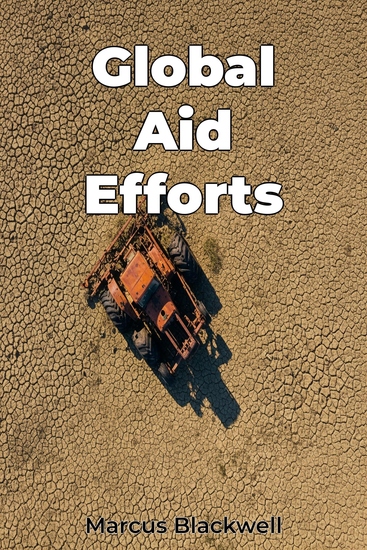
Global Aid Efforts - cover

Global Aid Efforts

Marcus Blackwell

Traductor A AI

Editorial: Publifye

  • 0
  • 0
  • 0

Sinopsis

Global Aid Efforts examines the persistent challenge of global hunger despite extensive international aid. It delves into the complexities of hunger relief programs, assessing the roles of NGOs and governments while scrutinizing both successes and failures. Intriguing is the fact that legacies of colonialism and the Cold War still significantly shape aid structures today. The book argues that systemic issues like political instability and corruption often undermine even well-intentioned humanitarian efforts.

 
The book begins by tracing the historical evolution of hunger relief, moving from post-World War II initiatives to contemporary strategies. Subsequent chapters explore critical themes such as the impact of agricultural policies, the role of technology, and the immense challenges of delivering aid in zones of conflict. A unique focus is placed on the importance of local knowledge and community-led development, advocating for collaborative approaches over traditional top-down methods. It also emphasizes the need to address the root causes of poverty and food insecurity, as these are key to sustainable solutions.
Disponible desde: 17/02/2025.
Longitud de impresión: 87 páginas.

Otros libros que te pueden interesar

  • Byzantium: The History of the Ancient Greek City Before It Became Constantinople - cover

    Byzantium: The History of the...

    Editors Charles River

    • 0
    • 0
    • 0
    Byzantium may have reached its zenith during the Middle Ages as Constantinople, but it had previously stood out among Greek and other ancient cities for its wealth, size, and strategic location. It is probable that given the location, if the Megarans had not founded their city where they did, another Greek polis would have. It is equally probable that any city in that area would have enjoyed success from the wealth generated from its involvement in the key two-way trade between the Greek states and their numerous colonies around the Black Sea and the increasing general east-west trade between the Roman Empire and the exotic lands to the east.  
    Byzantium’s position as guardian of the Bosphorus gave it advantages that stood the city in good stead for thousands of years and consolidated the city as an intercontinental and international trading hub. Inevitably, such a vibrant international center produced many creative thinkers, and Byzantium was the birthplace or home to such figures as Homerus, a tragedian who lived in the early 3rd century BCE. Another overlooked figure was Philo, an engineer who lived from 280-220 BCE and is known as Philo Mechanicus. Although he was primarily an engineer, he was also a physicist and writer on mechanics. His most important work was the huge Syntaxis, which contained sections on general mathematics, mechanics, harbor construction, siege engine construction, pneumatics, mechanical toys, and coding for military use. The military sections Belopoeica and Poliorcetica survived, and they detailed how to build missiles, construct fortresses, and how to properly provision an army.
    Ver libro
  • Audio Nuggets: Corporate Espionage 101 - cover

    Audio Nuggets: Corporate...

    Rick Sheridan, Alfred C. Martino

    • 0
    • 0
    • 0
    In this audio program, you will learn the the basics about what corporate espionage is, and the best practices for the reducing the possibility for your company's proprietary information of products, services, employees, computer files, contracts, algorithms, etc., being stolen by rival companies, rogue ex-employees or hostile foreign entities.
    Ver libro
  • Dark Psychology - Mind Control Manipulation Fear Emotions and Persuasion - cover

    Dark Psychology - Mind Control...

    Wesley Felt

    • 0
    • 0
    • 0
    Remorse, regret, and saying "I'm sorry" are crucial for effective and balanced social interactions. These concepts, when practiced, increase the chances of successful relationships. Ignoring or rejecting these elements can lead to criminal or deviant behavior, with victimization often being a central aspect. The phrase "I'm sorry" is one of the most powerful and complex expressions in communication. 
      
    Throughout history, the phrase "I'm sorry" has been a fundamental part of societal and cultural exchanges across various languages. Its significance lies in acknowledging human fallibility, as our actions or words can cause temporary anger or lasting psychological harm. Understanding the origins and meanings of "I'm sorry" can deepen one's appreciation of this important expression. 
      
    The term "sorry" dates back to ancient times, originating from the West Germanic word "sairig," which is derived from "sairaz," related to the English word "sore." Initially, it conveyed both physical and emotional pain. Over time, it evolved into a term expressing remorse. Despite its similarity to the word "sadness," "sorry" has no direct etymological connection to it. The word "sadness" also traces back to prehistoric Germanic languages, where it meant "care," and the modern German word "Sorge" implies worry or sadness.
    Ver libro
  • Living with Jane Austen - cover

    Living with Jane Austen

    Janet Todd

    • 0
    • 0
    • 0
    Fanny Price, in Mansfield Park, tells her persistent suitor that 'we have all a better guide in ourselves...than any other person can be'. Sometimes, however, we crave external guidance: and when this happens we could do worse than seek it in Jane Austen's own subtle novels. Written to coincide with Austen's 250th birthday, this approachable and intimate work shows why and how - for over half a century - Austen has inspired and challenged its author through different phases of her life. Part personal memoir, part expert interaction with all the letters, manuscripts and published novels, Janet Todd's book reveals what living with Jane Austen has meant to her and what it might also mean to others. Todd celebrates the undimmable power of Austen's work to help us understand our own bodies and our environment, and teach us about patience, humour, beauty and the meaning of home.
    Ver libro
  • The Chinese Dragon - cover

    The Chinese Dragon

    L. Newton Hayes

    • 0
    • 0
    • 0
    The Chinese Dragon by L. Newton Hayes is a compelling exploration of the mythical creature that has long symbolized power, wisdom, and prosperity in Chinese culture. Written in the early 20th century, this insightful study draws upon folklore, religious beliefs, visual arts, and first-hand accounts to paint a vivid picture of the dragon’s enduring significance in Chinese tradition. Hayes examines the creature's diverse roles—from divine guardian to celestial force—while contrasting its revered image in the East with the often fearsome depiction in Western mythology. Blending academic scholarship with cultural storytelling, this audiobook offers listeners an enlightening journey through the historical, symbolic, and spiritual dimensions of one of humanity’s most iconic legendary beings.
    Ver libro
  • Cosmic Legacy of Ancient Egypt - Sacred Knowledge Hidden in Plain Sight - cover

    Cosmic Legacy of Ancient Egypt -...

    Asher Benowitz

    • 0
    • 0
    • 0
    Today, we do not use our ancient cosmic orientation to relate to the natural world as we once did. It's no longer determined by where we are or what time it is by the Sun's daily motion across the sky. Our perception of the outside world has changed, and we have lost our sense of wholeness within a great system. Factors such as our work and play rhythms, clothing, diet, and travel are affected by climatic and seasonal factors. These factors affect our unconscious sense of timing and our ability to communicate with nature, which we often overlook. 
    Often we marvel at the apparent serenity and spiritual confidence of ancient people, forgetting that their tools were taught and used within an environment that encouraged them to recognize and embrace natural and divine forces. These tools enabled one to maintain a profound sense of cosmic orientation, keep it, and view one's role as actual spiritual work. In ancient Egypt, a man named Al was gifted with a sense of cosmic orientation. 
    As dams have been constructed in our era, the Nile no longer produces an annual flood, but understanding the rhythm of that event and others associated with it is essential to understanding Egyptian rituals and ceremonies. To restore cosmic orientation, we need to leave our temporal field of time and enter the visible universe of ancient Egypt, where cosmic rhythms sustained human life, nature, and even the gods.
    Ver libro