Join us on a literary world trip!
Add this book to bookshelf
Grey
Write a new comment Default profile 50px
Grey
Subscribe to read the full book or read the first pages for free!
All characters reduced
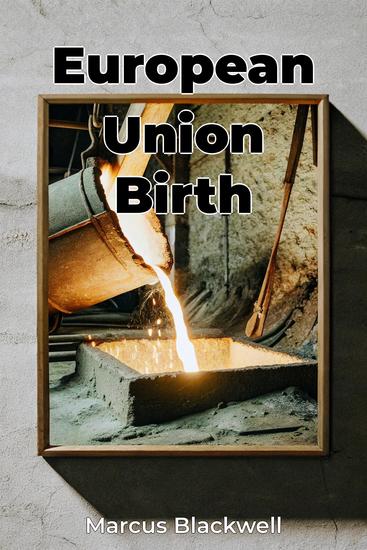
European Union Birth - cover

European Union Birth

Marcus Blackwell

Translator A AI

Publisher: Publifye

  • 0
  • 0
  • 0

Summary

European Union Birth meticulously chronicles the EU's complex origins, from post-World War II aspirations to the Maastricht Treaty. It reveals how political ambition, economic necessity, and historical context intertwined to shape this unique experiment in international cooperation. The book emphasizes that the EU's formation wasn't a straightforward path but a series of pragmatic responses to specific challenges. For example, the establishment of the European Coal and Steel Community (ECSC) aimed to prevent future wars by integrating vital industries, laying the groundwork for broader economic cooperation. The book explores key events and milestones, like the Treaties of Rome, while also addressing periods of crisis that tested the balance between national sovereignty and supranational governance. It underscores that the EU's evolution was shaped by competing interests and shifting international dynamics. Unfolding chronologically, each chapter analyzes major treaties and their impact, culminating in an analysis of the Maastricht Treaty and its implications. This approach provides readers with a comprehensive understanding of the EU's formation and its relevance to today's global challenges.
Available since: 02/15/2025.
Print length: 63 pages.

Other books that might interest you

  • 20 Myths about Religion and Politics in America - cover

    20 Myths about Religion and...

    Ryan P. Burge

    • 0
    • 0
    • 0
    The way most people think about religion and politics is only loosely linked to empirical reality, argues Ryan P. Burge in 20 Myths about Religion and Politics in America. Instead, our thinking is based on anecdotes, a quick scan of news headlines, or worse, flat-out lies told by voices trying to push a religious or political agenda on a distracted public. 


    Burge sees this fundamentally flawed understanding of the world around us and our misperceptions about where we fit into the larger fabric of society as caustic for the future of American politics and religion. Without an accurate picture of our society, when we subscribe to only caricatures of what our country looks like, we never really address the problems facing us. 


    Striving to be an impartial referee, Burge describes with accessible and engaging prose what the data says. Step by step, he debunks twenty myths, using rigorous data analysis and straightforward explanations. He gives listeners the resources to adopt an empirical view of the world that can help all of us, religious and nonreligious alike, get past at least some of the unsupported beliefs that divide us.
    Show book
  • Presidents - Richard Nixon Ronald Reagan and John F Kennedy - cover

    Presidents - Richard Nixon...

    Kelly Mass

    • 0
    • 0
    • 0
    This book contains information about the following US presidents: 
    1 - Richard Milhous Nixon was the United States' 37th president, serving from 1969 to 1974. Nixon, a Republican politician, formerly worked as the 36th Vice President from 1953 to 1961, after rising to country prominence as a California agent and senator. Following the Watergate occurrence, he ended up being the only president to leave from office after 5 years in the White Home that observed the end of the Vietnam War, détente with the Soviet Union and China, the first manned moon landings, and the starting of the Epa. 
    2 - Ronald Wilson Reagan was the 40th President of the U.S.A. of America, serving from 1981 to 1989. He was the Republican politician Party's 33rd ruler of California from 1967 to 1975, following a profession as a Hollywood star and labor organizer. Reagan was born in Tampico, Illinois, to a low-income family. In the year 1932, he finished from Eureka College and went to work in Iowa as a radio sports analyst. Reagan transferred to Californian the year 1937 to chase after a profession as a star. He appeared in certain noteworthy productions. 
    3 - JFK, or John Fitzgerald Kennedy, was an American political leader who functioned as the 35th President of the US from 1961 till his assassination to the conclusion of his 3rd year in office. Kennedy was president throughout the height of the Cold War, and the majority of his time in office was spent handling the Soviet Union and Cuba. Prior to his presidency, Kennedy acted as a Democrat in both homes of Congress, representing Massachusetts.
    Show book
  • The Dunning-Kruger Effect - Why Incompetent Individuals Overestimate Their Abilities - cover

    The Dunning-Kruger Effect - Why...

    William Rands

    • 0
    • 0
    • 0
    The Dunning-Kruger effect is a cognitive bias that leads individuals with limited knowledge or ability in a particular area to overestimate their competence. Named after psychologists David Dunning and Justin Kruger, who first identified this phenomenon in 1999, the effect reveals a paradox in human cognition: the less people know, the more likely they are to believe they know everything. Conversely, experts in a field tend to underestimate their abilities, assuming that others possess the same level of expertise. This bias is not only fascinating from a psychological standpoint but also carries significant implications for personal, professional, and societal development. 
    At the core of the Dunning-Kruger effect is the misjudgment of one’s capabilities, which stems from a lack of metacognitive awareness—the ability to assess one’s own knowledge and skills accurately. Incompetent individuals, lacking the expertise required to recognize their deficiencies, are unable to discern how little they know. This lack of insight leads them to overestimate their abilities and make decisions based on flawed reasoning. As a result, they may unknowingly engage in behaviors that exacerbate their incompetence, further reinforcing their false sense of expertise. 
    One of the most compelling aspects of the Dunning-Kruger effect is its broad applicability across various fields. From everyday social interactions to high-stakes decision-making in professional environments, this cognitive bias affects people at all levels. In the workplace, for example, leaders with limited knowledge in a specific domain may make decisions that negatively impact their teams, while employees with expertise may remain silent or defer to those who appear more confident. In education, students and teachers alike may fall victim to this effect, with the former believing they fully understand a topic despite limited comprehension, and the latter overestimating their teaching efficacy.
    Show book
  • World’s Most Famous Megaliths The: The History of Göbekli Tepe Stonehenge and the Megalithic Temples of Malta - cover

    World’s Most Famous Megaliths...

    Editors Charles River

    • 0
    • 0
    • 0
    Despite the fact some Neolithic communities grew to considerable sizes, they’re typically not considered when people think of the first ancient civilizations or the first major cities, so when German archaeologists discovered the archaeological site of Göbekli Tepe in southeastern Turkey in the 1990s, it created an academic firestorm that is still raging. Far from being just another settlement, Göbekli Tepe has been described as the world’s first temple and perhaps one of the locations where human civilization began. Subsequent archaeological work at Göbekli Tepe has revealed that the site was a spiritual center for the local population during a time when humans were undergoing a transition as hunter-gatherers in the Paleolithic Period to a more sedentary lifestyle in the Neolithic Period, more than 10,000 years ago.  
    	Naturally, when European archaeologists began unearthing the megaliths of Malta in the 19th century, they did not know what to think, which led to a plethora of theories, many of them quite fantastic. At least 23 of these temples were uncovered, but because the people who built them lacked the knowledge of writing, speculation over who built them and why remained well into the 20th century (Rountree 2003, 26). Some people theorized that the Malta megaliths were built by a race of giants, while others believed that it was the center of a “Mother Earth” cult that later spread through Neolithic Europe.  
    	On the Salisbury Plain, only a few hours from the hustle and bustle of Central London, remains one of the greatest surviving relics of humanity's ancient past: the mighty stone circle of Stonehenge. Stonehenge is one of the most well-known ancient sites in the world, and an image of it raises numerous associations and emotional responses. Its impressiveness comes not only from its size and remarkable level of preservation, but more so because of incredible precision during an era of simple technology.
    Show book
  • Secret Society Secrets - cover

    Secret Society Secrets

    Raphael Terra

    • 0
    • 0
    • 0
    This audiobook has been recorded using Text to speech (TTS). 
     
    Secret societies have their origin in religions, mysteries, folklore, myths and legends. They very often created them and in each of these tales can be found the ultimate truths of the secret societies of the world. 
     
    Tales of the children of Jesus, the Holy Grail, hidden chambers in ancient structures and profound inner wisdom are all part and parcel of the fascinating world of secret societies. It is a world of the occult. It is hidden right before our very eyes and all we need is new sight. 
     
    In this film we will reveal the very heart of the ancient secret orders and their beliefs. We will show exactly what it is they are hiding and how these secrets have been hidden right before our eyes. These secrets are highly esoteric and mystical and we will need to alter our perspective inorder to see the truth. This is the quantum world of the mind itself and the revelation of sacred and secret truths of the universe itself. Suddenly mysteries will reveal their secrets. From the Holy Grail to the Ark of the Covenant, from Sufi mysticism to enlightenment itself, the occult nature of these profound and enigmatic tales will be revealed. 
     
    The inner teachings and secrets of these hidden groups is one of profound wisdom. This is why it has been so powerful. It is time to walk the path of the initiate and discover the ultimate sacred hidden truths for ourselves.
    Show book
  • Montesquieu & the Despotic Ideas of Europe - An Interpretation of The Spirit of the Laws - cover

    Montesquieu & the Despotic Ideas...

    Vickie B. Sullivan

    • 0
    • 0
    • 0
    Montesquieu is rightly famous as a tireless critic of despotism, which he associates in his writings overtly with Asia and the Middle East and not with the apparently more moderate Western models of governance found throughout Europe. However, a careful reading of Montesquieu reveals that he recognizes a susceptibility to despotic practices in the West—and that the threat emanates not from the East, but from certain despotic ideas that inform such Western institutions as the French monarchy and the Roman Catholic Church.             Nowhere is Montesquieu’s critique of the despotic ideas of Europe more powerful than in his enormously influential The Spirit of the Laws, and Vickie B. Sullivan guides readers through Montesquieu’s sometimes veiled, yet sharply critical accounts of Machiavelli, Hobbes, Aristotle, and Plato, as well as various Christian thinkers. He finds deleterious consequences, for example, in brutal Machiavellianism, in Hobbes’s justifications for the rule of one, in Plato’s reasoning that denied slaves the right of natural defense, and in the Christian teachings that equated heresy with treason and informed the Inquisition. In this new reading of Montesquieu’s masterwork, Sullivan corrects the misconception that it offers simple, objective observations, showing it instead to be a powerful critique of European politics that would become remarkably and regrettably prescient after Montesquieu’s death when despotism wound its way through Europe.  
    Show book