

¡Acompáñanos a viajar por el mundo de los libros!
Añadir este libro a la estantería
Grey
Escribe un nuevo comentario Default profile 50px
Grey
Suscríbete para leer el libro completo o lee las primeras páginas gratis.
All characters reduced
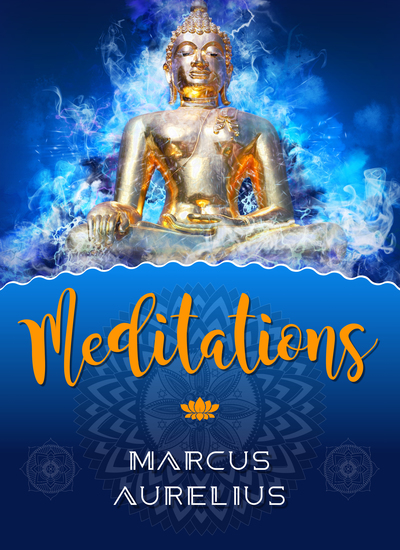
Meditations - cover

Meditations

Marcus Aurelius

Editorial: E-Kitap Projesi & Cheapest Books

  • 0
  • 0
  • 0

Sinopsis

Such is the system which underlies the Meditations of Marcus Aurelius. Some knowledge of it is necessary to the right understanding of the book, but for us the chief interest lies elsewhere. We do not come to Marcus Aurelius for a treatise on Stoicism. He is no head of a school to lay down a body of doctrine for students; he does not even contemplate that others should read what he writes.

His philosophy is not an eager intellectual inquiry, but more what we should call religious feeling. The uncompromising stiffness of Zeno or Chrysippus is softened and transformed by passing through a nature reverent and tolerant, gentle and free from guile; the grim resignation which made life possible to the Stoic sage becomes in him almost a mood of aspiration. His book records the innermost thoughts of his heart, set down to ease it, with such moral maxims and reflections as may help him to bear the burden of duty and the countless annoyances of a busy life.
It is instructive to compare the Meditations with another famous book, the Imitation of Christ. There is the same ideal of self-control in both. It should be a man's task, says the Imitation, 'to overcome himself, and every day to be stronger than himself.' 'In withstanding of the passions standeth very peace of heart.' 'Let us set the axe to the root, that we being purged of our passions may have a peaceable mind.' To this end there must be continual self-examination. 'If thou may not continually gather thyself together, namely sometimes do it, at least once a day, the morning or the evening. In the morning purpose, in the evening discuss the manner, what thou hast been this day, in word, work, and thought.' But while the Roman's temper is a modest self-reliance, the Christian aims at a more passive mood, humbleness and meekness, and reliance on the presence and personal friendship of God. The Roman scrutinises his faults with severity, but without the self-contempt which makes the Christian 'vile in his own sight.'

The Christian, like the Roman, bids 'study to withdraw thine heart from the love of things visible'; but it is not the busy life of duty he has in mind so much as the contempt of all worldly things, and the 'cutting away of all lower delectations.' Both rate men's praise or blame at their real worthlessness; 'Let not thy peace,' says the Christian, 'be in the mouths of men.' But it is to God's censure the Christian appeals, the Roman to his own soul. The petty annoyances of injustice or unkindness are looked on by each with the same magnanimity. 'Why doth a little thing said or done against thee make thee sorry? It is no new thing; it is not the first, nor shall it be the last, if thou live long. At best suffer patiently, if thou canst not suffer joyously.' The Christian should sorrow more for other men's malice than for our own wrongs; but the Roman is inclined to wash his hands of the offender. 'Study to be patient in suffering and bearing other men's defaults and all manner infirmities,' says the Christian; but the Roman would never have thought to add, 'If all men were perfect, what had we then to suffer of other men for God?' The virtue of suffering in itself is an idea which does not meet us in the Meditations. Both alike realise that man is one of a great community. 'No man is sufficient to himself,' says the Christian; 'we must bear together, help together, comfort together.' But while he sees a chief importance in zeal, in exalted emotion that is, and avoidance of lukewarmness, the Roman thought mainly of the duty to be done as well as might be, and less of the feeling which should go with the doing of it. To the saint as to the emperor, the world is a poor thing at best. 'Verily it is a misery to live upon the earth,' says the Christian; few and evil are the days of man's life, which passeth away suddenly as a shadow.
Disponible desde: 07/12/2024.
Longitud de impresión: 300 páginas.

Otros libros que te pueden interesar

  • Learn Chinese Idioms with Stories: Volume 3 - An Easy Guide with Meaning & Story - cover

    Learn Chinese Idioms with...

    Letitia Wu

    • 0
    • 0
    • 0
    Ready to learn more Chinese, one story at a time? 
    Learn Chinese Idioms with Stories (Volume 3) brings you 10 vivid idioms, each explained with simple language, memorable stories, and easy-to-understand insights. 
    Even if you don’t speak Chinese, you’ll enjoy these timeless stories — and gain a deeper understanding of Chinese thinking. 
    Inside, you’ll find: 
    - Engaging short stories for each idiom 
    - Clear, beginner-friendly explanations 
    - Cultural wisdom and life lessons 
    - Simple memory tips to help you remember 
    - A few example sentences — perfect for learners ready to go further 
    Whether you’re learning Chinese or simply curious about Chinese culture, this audiobook helps you: 
    ✔ Understand how Chinese people think 
    ✔ Learn real expressions in a natural way 
    ✔ Enjoy meaningful stories, anytime 
    No textbook needed. Just press play. 
    More stories. More wisdom. More Chinese you’ll never forget.
    Ver libro
  • NGR What Does It Mean? - cover

    NGR What Does It Mean?

    P. E. McCallum

    • 0
    • 0
    • 0
    NGR, What Does It Mean?: An Expose' on the N-word from a Hip Hop Perspective is an in-depth look into the origins and etymology of the n-word. P. E. McCallum, b.k.a. Pow Shadowz, addresses the n-word and the controversy surrounding it from an MC of Hip Hop's point of view. This expose' is a radical journey through history. It delves into the psyche of American culture and deals with issues surrounding the struggles of race relations. Because the n-word is considered the most offensive word in the English language, this book is timely. After reading it, you will be well informed on the n-word and you will be able to make an educated decision on whether or not you want to use it!
    Ver libro
  • HYPNOSIS FOR ANXIETY - Harnessing the Power of Hypnotherapy to Alleviate Anxiety and Promote Mental Well-being (2023) - cover

    HYPNOSIS FOR ANXIETY -...

    TRISTAN KELLEY

    • 0
    • 0
    • 0
    "Hypnosis for Anxiety: Harnessing the Power of Hypnotherapy to Alleviate Anxiety and Promote Mental Well-being" is your essential guide to understanding and utilizing the therapeutic potential of hypnosis in managing and reducing anxiety. This book offers practical insights and effective techniques to help you harness the power of your subconscious mind to alleviate anxiety and cultivate a sense of inner peace and emotional balance. 
    Inside this transformative guide, you'll uncover:Introduction to Hypnotherapy: Insights into the principles and methodologies of hypnotherapy and its role in addressing anxiety-related concerns.Anxiety Reduction Techniques: Practical hypnosis techniques for reducing anxiety levels and promoting a sense of calm and relaxation.Cognitive Restructuring through Hypnosis: Techniques for restructuring cognitive patterns and thought processes to promote a more positive and resilient mindset.Stress Management and Coping Strategies: Strategies for managing stress and developing effective coping mechanisms to navigate anxiety-inducing situations.Building Emotional Resilience: Tools and exercises for building emotional resilience and fostering a sense of inner strength and stability.Positive Affirmations and Visualizations: Incorporating positive affirmations and guided visualizations to reframe negative thought patterns and foster a more optimistic outlook.Self-Hypnosis Techniques: Step-by-step guidance on implementing self-hypnosis practices for managing anxiety and promoting emotional well-being. 
    Embrace the restorative potential of hypnotherapy and embark on a journey to lasting emotional wellness and tranquility. 
     
    Ver libro
  • Digital Stockholm Syndrome in the Post-Ontological Age - cover

    Digital Stockholm Syndrome in...

    Mark Jarzombek

    • 0
    • 0
    • 0
    Once, humans were what they believed. Now, the modern person is determined by data exhaust—an invisible anthropocentric ether of ones and zeros that is a product of our digitally monitored age. Author Mark Jarzombek argues that the world has become redesigned to fuse the algorithmic with the ontological, and the discussion of ontology must be updated to rethink the question of Being. In Digital Stockholm Syndrome in the Post-Ontological Age, Jarzombek provocatively studies the new interrelationship between human and algorithm. 
    Forerunners is a thought-in-process series of breakthrough digital works. Written between fresh ideas and finished books, Forerunners draws on scholarly work initiated in notable blogs, social media, conference plenaries, journal articles, and the synergy of academic exchange. This is gray literature publishing: where intense thinking, change, and speculation take place in scholarship.
    Ver libro
  • Extended Summary - Part Of Your World - Based On The Book By Abby Jimenez - cover

    Extended Summary - Part Of Your...

    Quick Reading Library

    • 0
    • 0
    • 0
    EXTENDED SUMMARY 
      
    PART OF YOUR WORLD 
    BASED ON THE BOOK BY ABBY JIMENEZ 
      
    SUMMARY WRITTEN BY: QUICK READING LIBRARY 
      
    CONTENT 
    Alexis Montgomery's World 
    Daniel Grant's Life 
    A Magical Town 
    Growing Closer 
    The Conflict of Worlds 
    Love Against the Odds 
    The Town's Magic 
    A Moment of Clarity 
    A New Beginning 
    General Analysis 
      
    ABOUT THE ORIGINAL BOOK 
    Part of Your World by Abby Jimenez follows Alexis Montgomery, a successful doctor from a prestigious family, who is feeling trapped by expectations and seeking a change. While driving through a small town, her car breaks down, and she meets Daniel Grant, a 28-year-old carpenter with a warm heart and a contrasting lifestyle. As they form a connection, their differing worlds and the pressures of family, class, and personal aspirations create tension. The novel explores themes of love, self-discovery, societal expectations, and finding the courage to live authentically, making it a heartfelt and transformative romance.
    Ver libro
  • The Unbiased Self - The Psychology of Overcoming Cognitive Bias - cover

    The Unbiased Self - The...

    Erin Devers

    • 0
    • 0
    • 0
    A Christian Perspective on Overcoming Cognitive Bias 


    So much human behavior can be explained by two motives: we want to be right, and we want to feel good about ourselves. But the tension between these two motives makes us especially vulnerable to bias—and bias distorts our view of the world and of ourselves and can keep us from doing even what we know is right. 


    In The Unbiased Self, social psychologist Erin Devers lays out what psychology has discovered about bias and selfishness. To truly overcome cognitive bias, we need a vision of what an unbiased self could look like, stemming from a solid sense of identity—an identity available in Christian faith. Devers explains how a Christian concept of the self can provide the combination of humility with self-confidence that enables unbiased thinking. Using current research and illuminating stories, this book describes how "fast" and "slow" thinking work together in everyday life; 
    diagnoses when we're most vulnerable to distorted thinking; 
    considers how regarding every person as a child of God counteracts implicit bias; reveals psychological insights into spiritual formation; and recommends practices for slowing our thinking to seek God's wisdom about our ourselves and others.
    Ver libro
