Begleiten Sie uns auf eine literarische Weltreise!
Buch zum Bücherregal hinzufügen
Grey
Einen neuen Kommentar schreiben Default profile 50px
Grey
Jetzt das ganze Buch im Abo oder die ersten Seiten gratis lesen!
All characters reduced
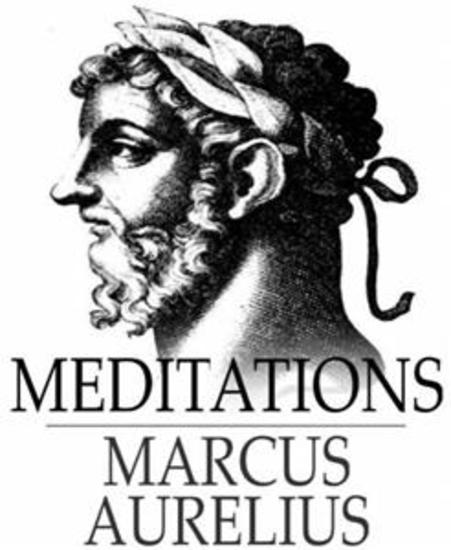
Meditations - cover

Meditations

Marcus Aurelius

Verlag: BookRix

  • 0
  • 0
  • 0

Beschreibung

Meditations is a series of writings by Marcus Aurelius, Roman Emperor 161–180 CE, setting forth his ideas on Stoic philosophy. A central theme to "Meditations" is to analyze your judgement of self and others and developing a cosmic perspective. As he said "You have the power to strip away many superfluous troubles located wholly in your judgement, and to possess a large room for yourself embracing in thought the whole cosmos, to consider everlasting time, to think of the rapid change in the parts of each thing, of how short it is from birth until dissolution, and how the void before birth and that after dissolution are equally infinite". He advocates finding one's place in the universe and sees that everything came from nature, and so everything shall return to it in due time. It seems at some points in his work that we are all part of a greater construct thus taking a collectivist approach rather than having an individualist perspective. Another strong theme is of maintaining focus and to be without distraction all the while maintaining strong ethical principles such as "Being a good man". His Stoic ideas often involve avoiding indulgence in sensory affections, a skill which will free a man from the pains and pleasures of the material world. He claims that the only way a man can be harmed by others is to allow his reaction to overpower him. An order or logos permeates existence. Rationality and clear-mindedness allow one to live in harmony with the logos.
Verfügbar seit: 19.12.2023.
Drucklänge: 252 Seiten.

Weitere Bücher, die Sie mögen werden

  • In Her Own Words - The Political Speeches of Kamala Harris - cover

    In Her Own Words - The Political...

    Davis Truman

    • 0
    • 0
    • 0
    This book delves into Kamala Harris's powerful and nuanced speeches and offers an in-depth analysis of her use of language. A meticulous examination reveals how Harris's choice of words and pronouns, such as "we" and "I," is deliberately crafted to connect with her audience, balance personal authority with collective identity, and foster a sense of unity and shared purpose. 
    Kamala Harris presents herself as relatable and empathetic, aligning her experiences and emotions with her audience. Highlighting the importance of careful attention to language, this book underscores how understanding and analyzing the use of pronouns and vocabulary in political speeches can enhance our appreciation of rhetorical strategies. It also serves as a guide to utilizing these techniques effectively and safeguarding ourselves from manipulation, providing valuable insights into the art of persuasion and the intricate craft of political communication.
    Zum Buch
  • The Slave Prince - a gay fairytale - cover

    The Slave Prince - a gay fairytale

    Jason Fronde

    • 0
    • 0
    • 0
    In a kingdom where duty reigns supreme, I, Prince James, have long hidden my true desires, yearning for a connection that feels impossible. Taken captive and made the king's slave, I never imagined I would find solace in the very man who commands my servitude. 
    As King Septimus, a ruler of strength and compassion, begins to care for me in ways I’ve never known, everything changes. When he bathes me with tenderness, I feel seen for the first time—not just as a captive or a servant, but as a man worthy of love. With each gentle touch, our bond deepens, awakening a longing within me that I can no longer ignore. 
    When his lips meet mine, I realize we have the chance to defy the expectations of our positions and embrace a love that could transform our lives. Will we dare to follow our hearts and forge a new path together, despite the chains of circumstance?
    Zum Buch
  • Liberation of Western Europe in World War II The: The History of the Western Allies’ Campaigns on the Continent - cover

    Liberation of Western Europe in...

    Editors Charles River

    • 0
    • 0
    • 0
    During World War II, the free world literally hung in the balance, with the Axis and Allies engaging in warfare on an unprecedented scale. Although Hitler’s Nazi Germany had overrun much of the European continent by 1940, the Allies began to reverse the momentum in 1942. By the end of 1943, with Allied forces firmly established in Italy and the Soviets on the verge of turning the tide in Russia, the British and Americans began to plot the invasion that would liberate Europe from the Nazis.  
    	During the first half of 1944, the Americans and British commenced a massive buildup of men and resources in the United Kingdom, while Allied Supreme Commander Dwight D. Eisenhower and military brass planned the details of an enormous and complex amphibious invasion of Europe. Though the Allies used misinformation to try deceiving the Germans, the most obvious place for an invasion was just across the narrow English Channel, and the Germans had built coastal fortifications throughout France to protect against just such an invasion. 
    The invasion across the Channel came in the early morning hours of June 6, 1944. That day, forever known as D-Day, the Allies commenced Operation Overlord by staging the largest and most complex amphibious invasion in human history. After the successful amphibious invasion on D-Day in June 1944, the Allies began racing east toward Germany and liberating France along the way. The Allies had landed along a 50 mile stretch of French coast, and despite suffering 8,000 casualties on D-Day, over 100,000 still began the march across the western portion of the continent.  
    After resisting the German attack, the Allied armies began advancing, and with that, the race to Berlin was truly on. While much has been written of the Battle of the Bulge, Okinawa, Midway, Stalingrad, and many other conflicts of the Second World War, the Battle for Berlin has remained in the shadows for many historians. 
    Zum Buch
  • Philippines Campaigns of World War II The: The History of the Japanese Invasion in 1941-1942 and the Allied Liberation in 1944-1945 - cover

    Philippines Campaigns of World...

    Editors Charles River

    • 0
    • 0
    • 0
    I came through and I shall return." - General Douglas MacArthur 
    Those who had decoded and seen the Japanese communications in early December 1941 would not be surprised when they heard about an attack on December 7, 1941. They would, however, be astonished when they heard where that attack took place. Posted on the other side of the world, it was early on the morning of December 8 in the Philippines when American general Douglas MacArthur received news of the Japanese attack on Pearl Harbor hours earlier. With that, it could only be a matter of time before the Japanese attacked the Philippines. 
    Although MacArthur and Allied forces tried to hold out, they could only fight a delaying action, and the Japanese managed to subdue all resistance by the spring of 1942. In the wake of the 1941-1942 campaign, Japan occupied the country and went on to expand their territory in the Pacific, while at the same time destroying the American presence in that region, but by the spring of 1943, American military planners had begun to create a plan to dislodge Japan from east and southeast Asia. To do so, parts of the Philippines were considered main strategic points in the potential Allied attack in the Pacific. The end goal of the Allied plan was an invasion of the Japanese home islands, in which heavy aerial bombardment would precede a ground assault. In order for this to occur, Allied forces would have to occupy areas surrounding Japan. 
    By the time the campaign started, Japan was on the defensive, but as they would prove in other places like Iwo Jima and Okinawa, Japanese soldiers would act fanatically before admitting defeat or surrendering. During this second major Philippines campaign, an estimated 330,000 Japanese died, and only a bit more than 10,000 were willing to be taken prisoner. 
    Zum Buch
  • Ur - The History of the City-State in Ancient Mesopotamia - cover

    Ur - The History of the...

    Kelly Mass

    • 0
    • 0
    • 0
    Ur was a considerable Sumerian city-state in old Mesopotamia, situated near modern-day "Tell el-Muqayyar" in the Dhi Qar Governorate in southern Iraq. Ur was formerly a seaside city on the Persian Gulf, near the mouth of the Euphrates, but the shoreline has modified, and the city is now well inland, on the south bank of the Euphrates, sixteen kilometers (about 9.9 miles) from Nasiriyah in modern-day Iraq. 
    The city stemmed from the Ubaid period around 3800 BC, and it initially appears in written history as a city-state in the 26th century BC, with Mesannepada as its first noted king. 
    In this guide, you will be able to satisfy your curiosity about this ancient location.
    Zum Buch
  • The Woman's Book of Joy - Listen to Your Heart Live with Gratitude and Find Your Bliss - cover

    The Woman's Book of Joy - Listen...

    Eileen Campbell

    • 0
    • 0
    • 0
    Experience Serenity and Hope Daily“The Woman’s Book of Joy is like a comforting friend supporting us in our struggles.” —Mandy Keast-Southall, therapist and yoga teacherWhen you learn to tap into the deep wellspring of joy that is within you, nothing is impossible.A book of joy. Women have a great many challenges to deal with in their lives. Among the most ubiquitous of those challenges is self-care. Too often, we are focused on caring for others and not ourselves. Low self-esteem, anxiety, and depression are all too common when our lives are less fulfilling than they could be. Yet deep within, women have a tremendous spiritual resource―a capacity for real joy that is not dependent on anything external. It is always available, regardless of circumstances.Find your inner spirituality. Many self-help books can lead people into further self-judgement. Instead, The Woman’s Book of Joy encourages and inspires women to care more deeply for themselves and to face life’s challenges with courage and joy. It’s a practical motivational book for accessing inner wisdom, enhancing self-esteem, overcoming sorrow, and deepening relationships.Thinking deeply. The meditations and affirmations in this book will provide you with the opportunity to contemplate a wide range of topics, including:Developing awarenessLetting goBelieving in your dreamsLiving in the nowFinding your true purposePracticing kindnessBeing optimisticTrusting the universeAppreciating life’s blessingsIf you found joy in meditation books and inspirational books for women like I've Been Thinking…, Journey to the Heart, and Each Day a New Beginning, you’ll be encouraged and uplifted by The Woman's Book of Joy.
    Zum Buch