¡Acompáñanos a viajar por el mundo de los libros!
Añadir este libro a la estantería
Grey
Escribe un nuevo comentario Default profile 50px
Grey
Suscríbete para leer el libro completo o lee las primeras páginas gratis.
All characters reduced
History Of A Resistance - The Italian Military Internees - cover

History Of A Resistance - The Italian Military Internees

Marcello De Caro

Editorial: CIESSE Edizioni

  • 0
  • 0
  • 0

Sinopsis

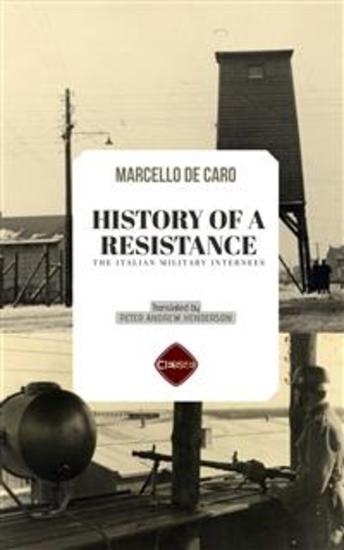
History of a Resistance is an important contribution to understanding the choice made by Italian soldiers after the armistice. In fact, during the Second World War, among the millions of soldiers taken prisoner by the Germans, only the Italians captured after 8th September 1943 were offered the chance to be freed in exchange for joining the Third Reich and the newly formed Italian Social Republic. This proposal was rejected by the vast majority, who preferred to face the harsh conditions of the German Lagers, even at the risk of their lives, so as not to contribute actively to the Nazi-Fascist war effort.
The tragic story of the IMIs (Internati Militari Italiani - Italian Military Internees) is in its own right a chapter, so far too little known, in the history of the Resistance.
Disponible desde: 03/08/2024.
Longitud de impresión: 188 páginas.
Otros libros que te pueden interesar

  • Woman Up - 'One of the most prolific writers about women's football in the UK' Evening Standard - cover

    Woman Up - 'One of the most...

    Carrie Dunn

    • 0
    • 0
    • 0
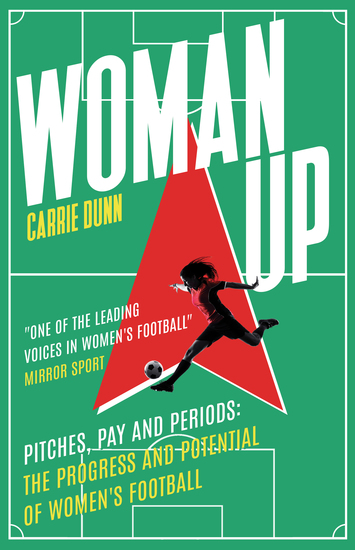
    With the triumph of England’s Lionesses at Euro 2022, the women’s game has been in the spotlight like never before, enjoying unprecedented media attention.
    Ver libro
  • The Revival - The Biggest Turning Points in History - cover

    The Revival - The Biggest...

    Kelly Mass

    • 0
    • 0
    • 0
    This 2 in 1 combo contains the following titles: 
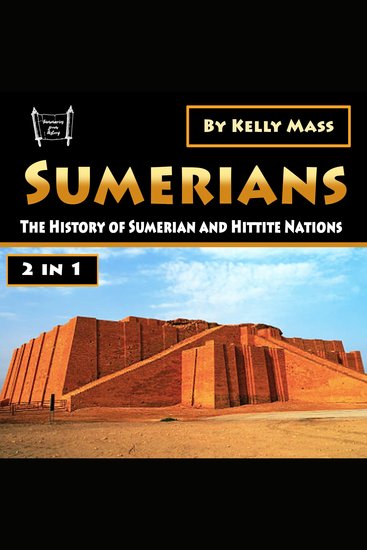
    1 - Age of Enlightenment: Finally…finally, humanity began to wake up. Finally, they decided to take science, knowledge, politics, development, multiple angles and perspectives, and the details of our everyday lives a bit more seriously. For centuries, raw and primal urges and principles had taken hold of conquerors, officials, and governments. But there was a light at the end of the tunnel. Humanity just needed to acknowledge knowledge. It needed to value the art of studying phenomena and learning, not just spiritual notions and religion. Welcome to the book about how this happened. Welcome to a glimmer of hope in humanity’s realization of what this world is and what lies in the elements yet to be discovered. 
    2 - Renaissance: When we think of the Renaissance, we often think of paintings. And indeed, many painters and sculptors were part of the artistic transformation the Renaissance caused. But there was more. The Renaissance basically formed a period of collective enlightenment and freedoms that put an end to certain tyrannies and false notions from the Middle Ages. 
    The Renaissance is a time in European history marking the shift from the Middle Ages to modernity and covering the 15th and 16th centuries, identified by an effort to restore and exceed ideas and accomplishments of classical antiquity. It happened after the crisis of the late Middle Ages and was related to great social change. Aside from the basic periodization, advocates of a "long Renaissance" might put its start in the 14th century and its end in the 17th century.
    Ver libro
  • The Cruel Sky - A Heavy Bomber Group in World War II - cover

    The Cruel Sky - A Heavy Bomber...

    Robert Thompson

    • 0
    • 0
    • 0
    The men who flew American heavy bombers over Europe in World War II were very young—most were either in their late teens or early twenties. There they faced a gauntlet of razor sharp antiaircraft artillery bursts and fighter aircraft firing cannons that shattered Plexiglas, metal, engines, and bone. It is no wonder that bomber crews suffered some of the highest casualty rates of any service during the war. Yet, their courage and sacrifice would help the Allies secure an overwhelming victory over Hitler's Germany. That bravery and the extreme dangers these young men faced in combat over Europe are vividly portrayed in The Cruel Sky. Using the 451st Bombardment Group (Heavy) of the Fifteenth Air Force as the focus for this compelling narrative, author Robert Thompson describes how the bomber group was established and trained, what is took to fly its aircraft—the Consolidated B-24 Liberator—the opposition they faced, and the harrowing stories of the missions for which the group received three Distinguished Unit Citations, one of only two units so honored during World War II. Relying on official reports and firsthand accounts of those who flew with the 451st, the book provides a fresh and personal perspective of the deadly air war over Europe that was critical in defeating the Nazis and liberating millions.
    Ver libro
  • Beauty and Imitation - A Philosophical Reflection on the Arts - cover

    Beauty and Imitation - A...

    Daniel McInerny

    • 0
    • 0
    • 0
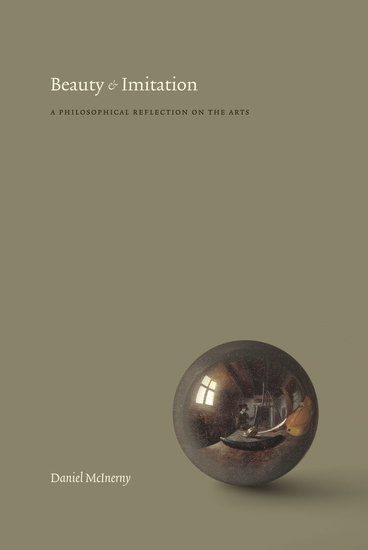
    The human person is a truth seeker, and one of the most compelling ways human beings pursue truth is through the arts. In Beauty and Imitation: A Philosophical Reflection on the Arts, Daniel McInerny argues for an understanding of art as a form of inquiry into truth that proceeds by way of sensible beauty.  Drawing upon the thought of Aristotle and St. Thomas Aquinas, McInerny argues for the unfashionable yet philosophically compelling view that art is essentially “mimetic,” imitative of human action. But what does it mean for art to imitate human action? It means that art imitates the way human beings by nature quest for fulfillment, or happiness. In questing for fulfillment, human life takes the form of a story, and so the arts—all the arts, from painting to music, from fiction to film—are storytelling arts whose beauty reveals the truth about human happiness.  The first part of the book features a renewed defense of the ancient Aristotelian claim that art is mimetic and that its imitation of the human story takes the form of a moral argument. The second part shows how audiences are transformed by the moral arguments the mimetic arts make, and the third concludes with a guided tour of the mimetic arts, where specific arts are considered in light of the Aristotelian and Thomistic principles advanced earlier.
    Ver libro
  • One Ukrainian Summer - A memoir about falling in love and coming of age in the former USSR - cover

    One Ukrainian Summer - A memoir...

    Viv Groskop

    • 0
    • 0
    • 0
    'A memoir that captivates and delights. Fabulous' —Nina Stibbe 


    Autumn 1993. The former USSR. Viv is about to turn twenty-one and is on a study year abroad, supposedly immersed in the language, history, and politics of a world that has just ceased to exist: the Soviet Union. 


    Instead, she finds herself immersed in Bogdan Bogdanovich—the lead guitarist of a Ukrainian punk rock band. As the temperature drops, he promises that if she can get through the freezing Russian winter, he will give her "one Ukrainian summer." But is he serious about her? Or is she just another groupie? 


    At parties, gigs, and dive bars, Viv and her new friends argue over whose turn it is to buy cigarettes, the best places to find Levi's jeans and whether beer counts as a soft drink. No one debates the merits of speaking Ukrainian over Russian, the precise location of the border, or the undeniable brightness of the future. Of course good times are here to stay. Because the Soviet Union is finished. Isn't it? 


    A poignant and often comical account of coming-of-age in the time after the Cold War and before Putin, One Ukrainian Summer is a love letter to a unique moment in history.
    Ver libro
  • Social Capital: Life online in the shadow of Ireland’s tech boom - cover

    Social Capital: Life online in...

    Aoife Barry

    • 0
    • 0
    • 0
    A David and Goliath story about Ireland’s role as prime real estate for the world’s largest tech multinationals, and the considerable impact it has had on us as individuals. 
    At the start of the millennium, the Tech giants landed on Ireland’s shores. Dublin, once one of Europe’s poorest cities, became a beacon of Silicon Valley’s promise of progress and power. As the face of the capital was remade in the image of Big Tech, Irish society embraced technology like no other. Romantic Ireland was dead and gone: social media was here to stay. 
    In this provocative account, Aoife Barry explores the human cost of Ireland’s Faustian pact with Big Tech, from the local communities uprooted by Google to the traumatised moderators squirrelled in the capital’s pockets, keeping the internet safe at a terrible price. Unsettling, insightful, and wryly funny, she paints a portrait of a country addicted to the internet, refreshing the news, refreshing Twitter, scrolling and scrolling towards a feverish future. She turns an equally honest eye on her own life online, from her humble beginnings using dial-up in her parent’s kitchen to working for Ireland’s first digital-only newsroom, and asks what we bargain in exchange for life in the metaverse. 
    Social Capital is the coming of age story of Ireland 3.0: set against the backdrop of the tech revolution, it chronicles how we collapse the boundary between physical and virtual reality, and where we might go from here. 
    Barry's new book, Social Capital, is a popular science exploration into the world of computers and information technology. It's a top pick for anyone interested in the intersection of culture, economics, and the latest developments in the tech industry. 
    For fans of Bill Gifford (Ledyard), Britney Spears (The woman in me), Dolly Alderton (Everything I Know About Love), Bono (Surrender), and Ian H. Robertson (How Confidence Works). 
    HarperCollins 2023
    Ver libro