Junte-se a nós em uma viagem ao mundo dos livros!
Adicionar este livro à prateleira
Grey
Deixe um novo comentário Default profile 50px
Grey
Assine para ler o livro completo ou leia as primeiras páginas de graça!
All characters reduced
The Boy on the Beach - Explicit Gay Erotic Short Stories for Men (Hot and Sexy) - cover
LER

The Boy on the Beach - Explicit Gay Erotic Short Stories for Men (Hot and Sexy)

Manuel García

Editora: Publishdrive

  • 0
  • 0
  • 0

Sinopse

They don’t talk much. They don’t need to.Real men—rough-edged, silent, unapologetically masculine—meet in the crackling heat of confrontation and the quiet pull of glances held a second too long. The Boy on the Beach is a collection of erotic short stories where desire rises from the grit of reality: bruised knuckles, soaked shirts, and the smell of salt or sweat in the air. This is not polished fantasy. This is raw, skin-to-skin virility.
 
In the title story, a golden boy walks the beach at dawn, hiding secrets behind ice-blue eyes and a body that turns heads without effort. When he spots a dark figure stumbling into the surf—jeans still clinging to his frame, drunk or desperate—he doesn’t think. He runs. And when he pulls him out, breathes life into him, the moment twists: from rescue to recognition, from mouth to mouth, skin to skin.
 
The boy—Walter—is fragile, shivering, silent. His long black hair clings to his face, his pride washed away with the tide. Daniele wraps an arm around his naked shoulders, pulls him close, not to seduce but to shelter. Jeans slide off easily. There's nothing underneath. The silence is heavier than any moan could be. Something electric hangs in the space between breath and restraint.
 
These stories don’t promise happy endings. They offer something more dangerous: truth. Flesh that bruises. Glances that expose. And men who burn for men, even when they don’t have the words for it.Open the book. Let it touch a nerve. And see what rises.
Disponível desde: 23/07/2025.
Comprimento de impressão: 70 páginas.

Outros livros que poderiam interessá-lo

  • Self Reliance - Adapted for the Contemporary Reader - cover

    Self Reliance - Adapted for the...

    James Harris, Ralph Waldo Emerson

    • 0
    • 0
    • 0
    SELF RELIANCE is an essay written in 1841 by Ralph Waldo Emerson. 
    ★ It contains the most thorough statement of one of Emerson's recurrent themes: the need for each individual to avoid conformity and false consistency, and follow his own instincts and ideas. 
    ★ This essay is an analysis into the nature of the aboriginal self on which a universal reliance may be grounded. 
    ★ Emerson emphasises the importance of individualism and its effect on an individual's satisfaction in life. He stresses that anyone is capable of achieving happiness, simply if they change their mindset. 
    ★ Emerson focuses on seemingly insignificant details explaining how life is "learning and forgetting and learning again". 
    ★ This book has been carefully adapted in to Modern English to allow for easy reading. ✓ 
    ENJOY ♥
    Ver livro
  • Megalithic Temples of Malta The: The History and Legacy of Europe’s Oldest Standing Structures - cover

    Megalithic Temples of Malta The:...

    Editors Charles River

    • 0
    • 0
    • 0
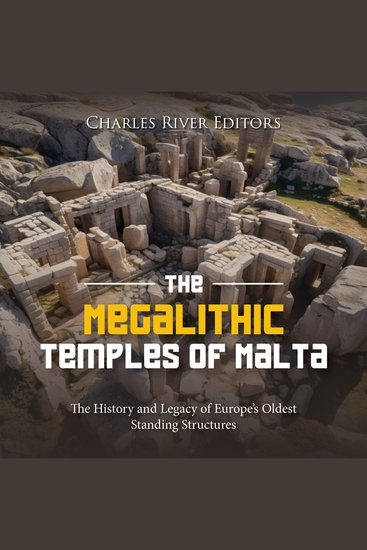
    Malta’s history goes back further than many know, which can be attested to by the numerous Neolithic and Bronze Age era megaliths that dot the island of Malta proper as well as the island of Gozo to the north. Naturally, when European archaeologists began unearthing the megaliths of Malta in the 19th century, they did not know what to think, which led to a plethora of theories, many of them quite fantastic. At least 23 of these temples were uncovered, but because the people who built them lacked the knowledge of writing, speculation over who built them and why remained well into the 20th century (Rountree 2003, 26). Some people theorized that the Malta megaliths were built by a race of giants, while others believed that it was the center of a “Mother Earth” cult that later spread through Neolithic Europe.  
    Early archaeologists were also perplexed about the physical origins of the Maltese megalith builders. Because Malta is such an isolated location, the builders had to have migrated there from elsewhere, but debates raged over the location. Equally confusing was when the megaliths were built. Although most legitimate historians believed from an early time that they were Neolithic structures, some argued that they were built much later and influenced by the Minoans and/or the Mycenaeans.  
    Even as some answers have arrived, scholars still debate the purpose of the megaliths. Although there is a near consensus that they served as religious temples, the deities that were worshiped as well as the rituals carried out in the structures remain a mystery and sources of further debate. As such, the ancient monuments remain enigmatic and serve as sources of pride for the modern Maltese people and awe-inspiring to all those who visit them.
    Ver livro
  • The Complete History of Ancient Egypt - cover

    The Complete History of Ancient...

    Omar Khalil

    • 0
    • 0
    • 0
    The story of Ancient Egypt begins along the fertile banks of the Nile River, where geography shaped the destiny of one of the world’s most iconic civilizations. The Nile provided more than just water—it was the lifeline that enabled agriculture, transportation, and trade, making permanent settlement possible in an otherwise arid desert. As early as 5000 BCE, small communities began to emerge, relying on the predictable flooding of the river to support grain cultivation. Over time, these settlements evolved into more complex societies, each developing distinct cultural and political practices. 
    The predynastic period saw the rise of two major regions: Upper Egypt in the south and Lower Egypt in the north. These regions were marked by different customs, burial practices, and artistic expressions, yet both shared a reverence for the Nile and its central role in life and death. Villages grew into city-states ruled by local chieftains, and as competition and alliances formed, a gradual move toward centralization began. Archaeological evidence, including pottery styles and tomb construction, shows increasing social stratification and technological innovation during this period. 
    The unification of Upper and Lower Egypt around 3100 BCE marks the beginning of pharaonic rule and the dynastic era. Traditionally attributed to a ruler named Narmer (also known as Menes), this event was not just a political milestone but also a cultural one. Narmer’s unification is immortalized on the Narmer Palette, a ceremonial artifact that symbolically represents the king’s authority over both lands. With unification came the birth of a centralized administration, standardized religious practices, and a single ruler who was seen not only as a political leader but also as a divine intermediary between the gods and the people.
    Ver livro
  • History of Marathas EP01 - Deccan before Shivaji - cover

    History of Marathas EP01 -...

    Vikrant Pande

    • 0
    • 0
    • 0
    The story of the Marathas starts with Shivaji for most of us. The action happened in what is called the Deccan and its geography and politics plays an important role. We must understand what the Deccan means, who ruled there and what was the condition of the Deccan part of India before, and when, Shivaji was born.
    Ver livro
  • Ethiopia: A Captivating Guide to Ethiopian History and the Second Italo-Abyssinian War - cover

    Ethiopia: A Captivating Guide to...

    Captivating History

    • 0
    • 0
    • 0
    Two manuscripts in one audiobook:History of Ethiopia: A Captivating Guide to Ethiopian HistoryThe Italian Invasion of Ethiopia: A Captivating Guide to Mussolini's War in Abyssinia 
    In the first part of this audiobook, you will discover:Ethiopia’s origin and the legendary Queen of ShebaThe Aksumite Empire and the adoption of ChristianityEthiopia’s Solomonic line—King Solomon to Haile SelassieThe brief intermission of the Zagwe dynastyEthiopian emperors and how they ruledEthiopia’s communist takeoverModern Ethiopia 
    In the second part of this audiobook, you will learn about:The geopolitical background before the invasionHow the invasion was planned and what it entailedThe international role played by the League of NationsThe major battles fought during the Second Italo-Ethiopian WarThe exile of Haile Selassie and how he continued to take a stand in exileThe Italian occupation of EthiopiaThe atrocities the Italians committedWhat happened to EthiopiaAnd much more! 
    Scroll up and click the “add to cart” button to learn more about Ethiopia!
    Ver livro
  • Jean-Paul Sartre - Existentialism and Human Freedom - cover

    Jean-Paul Sartre -...

    Hector Davidson

    • 0
    • 0
    • 0
    Jean-Paul Sartre, a towering figure in 20th-century philosophy, is perhaps best known for his development of existentialism, a school of thought that emphasizes individual freedom, choice, and the creation of meaning in an otherwise indifferent universe. Sartre’s philosophy arises from the existentialist tradition but distinguishes itself through its rigorous approach to human freedom and responsibility. At the heart of Sartre's thought is the idea that human beings are condemned to be free, burdened with the constant task of making choices without any external justification or predetermined essence. 
    Born in Paris in 1905, Sartre’s intellectual journey was shaped by early encounters with phenomenology and existential philosophy, especially through the works of Edmund Husserl and Martin Heidegger. However, it was his engagement with phenomenology, along with his studies in literature and politics, that laid the groundwork for his later ideas. Sartre’s major philosophical work, Being and Nothingness (1943), is considered one of the central texts of existentialist thought, where he explores the nature of existence, consciousness, and freedom in profound detail. 
    Sartre’s existentialism diverges from traditional metaphysical perspectives by rejecting the notion of an intrinsic human nature or essence. For Sartre, existence precedes essence, meaning that individuals are not born with any predefined purpose or identity; instead, they must create their essence through their actions and choices. This concept places the responsibility for defining oneself squarely on the individual, leading to Sartre’s famous assertion that "man is nothing else but what he makes of himself."
    Ver livro