¡Acompáñanos a viajar por el mundo de los libros!
Añadir este libro a la estantería
Grey
Escribe un nuevo comentario Default profile 50px
Grey
Suscríbete para leer el libro completo o lee las primeras páginas gratis.
All characters reduced
The Boy on the Beach - Explicit Gay Erotic Short Stories for Men (Hot and Sexy) - cover

The Boy on the Beach - Explicit Gay Erotic Short Stories for Men (Hot and Sexy)

Manuel García

Editorial: Publishdrive

  • 0
  • 0
  • 0

Sinopsis

They don’t talk much. They don’t need to.Real men—rough-edged, silent, unapologetically masculine—meet in the crackling heat of confrontation and the quiet pull of glances held a second too long. The Boy on the Beach is a collection of erotic short stories where desire rises from the grit of reality: bruised knuckles, soaked shirts, and the smell of salt or sweat in the air. This is not polished fantasy. This is raw, skin-to-skin virility.
 
In the title story, a golden boy walks the beach at dawn, hiding secrets behind ice-blue eyes and a body that turns heads without effort. When he spots a dark figure stumbling into the surf—jeans still clinging to his frame, drunk or desperate—he doesn’t think. He runs. And when he pulls him out, breathes life into him, the moment twists: from rescue to recognition, from mouth to mouth, skin to skin.
 
The boy—Walter—is fragile, shivering, silent. His long black hair clings to his face, his pride washed away with the tide. Daniele wraps an arm around his naked shoulders, pulls him close, not to seduce but to shelter. Jeans slide off easily. There's nothing underneath. The silence is heavier than any moan could be. Something electric hangs in the space between breath and restraint.
 
These stories don’t promise happy endings. They offer something more dangerous: truth. Flesh that bruises. Glances that expose. And men who burn for men, even when they don’t have the words for it.Open the book. Let it touch a nerve. And see what rises.
Disponible desde: 23/07/2025.
Longitud de impresión: 70 páginas.

Otros libros que te pueden interesar

  • Learn Japanese in your car - Learn to speak practical Japanese without any books - cover

    Learn Japanese in your car -...

    Bobby Allen, Hiroko Isa

    • 0
    • 0
    • 0
    This audio language learning book is made for learning Japanese in your car while driving.You can also use this audio language learning book while you exercise and you can listen to it while you sleep.This audio book is designed for learning speaking Japanese without making any notes and using any books.
    Ver libro
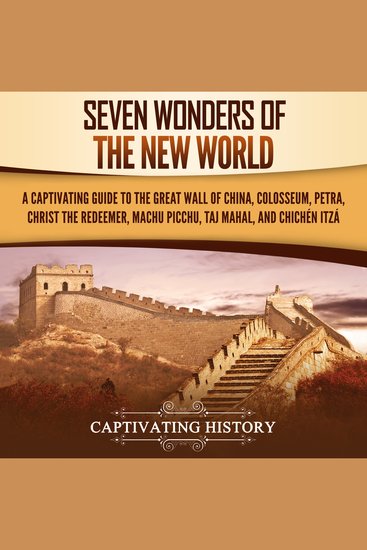
  • Seven Wonders of the New World: A Captivating Guide to the Great Wall of China Colosseum Petra Christ the Redeemer Machu Picchu Taj Mahal and Chichén Itzá - cover

    Seven Wonders of the New World:...

    Captivating History

    • 0
    • 0
    • 0
    Did you know that Shah Jahan once planned to build another Taj Mahal in his empire? 
    The Taj Mahal is renowned for its exceptional architecture that infuses elements from various influences around the world, including the magnificence of Mughal, Persian, and Islamic architectural styles. 
    Shah Jahan, the reigning emperor of the Mughal Empire, had been plagued with sadness following the death of his beloved wife, Mumtaz Mahal. And so, as a parting gift to her, the mourning emperor commissioned the construction of a grand mausoleum made of white marble. 
    Upon completion, the Taj Mahal stood on the banks of the Yamuna River, impressing those who gazed at its marvelous façade glimmering under the bright sun. A reflective pool enhanced its perfections, but it was the mausoleum’s symmetrical design that captivated many. The symmetry could be seen in each corner of the complex except for Mumtaz Mahal’s extravagant tomb chamber—the symmetrical design was broken when Shah Jahan’s cenotaph was added years later. 
    Some said it was intentional, while others claimed Shah Jahan never intended to be buried beside his wife. Legend has it that the emperor was planning to build another mausoleum for himself that mirrored the Taj Mahal; it was to be placed across from the Taj Mahal and made of black marble. However, whether this is true remains a debate. Ancient sources contradict each other, which can be confusing for curious readers. 
    But that is about to change. With this all-new history audiobook, you can easily explore the gripping events that led to the construction of the Seven Wonders of the New World. 
    Scroll up and click the “add to cart” button to learn more about the Seven Wonders of the New World!
    Ver libro
  • The Influence of Ancient Egypt on Modern Culture - cover

    The Influence of Ancient Egypt...

    Omar Khalil

    • 0
    • 0
    • 0
    The fascination with Ancient Egypt’s visual and structural aesthetics has significantly influenced Western art and architecture, especially during the 18th and 19th centuries. Known as the Egyptian Revival, this movement emerged as part of a broader romantic and neoclassical interest in ancient civilizations. Following Napoleon's campaign in Egypt and the publication of Description de l'Égypte, Europe became enamored with Egyptian motifs, leading to their incorporation into a wide range of architectural projects. 
    One of the most recognizable contributions of Egyptian Revival architecture is the use of obelisks and pyramid forms in public spaces and memorials. These iconic shapes, once central to Egyptian religious and ceremonial design, were reinterpreted in cemeteries, government buildings, and monuments across Europe and the United States. The Washington Monument in the U.S., for instance, is a clear example of how Egyptian form was adapted to convey power and permanence. 
    In interior design and decorative arts, Egyptian Revival made a mark through bold geometric patterns, lotus flower motifs, and symbolic elements like the sun disk and winged scarab. Furniture, wallpaper, jewelry, and textiles adopted these styles, evoking the mystery and majesty of the Nile. This decorative trend became especially popular after the discovery of King Tutankhamun’s tomb in 1922, which triggered a new wave of Egyptomania in the early 20th century.
    Ver libro
  • History of Marathas EP04 - Valourous acts at Panhala and Godkhind - cover

    History of Marathas EP04 -...

    Vikrant Pande

    • 0
    • 0
    • 0
    Shiva the barber was unperturbed. 'There is no point in showing your anger. Raje is gone. Flown away! I got a chance to wear his clothes and pretend to be him for an hour. What else do I need. This is my reward.'
    'Haramzaade!' Siddi shouted again and plunged his sword into Shiva's chest. Shiva's face contorted with pain and he stumbled back. He steadied himself for a bit, holding a pillar inside the tent. He could not afford to show his back to the enemy. Even when he was acting like Shivaji he had to be one!
    He said, raising his hand to his forehead as he said, 'Raje, ha maaza shevat cha muzra.' It was his last salute to Raje. Shiva collapsed the next moment, dead.
    
    When Shivaji has men like him, how could he not live up to their expectations
    Ver libro
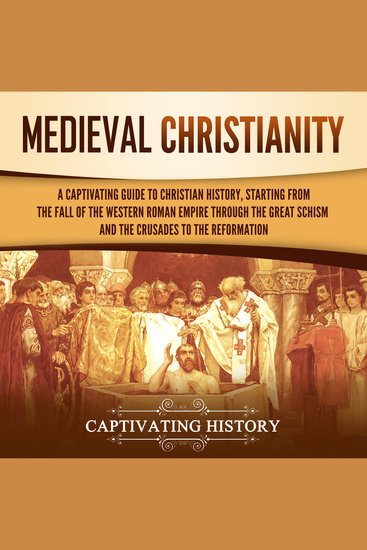
  • Medieval Christianity: A Captivating Guide to Christian History Starting from the Fall of the Western Roman Empire through the Great Schism and the Crusades to the Reformation - cover

    Medieval Christianity: A...

    Captivating History

    • 0
    • 0
    • 0
    Embark on a Timeless Journey: Unveil the saga of Christianity from its origins to the Counter-Reformation 
    Are you intrigued by the monumental path Christianity carved through history? This masterful narrative weaves through 1,600 years of history, from Christianity’s origins in the 1st century AD to the transformative Counter-Reformation in 1700. 
    Discover the Epochs That Shaped the WorldWitness Rome’s metamorphosis with the rise of Christianity.Delve into the Great Schism’s profound impact.Relive the fervor of the Crusades and the mystique of the Knights Templar.Understand the Reconquista’s enduring legacy.Unravel the complex interplay of Christianity and Islam.Probe the Reformation and the Catholic Church’s corruption.Meet the influential popes who steered Christian history. 
    A Chronicle of Power, Faith, and War 
    This audiobook is not just a historical account; it’s a revelation of how Christianity influenced politics, ignited wars, and spread its ethos globally. It’s a tale of transformation, conflict, and resilience. 
    Your Portal to a Bygone Era 
    Whether you’re a history aficionado, a seeker of religious insights, or simply a curious mind, this audiobook is your gateway to understanding the pivotal role of Christianity in shaping our world. 
    Don’t miss this chance to immerse yourself in the epic saga of medieval Christianity. Scroll up, click the “add to cart” button, and prepare to be transported through time!
    Ver libro
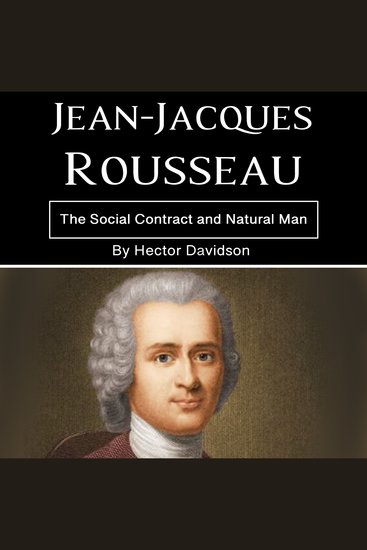
  • Jean-Jacques Rousseau - The Social Contract and Natural Man - cover

    Jean-Jacques Rousseau - The...

    Hector Davidson

    • 0
    • 0
    • 0
    Jean-Jacques Rousseau, one of the most influential philosophers of the 18th century, reshaped the landscape of political and social theory. His ideas, particularly those outlined in The Social Contract and Discourse on the Origin and Basis of Inequality Among Men, have had a profound impact on modern thought, influencing the French Revolution, the development of democratic ideals, and the evolution of social theory. Rousseau's philosophy is a reflection of his deep concern with the relationship between individuals and society, the nature of human freedom, and the consequences of civilization. 
    At the heart of Rousseau’s thought is his concept of the "state of nature," a condition in which humans existed before the corrupting influence of society. In this natural state, Rousseau argued, humans were free, equal, and solitary. Their basic needs were limited, and they acted primarily on instinct, guided by compassion and self-preservation. However, with the rise of private property, inequality began to emerge, leading to the social contract—a mechanism through which individuals could unite to form a collective body politic, agreeing to follow the “general will” for the common good. This social contract was Rousseau's answer to the problem of how to create a just society that respects both individual liberty and collective harmony. 
    Rousseau rejected the view that human beings are inherently selfish, as suggested by other philosophers like Hobbes. Instead, he believed that while civilization introduced inequality and competition, it also created the potential for true human freedom, which could only be realized in a political community that was based on the collective will of its people. Rousseau’s idea of the general will is central to his political theory. The general will is not simply the sum of individual desires but represents the collective interests that transcend personal ambitions, aiming for the common good.
    Ver libro