Join us on a literary world trip!
Add this book to bookshelf
Grey
Write a new comment Default profile 50px
Grey
Subscribe to read the full book or read the first pages for free!
All characters reduced
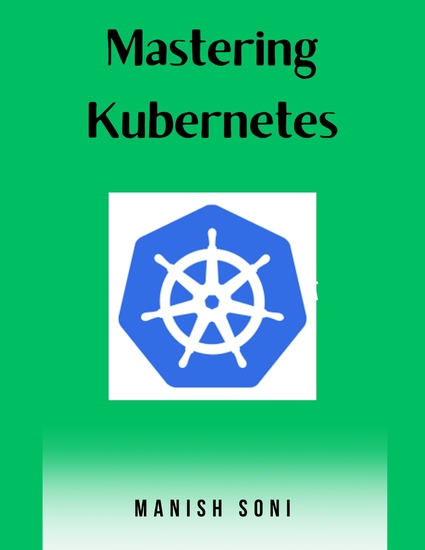
Mastering Kubernetes - cover

Mastering Kubernetes

Manish Soni

Publisher: Poorav Publications

  • 0
  • 0
  • 0

Summary

Mastering Kubernetes has emerged as a cornerstone of modern software development and infrastructure management in recent years. Whether you are a developer looking to streamline your workflows, a DevOps professional aiming to enhance your deployment pipelines, or a systems administrator seeking better scalability and resilience, Kubernetes offers a powerful, open-source solution to orchestrate and manage containerised applications.This book, Mastering Kubernetes can be both exhilarating and challenging. With its comprehensive ecosystem and rapid evolution, it is essential to understand how Kubernetes works and why it works the way it does. This book is designed to guide you through that journey-from foundational concepts to advanced techniques, equipping you with the knowledge and skills to harness the full potential of Kubernetes in your projects.The idea for this book was born out of countless interactions with professionals and organisations grappling with the complexities of modern cloud-native technologies. While Kubernetes is an incredibly robust platform, its steep learning curve often deters newcomers and even seasoned engineers. Through this book, my goal is to demystify Kubernetes, presenting its concepts and applications in a way that is both accessible and actionable.
Available since: 11/13/2024.
Print length: 88 pages.

Other books that might interest you

  • Summary: The Myth of Normal - Trauma Illness and Healing in a Toxic Culture By Gabor Maté MD & Daniel Maté: Key Takeaways Summary & Analysis - cover

    Summary: The Myth of Normal -...

    Brooks Bryant

    • 0
    • 0
    • 0
    DISCLAIMER: THIS IS NOT THE OFFICIAL BOOK. 
    This is a summary, & it does not accompany the official 
    In 'The Myth of Normal: Trauma, Illness, and Healing in a Toxic Culture,' renowned physician Gabor Maté explores the alarming rise of chronic illness and poor health in Western societies. He challenges the conventional definition of 'normal' health, revealing how trauma, stress, and the pressures of modern life negatively impact our physical and mental well-being. Drawing on four decades of clinical experience, Maté uncovers the shortcomings of Western medicine and its failure to address the holistic health of individuals. Co-authored with his son Daniel, this groundbreaking book connects the dots between individual maladies and society's overall decline in well-being, offering a compassionate guide for healing.
    Show book
  • A Mountain to Climb - The Climate Crisis: A Summit Beyond Everest - cover

    A Mountain to Climb - The...

    Hakan Bulgurlu

    • 0
    • 0
    • 0
    On the 23rd of May 2019, Hakan Bulgurlu became one of the fortunate few to have reached the summit of Mount Everest. To stand on top of the world’s highest mountain is a humbling experience, to bear witness to nature at its most awe-inspiring and powerful is even more humbling. Bulgurlu’s quest to climb Everest came with a purpose: making the environment the centre of his ambition to highlight the catastrophic effect climate change is having on our planet, to lead by example and to seek out practical solutions. He wanted to use the expedition as a wake-up call to what we are doing to the natural world.  
    In his powerful new book, Bulgurlu tells the fascinating story of this adventure of a lifetime, harrowing and exhilarating in equal measure. He delves into the roots of the environmental crisis we find ourselves in, speaking to climate activists and campaigners, biologists, scientists, filmmakers, academics, economists, entrepreneurs, global leaders and innovators. They help shed light on the issues that we face and the solutions that will help secure a better future for generations to come. In this gripping account of his journey, Bulgurlu describes the challenges he faced in reaching the summit, and the challenges we all face in protecting the planet and the future of humanity.
    Show book
  • Dangerous Medicine - The Story Behind Human Experiments with Hepatitis - cover

    Dangerous Medicine - The Story...

    Sydney A. Halpern

    • 0
    • 0
    • 0
    The untold history of America's mid-twentieth-century program of hepatitis infection research, its scientists' aspirations, and the damage the project caused human subjects 


    From 1942 through 1972, American biomedical researchers deliberately infected people with hepatitis. Government-sponsored researchers were attempting to discover the basic features of the disease and the viruses causing it, and to develop interventions that would quell recurring outbreaks. Drawing from extensive archival research and in-person interviews, Sydney Halpern traces the hepatitis program from its origins in World War II through its expansion during the initial Cold War years, to its demise in the early 1970s amid an outcry over research abuse. 


    The subjects in hepatitis studies were members of stigmatized groups—conscientious objectors, prison inmates, the mentally ill, and developmentally disabled adults and children. The book reveals how researchers invoked military and scientific imperatives and the rhetoric of a common good to win support for the experiments and access to recruits. Halpern examines the participants' long-term health consequences and raises troubling questions about hazardous human experiments aimed at controlling today's epidemic diseases.
    Show book
  • Consciousness - Where Did It Come From and Where Is It Going? - cover

    Consciousness - Where Did It...

    Ylia Callan

    • 0
    • 0
    • 0
    This audiobook is narrated by an AI Voice.   
    What is consciousness, and why does it matter? Is it a byproduct of the brain, a reflection of the cosmos, or the very fabric of reality itself? Consciousness – Where Did It Come From and Where Is It Going? takes listeners on a profound journey through the mysteries of awareness, exploring both the science and the spirit of mind. 
    From leading theories such as Integrated Information Theory and Global Workspace Theory, to deeper explorations of memory, dreams, the self, and even the quantum question, this audiobook illuminates the many faces of consciousness. It traces the evolution of awareness - from the earliest stirrings of life’s inner eye, to the possibility of a universal consciousness shaping the cosmos. 
    With clarity and depth, the chapters reveal consciousness as both a scientific puzzle and a timeless mystery. Is the self an illusion? Can dreams open gateways to hidden dimensions of mind? What role does the body play in shaping awareness? And most importantly, what might the future of consciousness hold for humanity and beyond? 
    Whether you are fascinated by neuroscience, intrigued by philosophy, or drawn to the spiritual dimensions of mind, this audiobook offers a sweeping exploration of one of the greatest questions of existence: Where did consciousness come from - and where is it going?
    Show book
  • Augmented Reality and Virtual Reality - Exploring Digital Worlds - cover

    Augmented Reality and Virtual...

    Craig Dames

    • 0
    • 0
    • 0
    Augmented Reality (AR) and Virtual Reality (VR) have transformed the way we interact with digital environments, offering immersive experiences that blend the real and virtual worlds. While both technologies enhance perception, they do so in fundamentally different ways. AR overlays digital elements onto the real world, enriching reality with interactive, computer-generated enhancements. VR, on the other hand, creates fully immersive digital environments, transporting users into a completely virtual space where physical surroundings disappear. 
    The evolution of AR and VR has been a fascinating journey, driven by advancements in computing power, graphics rendering, and sensor technology. Early experiments in virtual reality can be traced back to the 1960s, with devices like the Sensorama and the first head-mounted displays. However, it wasn’t until the 2010s that VR technology became widely accessible, thanks to companies like Oculus, HTC, and Sony. AR’s development followed a different trajectory, gaining mainstream attention with mobile applications like Pokémon GO and smart glasses designed for enterprise use. 
    One of the key distinctions between AR and VR is their method of user interaction. AR enhances real-world experiences without replacing them, allowing users to see both physical and digital elements simultaneously. This has led to widespread adoption in fields such as retail, education, and healthcare. VR, in contrast, immerses users in entirely synthetic environments, making it ideal for gaming, training simulations, and remote collaboration. The level of immersion is influenced by factors such as display resolution, field of view, motion tracking, and haptic feedback, all of which contribute to a sense of presence within a virtual space.
    Show book
  • The Lost Trees of Willow Avenue - A Story of Climate and Hope on One American Street - cover

    The Lost Trees of Willow Avenue...

    Mike Tidwell

    • 0
    • 0
    • 0
    In 2023, author and activist Mike Tidwell decided to keep a record for a full year of the growing impacts of climate change on his one urban block right on the border with Washington, DC. Tidwell's story depicts the neighborhood's battle to save the trees and combat climate change: The midwife who builds a geothermal energy system, the Congressman who battles cancer and climate change, and the Chinese-American climate scientist who wants to bury billions of the world's dying trees to store their carbon and help stabilize the atmosphere. 


    The story goes beyond ailing trees as Tidwell chronicles people on his block coping with Lyme disease, a church with solar panels and floodwater, and young people anguishing over whether to have kids—all in the same neighborhood and all against the backdrop of 2023's record global temperatures and raging wildfires and hurricanes. Then there's Tidwell himself who explores the ethical and scientific questions surrounding the idea of "geoengineering" as a way to save the world's trees by reflecting sunlight away from the planet. 


    No book has told the story of climate change this way: hyper-local, full of surprises, full of true stories of life and death in one neighborhood. The Lost Trees of Willow Avenue is a harrowing and hopeful proxy for every street in America and every place on Earth.
    Show book