Begleiten Sie uns auf eine literarische Weltreise!
Buch zum Bücherregal hinzufügen
Grey
Einen neuen Kommentar schreiben Default profile 50px
Grey
Jetzt das ganze Buch im Abo oder die ersten Seiten gratis lesen!
All characters reduced
The Man Who Was Afraid - cover

The Man Who Was Afraid

Maksim Gorky

Übersetzer Herman Bernstein

Verlag: DigiCat

  • 0
  • 0
  • 0

Beschreibung

In "The Man Who Was Afraid," Maksim Gorky delves into the profound psychological struggles of the individual within the context of social alienation and existential dread. The novella's narrative style is marked by its lyrical prose and vivid characterizations, reflecting Gorky's rootedness in the Russian literary tradition while simultaneously pushing against the boundaries of naturalism. This poignant exploration of fear, identity, and the human condition invites readers to reflect on the societal structures that contribute to personal angst, contextualized against the backdrop of a rapidly changing early 20th-century Russia marked by social upheaval and political uncertainty. Maksim Gorky, a key figure in Russian literature and a fervent advocate for the working class, drew heavily from his own tumultuous life experiences. Born into poverty, Gorky faced numerous hardships that shaped his worldview and ignited his passion for social justice. His innate understanding of anxiety and despair is masterfully articulated in this novella, shedding light on the broader existential fears that plagued individuals during an era of profound societal transformation. I highly recommend "The Man Who Was Afraid" to readers seeking a deep and thought-provoking work that encapsulates the essence of human vulnerability. Gorky's exploration of fear resonates across time and borders, making this novella not only a compelling literary experience but also an essential reflection on the human experience in the face of adversity.
Verfügbar seit: 15.09.2022.
Drucklänge: 297 Seiten.

Weitere Bücher, die Sie mögen werden

  • The Drums of Jeopardy - cover

    The Drums of Jeopardy

    Harold MacGrath

    • 0
    • 0
    • 0
    The Drums of Jeopardy is a 1920 American novel by Harold MacGrath. The story was serialized by the The Saturday Evening Post beginning in January of 1920.In 1922 the book was made into a Broadway play and the following year a motion picture. A second film version appeared in 1931.It is said that a young Boris Karloff, who previously had a few uncredited film roles, chose his stage name for his first screen credit in 1920 from a Russian mad scientist character named "Boris Karlov" in this novel. The name "Boris Karlov" was used from MacGrath's book for the 1922 Broadway play, but by 1923 with actor Boris Karloff using the similar sounding variation, the film version renamed the character, played by Wallace Beery, "Gregor Karlov." In the 1931 film version, however, with Warner Oland playing the character, the mad scientist's name is restored to "Boris Karlov," less than a year before Frankenstein would make Boris Karloff a household word for generations. Ironically, Boris Karloff would play many mad scientists on screen, but never "Boris Karlov." (Wikipedia)
    Zum Buch
  • A Shocking Proposition - cover

    A Shocking Proposition

    Elizabeth Rolls

    • 0
    • 1
    • 0
    Only one man can help her save her family legacy—and set her heart afire—in this charming Regency romance from the author of The Unexpected Bride. 
     
    Madeleine Kirkby must marry quickly—or lose her family estate to a distant cousin! And after a chance encounter with the man she lost her heart to years ago, she has the perfect prospective husband in mind. 
     
    Lord Ashton Ravensfell hasn’t seen Maddy since before he went to war, but it’s clear she has grown into a fetching young woman. So he’s shocked to receive a letter from her, proposing a marriage of convenience. They must be married before Twelfth Night! Ash cannot stand by and watch as Maddy and her tenants are turned out of their homes, and there’s no denying their obvious mutual desire has him more than looking forward to their wedding night . . .
    Zum Buch
  • Black Arrow The - A Tale of the Two Roses - cover

    Black Arrow The - A Tale of the...

    Robert Louis Stevenson

    • 0
    • 0
    • 0
    The Black Arrow tells the story of Richard (Dick) Shelton during the Wars of the Roses: how he becomes a knight, rescues his lady Joanna Sedley, and obtains justice for the murder of his father, Sir Harry Shelton. Outlaws inTunstall Forest organized by Ellis Duckworth, whose weapon and calling card is a black arrow, cause Dick to suspectthat his guardian Sir Daniel Brackley and his retainers are responsible for his father's murder. Dick's suspicionsare enough to turn Sir Daniel against him, so he has no recourse but to escape from Sir Daniel and join the outlawsof the Black Arrow against him. This struggle sweeps him up into the greater conflict surrounding them all.The story of the Wars of the Roses is told in miniature by The Black Arrow. (Summary from Wikipedia)
    Zum Buch
  • Black Towers to Danger - cover

    Black Towers to Danger

    L. Ron Hubbard

    • 0
    • 0
    • 0
    Drilling for oil is a dirty business, and for Bill Murphy, it's about to turn positively filthy. But Murphy's more than a match for everything Venezuela can throw at him.
    Zum Buch
  • Forgotten Authors The - Men - Volume 2 - William E Burton to Richard Garnett - cover

    Forgotten Authors The - Men -...

    William E Burton, Ivan Cankar,...

    • 0
    • 0
    • 0
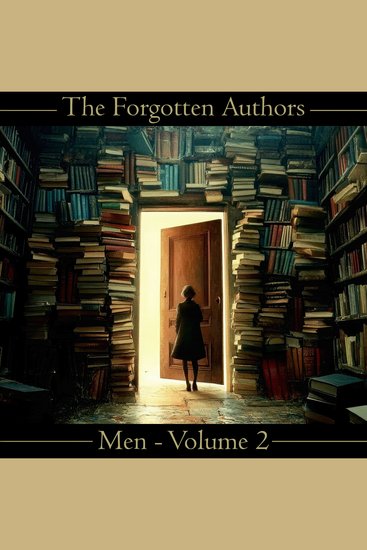
    Throughout the long centuries of human history is the want, and the need, to share information, to exchange ideas and for that knowledge and experience, for curiosity and learning, to be the basis of a civil society. 
    In literature the ambition is much narrower.  In order to be known, to be popular, you had to be published.  And for that people had to know you existed and your ideas worth reading.  Obviously for most of humanity’s time people couldn’t read and texts couldn’t be published in any great number. 
    In the 15th Century Gutenberg’s printing press began the revolution to address the second and by the 19th century had gathered pace with startling speed and mass distribution.  Education for the many was brought in to help people understand more of their world and, with new skills, how to have a better place within it.  Now, if the powers that owned the presses and means of distribution agreed an audience would now be able to avail themselves of your ideas, your printed words.  
    Sadly, in the thirst for the new, the recent and the past fell from sight, relegated to dark corners and dusty shelves.   
    But the printed word is rarely without someone, somewhere busying themselves through piles of papers and books rediscovering what a good story is, whatever its age. 
    In this volume we offer up a small selection of those talents whose time has now come again.
    Zum Buch
  • The Agincourt Bride - cover

    The Agincourt Bride

    Joanna Hickson

    • 0
    • 0
    • 0
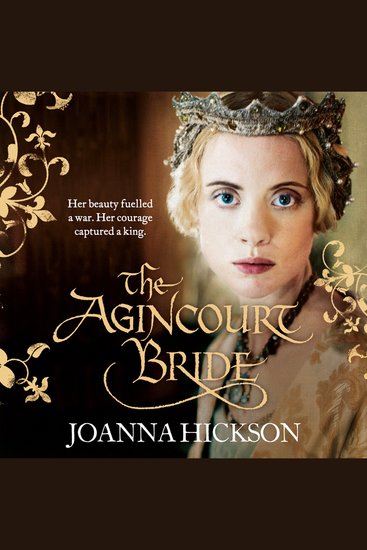
    The best-selling novel about the queen who founded the Tudor dynasty. ‘A bewitching first novel…alive with historical detail’ Good Housekeeping. 
    Her beauty fuelled a war. 
    Her courage captured a king. 
    Her passion would launch the Tudor dynasty. 
    When her own first child is tragically still-born, the young Mette is pressed into service as a wet-nurse at the court of the mad king, Charles VI of France. Her young charge is the princess, Catherine de Valois, caught up in the turbulence and chaos of life at court. 
    Mette and the child forge a bond, one that transcends Mette’s lowly position. 
    But as Catherine approaches womanhood, her unique position seals her fate as a pawn between two powerful dynasties. Her brother, The Dauphin and the dark and sinister, Duke of Burgundy will both use Catherine to further the cause of France. 
    Catherine is powerless to stop them, but with the French defeat at the Battle of Agincourt, the tables turn and suddenly her currency has never been higher. But can Mette protect Catherine from forces at court who seek to harm her or will her loyalty to Catherine place her in even greater danger? 
    Hickson's The Agincourt Bride is a mesmerising fusion of mediaeval history and romance, painting a vivid picture of a queen's struggle amidst the chaos of the French court. This work of fiction is a testament to the strength of women in the face of adversity. 
    For fans of Carol Mcgrath (The Lost Queen), Alison Weir (Elizabeth of York), Elizabeth Chadwick (The Royal Rebel), Annie Garthwaite (Cecily), and Anne R. Bailey (The Lady Ursula).
    Zum Buch