¡Acompáñanos a viajar por el mundo de los libros!
Añadir este libro a la estantería
Grey
Escribe un nuevo comentario Default profile 50px
Grey
Suscríbete para leer el libro completo o lee las primeras páginas gratis.
All characters reduced
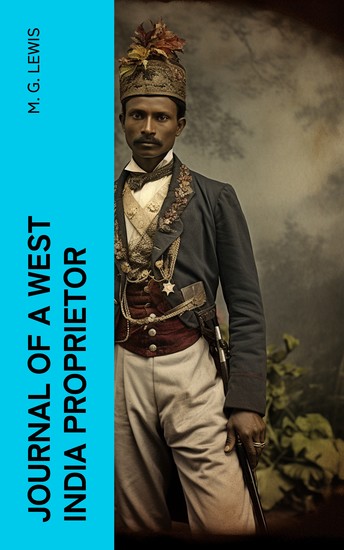
Journal of a West India Proprietor - Kept During a Residence in the Island of Jamaica - cover

Journal of a West India Proprietor - Kept During a Residence in the Island of Jamaica

M. G. Lewis

Editorial: e-artnow

  • 0
  • 0
  • 0

Sinopsis

This work provides a valuable insight into plantation life in Jamaica in the early 1800s. Englishman Matthew Gregory Lewis wrote it during his first journey to his plantations in Jamaica in 1817. It was not published in London until 1834, nearly two decades after being written, during the peak of the international abolitionist movement. Lewis was a slave-owner who took over two large plantations owned by his family, and he would visit it twice. During this trip, he examined the living and working circumstances of the enslaved people on his plantations. His informal record, the Journal of a West India Proprietor, offers a vivid report on plantation life from the standpoint of a 'liberal' enslaver. He was an acute observer of everything he saw, and nothing escaped his watch. He has also included a few folk tales told by the enslaved ones. In addition to this work, he was a novelist and best known as the author of the famous gothic novel The Monk.
Disponible desde: 23/11/2023.
Longitud de impresión: 535 páginas.
Otros libros que te pueden interesar

  • Greek Dark Ages and Greek Renaissance The: The History and Legacy of the Bronze Age Transition to Archaic Greece - cover

    Greek Dark Ages and Greek...

    Editors Charles River

    • 0
    • 0
    • 0
    The Greek Dark Ages, sometimes referred to as the Homeric Age or the Geometric Period, spans the era of Greek history from the end of the Mycenaean civilization around 1100 BCE and the emergence of the Greek poleis in the 9th century BCE. It is an era that has provided little in terms of extant archaeological evidence, which in part explains the name “Dark Ages,” but this lack of evidence has led some archaeologists and historians to make the very great assumption that little of any real significance occurred during these 200 years. Instead, they view it as a sort of hiatus between the collapse of the Mycenaean culture and the emergence of Archaic Greece. As with other so-called “Dark Ages,” this assessment is simplified, and an absence of evidence should never be assumed as evidence of absence. 
    If anything, the collapse of the Mycenaeans was a drawn-out affair, and while the early centuries of the Dark Ages might beseen as a continuation of this trend, even in the worst years, there was a degree of continuity and even some innovations. These changes including the beginnings of the use of iron as an alternative to bronze and some religious practices that continued to be observed. Furthermore, enough remained to form the basis of a recovery in economic, cultural, and artistic aspects of life in the later stage of the era, and in the political sphere, changes necessitated by the collapse in the economic system certainly paved the way for the rise of the polis, which would prove so fundamental in Greece in the centuries that followed.  
    This laid the groundwork for the Greek Renaissance of the 8th century. During that time, the Greek alphabet developed and the earliest surviving Greek literature was composed, while in terms of art and architecture, sculptures and red-figure pottery began. Warfare changed significantly as well when the hoplite became the core infantry.
    Ver libro
  • Twelve Years a Slave - cover

    Twelve Years a Slave

    Solomon Northup

    • 0
    • 0
    • 0
    A free man kidnapped. Twelve years in chains. A truth the world could not ignore.
    In this harrowing memoir, Solomon Northup recounts how he was abducted and sold into slavery despite being a free man. Through brutal labor, cruel masters, and relentless injustice, he clings to hope, intelligence, and the belief that freedom can be reclaimed. His voice is calm, precise, and devastating in its honesty.
    
    Regarded as "one of the most important slave narratives ever written," this firsthand account exposes the reality of American slavery with unmatched clarity and moral force. Northup's story helped fuel the abolitionist movement—and continues to confront readers with truths that still matter today.
    
    If you seek historical truth, human resilience, and a story that reshaped conscience and history, this essential classic belongs in your library.
    
    Open the book—and bear witness to a life that refused to be erased.
    Ver libro
  • Florence - The Fascinating History of Tuscany’s Greatest City - cover

    Florence - The Fascinating...

    Kelly Mass

    • 0
    • 0
    • 0
    Florence was a major center of middle ages European trade and banking, and also one of the most affluent cities in the world at the time. A lot of academics believe it was the beginning of the Renaissance, and it has been called "the Athens of the Middle Ages." 
    Periods of supremacy by the strong Medici family, and also several spiritual and republican transformations, have marked the nation's unpredictable political history. The city was the capital of the Kingdom of Italy from 1865 to 1871. (developed in 1861). 
    Renaissance painters and sculptures alike have their legacy in this city. The city attracts countless visitors each year. Let’s learn more about this intriguing spot in the world, a place where you can admire the works and historic buildings of the past.
    Ver libro
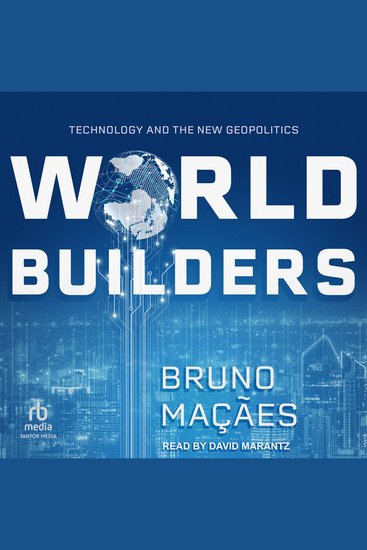
  • World Builders - Technology and the New Geopolitics - cover

    World Builders - Technology and...

    Bruno Maçães

    • 0
    • 0
    • 0
    World politics has changed, claims Bruno Maçães. Geopolitics is no longer simply a contest to control territory: in this age of advanced technology, it has become a contest to create the territory. Great powers seek to build a world for other states to inhabit, while keeping the ability to change the rules or the state of the world when necessary. At a moment when the old concepts no longer work, this book aims to introduce a radically new theory of world politics and technology. Understood as 'world building', the most important events of our troubled times suddenly appear connected and their inner logic is revealed: technology wars between China and the United States, the pandemic, the wars in Ukraine and the Middle East, and the energy transition. To conclude, Maçães considers the more distant future, when the metaverse and artificial intelligence become the world, a world the great powers must struggle to build and control.
    Ver libro
  • A Minute for Caregivers - When Everyday Feels Like Monday - cover

    A Minute for Caregivers - When...

    Peter Rosenberger

    • 0
    • 0
    • 0
    Family caregivers struggle with keeping their heads above water while caring for an impaired loved one. Most caregivers feel their well-being is sacrificed for the well-being of their loved ones. Hanging on until their loved one passes away is simply not acceptable for a caregiver to live a healthy life. Caregivers can live a life of meaning—and not just simply survive. A Minute for Caregivers offers families with special needs children, aging parents, wounded warriors, trauma victims, mental illness, addiction, and any other chronic impairment "just in time" practical, emotional, and spiritual help in dealing with the (often) traumatic challenges of caring for an impaired loved one.
    Ver libro
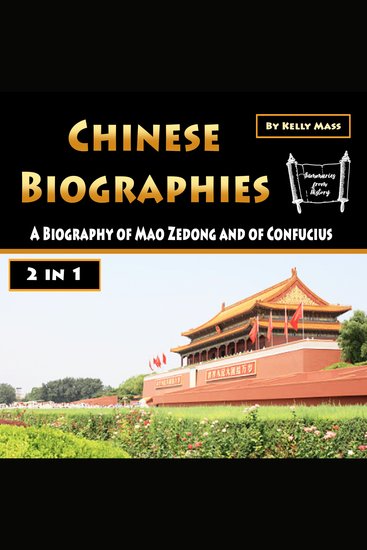
  • Chinese Biographies - A Biography of Mao Zedong and of Confucius - cover

    Chinese Biographies - A...

    Kelly Mass

    • 0
    • 0
    • 0
    This book consists of two titles! Here are the names of the titles: 
    Mao Zedong - Mao Zedong has had a tremendous impact on the Chinese nation. During his Great Leap Forward, he was responsible for more deaths than both Hitler and Stalin, making him the biggest mass murderer in history. 
    Mao Zedong, typically called Chairman Mao, was a Chinese communist revolutionary who functioned as the starting dad of peoples's Republic of China (PRC), judgment as the chairman of the Chinese Communist Party from 1949 till his death in 1976. Maoism is a Marxist-- Leninist dogma that includes his theories, army operations, and political programs. 
    What happened during the Great Leap Forward? Why did so many farmers starve to death? And what else did Mao Zedong do during his reign? You will find out more about those and other questions in this book. 
    Confucius - Confucius was a Chinese thinker and political leader who was considered as the apotheosis of Chinese sages. Confucius' theories and philosophy, commonly seen as one of the most essential and prominent individuals in human history, created the structure of East Asian civilization and civilization, and stay appropriate across China and East Asia today. 
    Confucianism, his philosophical theories, highlighted personal and governmental morality, social connection precision, justice, generosity, and genuineness. Confucianism was instilled in Chinese civilization and way of living; for Confucians, daily life was a spiritual arena. Throughout the Hundred Schools of Thought age, his disciples contended efficiently with lots of other schools, only to be repressed in favor of the Legalists throughout the Qin dynasty. Confucius' ideas were formally approved in the new administration following Han's success over Chu after Qin's collapse.
    Ver libro