¡Acompáñanos a viajar por el mundo de los libros!
Añadir este libro a la estantería
Grey
Escribe un nuevo comentario Default profile 50px
Grey
Suscríbete para leer el libro completo o lee las primeras páginas gratis.
All characters reduced
Hindu Time - cover

Hindu Time

Luna Clear

Traductor A AI

Editorial: Publifye

  • 0
  • 0
  • 0

Sinopsis

Hindu Time explores the rich tradition of the Hindu calendar, a system deeply intertwined with religious life, cultural practices, and ancient Indian thought. This book unveils how timekeeping in Hinduism extends beyond mere measurement, serving as a holistic framework that integrates astronomy, astrology (Jyotisha), mythology, and religious observances. One intriguing aspect discussed is the concept of vast cycles of creation and destruction (kalpas), reflecting a unique perspective on time's eternal nature. Also highlighted is the calendar's critical role in determining the timing of Hindu festivals and rituals, thus shaping communal worship and individual spiritual practices.

 
The book progresses from introducing the fundamental units of time, the concept of yugas, and the astronomical basis of the calendar, to examining the influence of planetary positions and the calendar's application in determining the dates of major Hindu festivals. What sets Hindu Time apart is its comprehensive approach, blending historical, astronomical, astrological, and religious perspectives to offer an accessible understanding of this complex system. By contextualizing the calendar’s origins within Vedic cosmology and ancient Indian thought, the book reveals its multifaceted significance, making it valuable for students of religion, history, South Asian studies, and anyone interested in Hindu culture.
Disponible desde: 04/03/2025.
Longitud de impresión: 74 páginas.
Otros libros que te pueden interesar

  • Egyptian Dynasties - The Pharaonic Lineages and Their Impact - cover

    Egyptian Dynasties - The...

    Omar Khalil

    • 0
    • 0
    • 0
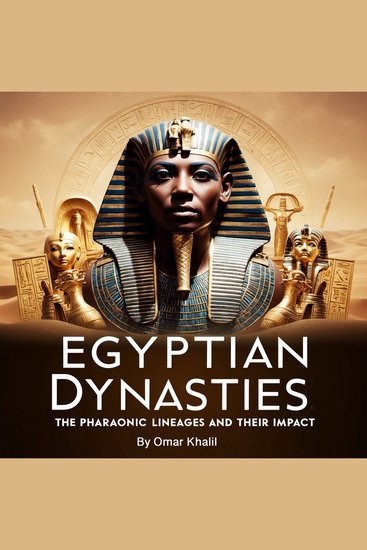
    The Early Dynastic Period marks the beginning of ancient Egyptian civilization, a time when the foundations of one of history’s most remarkable cultures were laid. Spanning approximately from 3100 to 2686 BCE, this period is characterized by the unification of Upper and Lower Egypt under a single ruler, leading to the establishment of the first dynasties and the concept of pharaonic rule. 
    The unification of Upper and Lower Egypt is often attributed to King Narmer, a powerful ruler who is believed to have brought the two regions together. The famous Narmer Palette, an ancient ceremonial artifact, depicts Narmer wearing the crowns of both Upper and Lower Egypt, symbolizing his authority over the unified land. This pivotal moment not only marked the creation of a centralized state but also set the stage for the development of a dynastic tradition that would persist for millennia. The consolidation of power allowed the pharaohs to wield significant control over the land, fostering political stability and cultural coherence. 
    The role of Narmer and the early pharaohs was instrumental in shaping the governance and societal structure of ancient Egypt. As divine rulers, these early kings were seen as earthly embodiments of the gods, responsible for maintaining ma'at, the concept of cosmic order and balance. This religious authority legitimized their political power and reinforced their role as mediators between the divine and mortal worlds. During this period, the pharaohs established court systems, oversaw the construction of monumental architecture, and promoted the development of writing, which became crucial for record-keeping and administration.
    Ver libro
  • The Book of Eastbay - How Two Friends Built the Business That Launched Sneakerhead Culture - cover

    The Book of Eastbay - How Two...

    Art Juedes, Rick Gering

    • 0
    • 0
    • 0
    Unable to contain himself, Rick pitched Art: move back to Wausau and start a business selling shoes. Art said, "What are you, an idiot? Selling shoes? How is this even worth trying?" 
     
    This is the story of Eastbay, a startup tale unlike most you've heard. First it was $5,000 worth of track sneakers sold out of the back of an AMC Gremlin. Then it was a quiet storefront in Wausau, Wisconsin. Then it became a catalog, a bible to GenX kids growing up in the 1980s and '90s, a powerful tastemaker so authentic that pro athletes swore by it. Sneakerhead culture started here. 
     
    Eastbay was  a company ahead of its time that mastered mail-order selling before Amazon existed. That grew so fast and was so successful in the first athletic mail-order wholesale shoe business that Nike pulled its AIR products from the catalog. After five years, Nike decided to allow AIR products back into the Eastbay catalog and ultimately Eastbay partnered with Nike to produce several Nike catalogs. 
     
    Sneakers are a global obsession, and it all started here, where kids were encouraged to dream big, and dream often, which is just what the founders were doing all along. This is their story. This is The Book of Eastbay.
    Ver libro
  • The Story Economy - How Sharing Your Truth Can Be Your Most Valuable Asset - cover

    The Story Economy - How Sharing...

    William Welser

    • 0
    • 0
    • 0
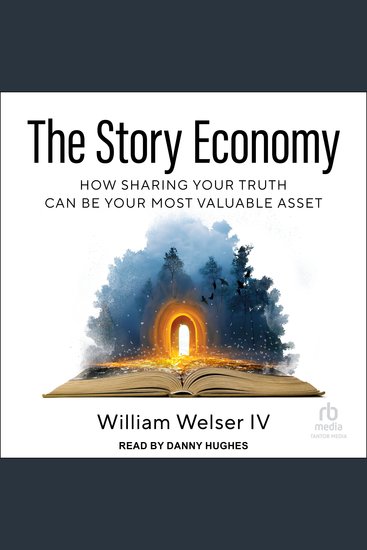
    How do you value your private data? What about your job? The truth is someone is selling your data, and your job may be among the countless others being lost to AI at record rates. Because of this abuse of technology among many others, most people have lost all agency over their technology, devices, and information. But technologist William Welser IV has a plan to help us regain control.Enter The Story Economy, a guide that provides fresh purchasing power in a world where opportunity feels harder and harder to grasp. Within, Welser outlines the need for an alternative economy where stories can become solutions to overwhelming new problems. His entirely new marketplace allows us to use our stories as currency, putting the data we've voluntarily given to good use—allowing us to purchase goods and services and giving us the power to see exactly where our data is going and to whom.In this exciting and sometimes scary world of AI, Big Tech is using all of its tools against us to create a society in which we're lonely, broke, and lost. We must take back our power and make the technology work for us to close the healthcare, education, and wealth divide—and in the process, foster self-awareness to help us become astute decision-makers and stay ahead of technology. The Story Economy provides the innovative blueprint to get started.
    Ver libro
  • The Assault on the State - How the Global Attack on Modern Government Endangers Our Future - cover

    The Assault on the State - How...

    Stephen E. Hanson, Jeffrey S....

    • 0
    • 0
    • 0
    What if the state as we know it didn't exist? Our air would be poisonous, our votes uncounted, and our markets dysfunctional. Yet across the world, in countries as diverse as Hungary, Israel, the UK, and the US, attacks on the modern state and its workforce are intensifying. They are morphing into power grabs by self-aggrandizing politicians who attempt to seize control of the state for themselves and their cronies. What replaces the modern state once it is fatally undermined is not the free market and the flowering of personal liberty. Instead, the death of government agencies organized under the rule of law inevitably leads to the only realistic alternative: the rule of men. 


    In The Assault on the State, political scientists Stephen Hanson and Jeffrey Kopstein offer an impassioned plea to defend modern government against those who seek to destroy it. They dissect the attack on the machinery of government from its origins in post-Soviet Russia to the core powers of Western democracy. The dangers of state erosion imperil every aspect of our lives. Hanson and Kopstein outline a strategy that can reverse this destructive trend before humanity is plunged back into the pathological personalistic politics of premodern times.
    Ver libro
  • What God Would Have Known - How Human Intellectual and Moral Development Undermines Christian Doctrine - cover

    What God Would Have Known - How...

    J. L. Schellenberg

    • 0
    • 0
    • 0
    Classical Christian ideas loom large in philosophy of religion today. But arguments against Christian doctrine have been neglected. J. L. Schellenberg's new book remedies this neglect. 


    The tide of human development, which the early Christians might have expected to corroborate their teaching, has in fact brought many results that run contrary to that teaching. Or at least it will be seen to have done so, says Schellenberg, when we think about the consequences of any God existent then being fully cognizant, when Christian doctrine was first formed, of all that we have laboriously learned since then. Newly discovered facts, not just about such things as evolution and the formation of the New Testament but also about mental illness, violent punishment, the relations between women and men, and the status of same-sex intimacy, suggest new arguments against the content of the Christian revelation when the prior understanding of the purported revealer is taken into account. 


    What God Would Have Known offers a thorough and incisive treatment of its subject that remains respectful and fair-minded throughout. It is not concerned with the overworked question of whether classical Christians believe irrationally, but with what overlooked arguments about human development show in relation to the truth or falsity of Christian claims about reality.
    Ver libro
  • My Personal Holocaust - Triumphing over the Devastation of Trauma Based Mind Control - cover

    My Personal Holocaust -...

    Carolyn Sherrow

    • 0
    • 0
    • 0
    A Journey from Darkness to Light 
    Carolyn Sherrow’s early life was marred by the darkness of ritual abuse and mind control. Yet, through the power of God’s relentless love, she found the strength to rise above her past. 
    In My Personal Holocaust, Sherrow describes her profound journey of faith, healing, and redemption. 
    In this deeply personal account, she shares how a dissociative disorder once bound her in fear but 
    ultimately led her closer to God. With the support of compassionate counselors and divine guidance, 
    she embarked on a path of spiritual and emotional restoration. 
    Her powerful story reminds us that with God, no wound is too deep to heal. 
    • Witness God’s miraculous healing in the midst of unimaginable pain. 
    • Learn how yielding to God’s gentle guidance can lead to profound transformation. 
    • Discover the importance of faith, prayer, and perseverance in the journey to wholeness. 
    Join Sherrow on this transformative journey—her story may help you rewrite your own. CAROLYN SHERROW practiced medicine as a physician assistant for twenty-three years. She has been published in the Pentecostal Evangel magazine, Chicken Soup for the Soul, and Bethany House anthologies. 
    A lifelong Colorado resident, Sherrow enjoys her flower and vegetable gardens.
    Ver libro