¡Acompáñanos a viajar por el mundo de los libros!
Añadir este libro a la estantería
Grey
Escribe un nuevo comentario Default profile 50px
Grey
Suscríbete para leer el libro completo o lee las primeras páginas gratis.
All characters reduced
Ultimate Web API Development with Django REST Framework - Build Robust and Secure Web APIs with Django REST Framework Using Test-Driven Development for Data Analysis and Management - cover

Ultimate Web API Development with Django REST Framework - Build Robust and Secure Web APIs with Django REST Framework Using Test-Driven Development for Data Analysis and Management

Luis Lazzaro Leonardo

Editorial: Orange Education Pvt Ltd

  • 0
  • 0
  • 0

Sinopsis

Build a Secure Recommendation System from Scratch Using Django Rest Framework.

Key Features
● Master Django REST Framework and Test-Driven Development.
● Build scalable APIs through real-world projects like recommendation engines.
● Secure, optimize, and deploy APIs for data science applications.

Book Description
Mastering API development is crucial for building modern, scalable software solutions. Ultimate Web API Development with Django REST Framework is your comprehensive guide to achieving that mastery. This book will teach you how to create robust, secure, and efficient APIs using Django REST Framework and Test-Driven Development (TDD).

You’ll start by learning the essentials of building and testing APIs, followed by developing simple APIs with effective testing practices. The book then takes a deep dive into data science, helping you understand data models, processing, and handling asynchronous tasks for efficient data management. You’ll also learn techniques for securing and scaling APIs, ensuring your applications are prepared for real-world demands.

As you progress, you'll master documenting, optimizing, and deploying APIs for production environments. By the end of the book, you'll be equipped to create scalable, high-performance APIs that power data-driven applications, making you a valuable asset in any tech team. With practical examples and expert insights, this book will help you become a top-tier API developer and build robust, scalable APIs that excel in today’s fast-paced tech landscape.

What you will learn
● Build secure, scalable APIs with Django REST Framework.
● Master Test-Driven Development for efficient, reliable coding.
● Create data-driven APIs through real-world projects like recommendation engines.
● Implement advanced authentication, permissions, and security techniques.
● Optimize and deploy production-ready APIs for data science applications.
● Manage asynchronous tasks and large-scale data processing efficiently.

Table of Contents
1. Django REST and TDD Essentials
2. Building and Testing Basic APIs
3. Data Models and Processing in Data Science
4. Asynchronous Tasks and Data Processing
5. Securing and Scaling Data Science APIs
6. Developing a Data Science Project
7. Documenting and Optimizing Your API
8. Deploying Your Data Science API
9. Final Thoughts and Future Directions
     Index

About the Authors
Born in Buenos Aires (la Ciudad de la Furia), Argentina, Leonardo Luis Lazzaro has always been fascinated by the idea of building something out of nothing. His first contact with computers began early, fueled by classic video games such as Maniac Mansion and Monkey Island. At just 12 years old, Leonardo was running his own Bulletin Board System (BBS) using ProBoardBBS Software, making him one of the youngest members of these online communities in Argentina. The BBS allowed him to meet other tech enthusiasts who introduced him to the world of programming. His fascination with computer demos from the demoscene became a major source of motivation for his continued discovery in Programming.

Leonardo’s academic path led him to study computer science at the prestigious Facultad de Ciencias Exactas, Universidad de Buenos Aires (UBA). He then embarked on a Ph.D. in drug discovery, trying to apply his computational skills to solve complex challenges through GPU simulations. However, his journey took a turn, leading him away from the academia and he became a Ph.D. dropout.
Disponible desde: 07/01/2025.
Longitud de impresión: 226 páginas.


Otros libros que te pueden interesar

  • On Airs Waters and Places - cover

    On Airs Waters and Places

    Hippocrates

    • 0
    • 0
    • 0
    On Airs, Waters, and Places is a treatise by Hippocrates in which he sets forth his ideas on the impact of climate and geography on human health. In particular, he believed that certain climates and types of terrain were more conducive to good health than others, and that people who lived in unhealthy environments were more likely to suffer from illness. Read in English, unabridged.
    Ver libro
  • Climate Denial - cover

    Climate Denial

    Thomas Porcher, Henri Landes

    • 0
    • 0
    • 0
    Is it possible to subsidize fossil fuels on the one hand, while at the same time claiming to be committed to the fight against global warming? 
    Is it possible to promote free trade treaties throughout the world while claiming that CO2 emissions must be reduced? 
    Can we use indicators that only take into account market production without taking into account pollution?
    In view of the climate challenge, the answer to these questions should be negative, but unfortunately today it is still positive. In a documented, clear and incisive book, Thomas Porcher and Henri Landes denounce this climate hypocrisy. In the last chapter, they present 10 proposals to meet the climate challenge. 
    Instead of all the great speeches on climate, this book reminds us of the sad reality of recent years—an unprecedented development of polluting energies with unconventional gas and oil, a blind trust in non-existent solutions from the market to fight against climate change, hundreds of free trade treaties being negotiated without climate clauses, inadequate measurement indicators that encourage business as usual.
    Ver libro
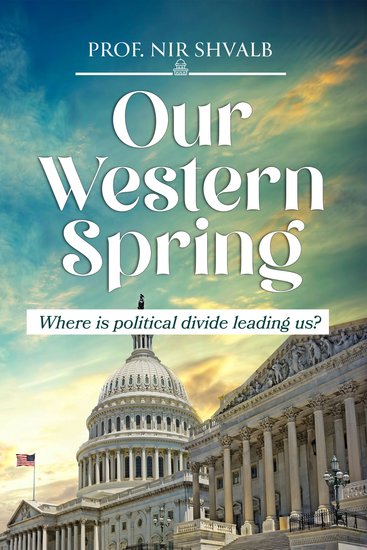
  • Our Western spring - Where is political divide leading us ? - cover

    Our Western spring - Where is...

    Nir Shvalb

    • 0
    • 0
    • 0
    "Progress is not just electronics and robots; it’s also adaptation and correction of social structures in light of these technological advances," Shvalb asserts, warning that "the old democracy won't survive if we don’t adjust it to the new era." 
    After reviewing the social phenomena leading societies to dangerous places, he points out, "History teaches us that civilizations tend to fade, and when they do, it can happen very suddenly." He then explores the influence of social networks on public discourse, noting that "fake news spreads six times faster than truthful news." As a scientist in the field of hard sciences, he examines the dangers of advancing technology, particularly the role of AI in societal unrest. Shvalb questions, "Can technological mega-giants know us intimately enough to control our choices?" 
    Life as we knew it no longer exists. The benefits technology has given us come with a heavy price. In a world where social interactions are shaped by powerful platforms guiding the way we think, behave, buy, and choose, there is a real risk to our societies that we must consider. The last part of the book is dedicated to practical solutions and suggestions. Yet, despite its serious themes, "Our Western Spring: Where is Political Divide Leading Us?" is engaging and fun to read. If you're curious about who suffered from scrotal ascites, what is considered the worst film of all time, or why China's government hates Winnie-the-Pooh, this book is for you. This blend of intriguing trivia and insightful analysis makes the book both thought-provoking and enjoyable, offering readers a captivating journey through the complexities of modern society.
    Ver libro
  • Technology and Social Change - How Digital Innovations Transform Society - cover

    Technology and Social Change -...

    Fred Grandsen

    • 0
    • 0
    • 0
    Technology has always played a fundamental role in shaping human societies, influencing how people communicate, work, and interact with the world around them. Social change, in turn, refers to the transformation of cultural, economic, and political structures over time. The relationship between technology and social change is deeply intertwined, as technological innovations can drive profound shifts in society, while social needs and challenges often inspire new technological developments. 
    Throughout history, technological advancements have acted as catalysts for change, altering the way people live and interact. The agricultural revolution, for example, enabled the transition from nomadic lifestyles to settled civilizations, fostering population growth and social organization. The industrial revolution transformed economies by introducing mechanization, mass production, and urbanization, dramatically reshaping labor markets and social structures. More recently, the digital revolution has revolutionized communication, education, and business through the rise of computers, the internet, and artificial intelligence. 
    One key aspect of understanding technology and social change is recognizing that technological progress is not inherently neutral.
    Ver libro
  • Machine Learning and Predictive Modeling - Turning Data into Action - cover

    Machine Learning and Predictive...

    Chuck Sherman

    • 0
    • 0
    • 0
    Uncover the latest trends and technologies shaping the future of machine learning, including explainable AI, quantum machine learning, and federated learning. The book also delves into the ethical considerations surrounding AI, making it an essential resource for professionals navigating the ever-evolving landscape of data and technology. 
    "Machine Learning and Predictive Modeling: Turning Data into Action" equips you with the knowledge, tools, and ethical insights necessary to harness the power of data, make informed decisions, and create positive change in your organization or community. Whether you're a data enthusiast, a curious mind, or a data-driven decision-maker, this book is your key to transforming data into action and unleashing the potential of machine learning in your world. Get ready to embark on a journey into the data-driven future, where knowledge is power, and insights drive action.
    Ver libro
  • Assembly Language - The Ultimate Guide to Programming and Virtual Machines - cover

    Assembly Language - The Ultimate...

    Jonathan Rigdon

    • 0
    • 0
    • 0
    Assembly language is often considered a bridge between high-level programming languages and machine code. Unlike high-level languages such as Python or C, which use human-readable syntax and abstract away many details of the underlying hardware, assembly language provides a more direct representation of the CPU's operations. 
      
    Each assembly language instruction corresponds to a specific operation that the CPU can perform, such as loading data from memory, performing arithmetic calculations, or branching based on conditions. These instructions are typically represented using mnemonic codes, which are easier for humans to understand compared to the binary machine code instructions that the CPU actually executes. 
      
    One of the key benefits of programming in assembly language is the level of control it provides over hardware resources. Because assembly language instructions map closely to CPU operations, programmers can fine-tune their code to optimize performance or interact directly with hardware peripherals.
    Ver libro