¡Acompáñanos a viajar por el mundo de los libros!
Añadir este libro a la estantería
Grey
Escribe un nuevo comentario Default profile 50px
Grey
Suscríbete para leer el libro completo o lee las primeras páginas gratis.
All characters reduced
The Story of Don John of Austria - cover

The Story of Don John of Austria

Luis Coloma

Editorial: Librorium Editions

  • 0
  • 0
  • 0

Sinopsis

There was no school in Getafe that afternoon; the sun had stricken down Sancha Apelza, the master's wife, while working on the farm of the Comunero, and she was to receive the last sacraments that night. The children from Leganés were coming back to the village, playing as usual by the way at Moors and Christians. Jeromín always insisted on this, and never would play at Comuneros, or at being Padilla, Adelentado or Bishop Acuña, all recent and popular heroes. He said it was enough for him to be Jeromín and to pretend to cut off the heads of Moors. He entrenched himself in the Canon's well as if it were a castle on a rock, and Pedro Verde defended the orchard of Maricuernos opposite, declaring it to be the Vega of Granada. Jeromín gave the word "Santiago," and from both sides, like bullets from an arquebus, came lumps of soft earth. At this inopportune moment, while the battle was raging along the road from Madrid bordering the orchard of Maricuernos, four mules appeared, harnessed in pairs with long traces to what seemed to be a little wooden house, with two tiny windows and four big wheels. A man was riding the foremost mule on the off side, and another was seated on the roof of the house, guiding the mules with a long stick. Through one of the windows a very fat man with grey moustaches and a pointed beard, could be seen, sitting inside. Four well-armed horsemen and two baggage-mules escorted the unwieldy vehicle. The children were frightened at the sight of this extraordinary machine, such as they had never seen before, but curiosity overcame their fear and they all grouped themselves, very silent, in the orchard of Maricuernos to see it pass closer. The boys' terror increased when they realised that the heavy machine was halting in front of them, and the fat gentleman, putting his head out of window, was asking them very politely whether the Emperor's former guitar-player, Francis Massy, who had married Ana de Medina, a native of the village, still lived there.
Disponible desde: 31/12/2023.
Otros libros que te pueden interesar

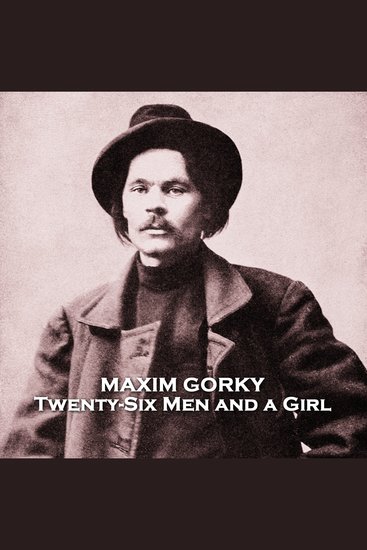
  • Twenty-Six Men and a Girl - From their pens to your ears genius in every story - cover

    Twenty-Six Men and a Girl - From...

    Maxim Gorky

    • 0
    • 0
    • 0
    Alexei Maximovich Peshkov was born on 28th March 1868, in Nizhny Novgorod, Russia. 
    Better known as Maxim Gorky he was orphaned at 11 and ran away from home at 12.  At 19 he had already attempted suicide and thereafter travelled, by foot, across the Russian Empire for 5 years. 
    His first book ‘Essays & Stories’ in 1898 was a sensation and so began a long career as an author of short stories, novels and plays.  Gorky saw writing as a moral and political act that would help to change the unjust world around him.  He was an ardent early advocate of the emerging Marxist movement and publicly opposed the Tsarist regime leading several times to his arrest.  
    In 1904 he began his own theatre but the censor banned every play and Gorky was forced to abandon the project. 
    But Gorky was a financially successful author, editor, and playwright and gave monies to political parties as well as for civil rights and social reform.  The brutal shooting of workers, which set in motion the Revolution of 1905, pushed Gorky more decisively toward radical solutions.  
    In 1906 he went to the United States to raise funds for the Bolsheviks. Those experiences including a scandal over travelling with his lover and not his wife deepened his contempt for the ‘bourgeois soul.’ 
    Gorky now moved to Capri in Italy, both for health reasons and to escape the increasingly repressive times in Russia.  
    An amnesty for the 300th anniversary of the Romanov dynasty saw him return to Russia in 1914. His politics remained close to the Bolshevik cause.  But soon, after the 1918 revolution, his essays referred to Lenin as a tyrant for his senseless arrests and repression.  He was soon appealing to the outside world for food aid after the catastrophic crop failure. 
    In October 1921 Gorky returned to Italy, now in Fascist hands, and settled in Sorrento until 1932.  His health worsened with the onset of tuberculosis. 
    He wrote several successful books there but now decided to find an understanding with the communist regime. Stalin invited him home and his return was hailed as a major propaganda victory.  He was decorated with the Order of Lenin, and a province, a park, and various streets re-named in his honour. 
    But he had his faults too.  In 1933, Gorky co-edited a book on the White Sea-Baltic Canal and denied even a single prisoner died during its construction, but thousands had. As well, knowing that some Nazis were homosexual, a phrase was attributed to him that said ‘exterminate all homosexuals and fascism will vanish’.  Although he was himself was quoting another he was decidedly homophobic. 
    With the increase of Stalinist repression in 1935 Gorky was placed under unannounced house arrest. 
    Maxim Gorky died on the 18th June 1936 from pneumonia.  He was 68. 
    Stalin and Molotov were among those who carried Gorky's urn of ashes at his funeral.
    Ver libro
  • Happy Land - Finding my inner Finn: forty years in the world's happiest country - cover

    Happy Land - Finding my inner...

    Tim Bird

    • 1
    • 0
    • 0
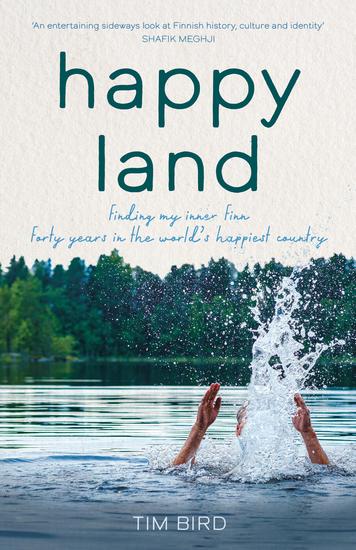
    A personal view of 'the world's happiest country' from an accidental expat in Finland
    Tim Bird arrived in Finland by accident in the early Eighties. More than forty years on, he is still there. He has watched the transformation of his adopted homeland from semi-detached member of the Soviet bloc to modern European nation that tops the rankings, year after year, as 'the happiest country in the world'.
    Does it deserve that status? Do the Finns, known for their hard drinking, their sisu (grit) and their passion for heavy metal, recognise that description of themselves? Telling the story of his own path to Finnish citizenship while also delving into the writings of a 19th-century British traveller, Bird interrogates the claim made on Finland's behalf.
    In this clear-sighted – but never cynical – sideways look at the land of the sauna, the Northern Lights and the Moomins, Bird spotlights the Nordic nation's distinctive culture, landscape and language. As he helps us understand the Finnish notion of contentment, are there life-lessons for the rest of us?
    Ver libro
  • Not Just Cricket - A Reporter's Journey through Modern India - cover

    Not Just Cricket - A Reporter's...

    Pradeep Magazine

    • 0
    • 0
    • 0
    Prominent writer Pradeep Magazine's diary is an account of lived, genuine encounters, of satisfaction, distress, dread, misfortune and trust, and about how an evacuated character shapes one's mentality towards society and the country. From the Kashmir of the 1950s to fearful Punjab, from the Mandir-Masjid partition and the effect of Mandal governmental issues to the grievous outcomes of the Kashmir circumstance Magazine lays out an interesting picture of present day India. 
    At the center of the book are records of the absolute most epochal occasions in India's cricketing history, woven around private experiences with a few notable cricketers. The creator exposes the horrendous maneuvers that are a staple eating regimen of sports administration and uncovers until recently obscure realities about the gratings and self image conflicts that are unavoidable in a game that rules India's donning talk.
    Ver libro
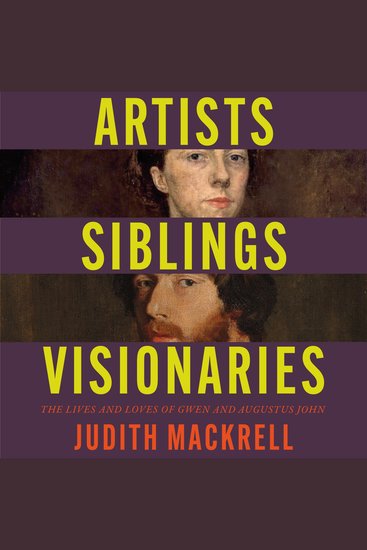
  • Artists Siblings Visionaries - The lives and loves of Gwen and Augustus John - cover

    Artists Siblings Visionaries -...

    Judith Mackrell

    • 0
    • 0
    • 0
    'Outstanding' - The Guardian 'Judith Mackrell has done an incredible job in bringing to life the stories of these two great artists' - Anthony D’Offay'This is a must read . . . a deeply moving account of a family bursting with talent' - Anne SebbaIn Artists, Siblings, Visionaries, acclaimed biographer Judith Mackrell turns her attention to British brother and sister artists Gwen and Augustus John.In many ways they were polar opposites. Augustus was the larger of the two; vivid, volatile and promiscuous, he was a hero among romantics and bohemians, celebrated as one of the great British talents of his generation.As a woman, Gwen's place in the art world was much smaller, and her private way of working and reserved nature meant it was only long after her death that her tremendous gifts were fully acknowledged. But her temperament was as turbulent as her brother's. She formed passionate attachments to men and woman, including a long affair with the sculptor Rodin.And there were other ways in which the two Johns were remarkably alike, as Mackrell vividly reveals. The result is a powerful portrait of two prodigiously talented artists and visionaries, whose experiments with form and colour created some of the most memorable work of the early twentieth century.
    Ver libro
  • Top 10 Short Stories The - The 1820's - The top 10 stories written from 1820 to 1829 - cover

    Top 10 Short Stories The - The...

    Honoré de Balzac, Walter Scott,...

    • 0
    • 0
    • 0
    Short stories have always been a sort of instant access into an author’s brain, their soul and heart.  A few pages can lift our lives into locations, people and experiences with a sweep of landscape, narration, feelings and emotions that is difficult to achieve elsewhere. 
     
    In this series we try to offer up tried and trusted ‘Top Tens’ across many different themes and authors. But any anthology will immediately throw up the questions – Why that story? Why that author?  
     
    The theme itself will form the boundaries for our stories which range from well-known classics, newly told, to stories that modern times have overlooked but perfectly exemplify the theme.  Throughout the volume our authors whether of instant recognition or new to you are all leviathans of literature. 
     
    Some you may disagree with but they will get you thinking; about our choices and about those you would have made.  If this volume takes you on a path to discover more of these miniature masterpieces then we have all gained something. 
     
    In this volume our classic authors turn their words and narratives to a decade when Europe is engulfed in revolution. At home London becomes the largest city on the globe, as the Industrial Revolution gathers pace amidst stirrings of increasing social unrest. 
     
    01 - Top 10 Short Stories - The 1820s - An Introduction 
    2 - El Verdugo by Honoré de Balzac 
    3 - The Tapestried Chamber by Walter Scott 
    4 - Ferdinando Eboli by Mary Shelley 
    5 - The Devil and Tom Walker by Washington Irving 
    6 - Vampirismus or Aurelia by E T A Hoffman 
    7 - Wake Not the Dead - Part 1 by Ernst Raupach 
    8 - Wake Not the Dead - Part 2 by Ernst Raupach 
    9 - From the Memoirs of Satan by Wilhelm Hauff 
    10 - Peter Rugg, The Missing Man - Part 1 by William Austin 
    11 - Peter Rugg, The Missing Man - Part 2 by William Austin 
    12 - Mateo Falcone by Prosper Merimee 
    13 - The Prediction - Part 1 by Mary Diana Dods writing as David Lyndsey 
    14 - The Prediction - Part 2 by Mary Diana Dods writing as David Lyndsey
    Ver libro
  • Unopened Letters - cover

    Unopened Letters

    Casey Overbeek

    • 0
    • 0
    • 0
    Though many of us know ourselves to be believers, it can be easy to lose our sense of direction when disappointment abounds. Maybe it is our bills that are piling up, our circumstances have become overwhelming, or the discouragement of watching disaster unfold in the world around us. 
    Heneka is feeling this way. Although he has always striven to believe in his hopes for himself, he finds himself feeling farther and farther from the life he desires. He’s ashamed to admit it, but he finds himself contemptuous and jealous of others, bitter against the world, and despairing at the thought of the future. So, hoping for answers, he decides to finally open the stack of letters from his Father sitting, unopened, on his desk. 
    Over the course of Unopened Letters, Heneka will learn, along with the help of his insightful friend Amita, the hard truth of just how far he’s strayed from his faith—and the perhaps harder-to-swallow lesson of just how easy it is to come back. As he opens each letter, one by one, he takes up their subjects in conversation with Amita: from where the desire to blame others for our pain arises, the root of doubt in the human heart, and ultimately, what reason we have to always trust in God’s path for us, no matter how far we’ve strayed. 
    Thoughtful, heartful, and true, the dialogue that unfolds in Unopened Letters invites you to reflect on your own faith journey and inspires you to also respond to the Father.
    Ver libro