¡Acompáñanos a viajar por el mundo de los libros!
Añadir este libro a la estantería
Grey
Escribe un nuevo comentario Default profile 50px
Grey
Suscríbete para leer el libro completo o lee las primeras páginas gratis.
All characters reduced
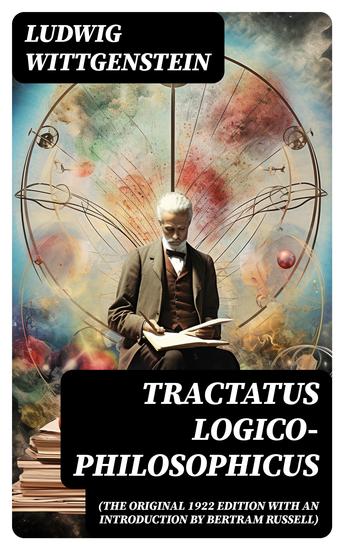
Tractatus Logico-Philosophicus (The original 1922 edition with an introduction by Bertram Russell) - cover

Tractatus Logico-Philosophicus (The original 1922 edition with an introduction by Bertram Russell)

Ludwig Wittgenstein

Editorial: DigiCat

  • 0
  • 0
  • 0

Sinopsis

In the seminal work 'Tractatus Logico-Philosophicus,' first published in 1922, Ludwig Wittgenstein presents a groundbreaking exploration of the relationship between language, reality, and thought. The text unfolds through a series of propositions, meticulously structured to elucidate the limits of language and its role in depicting the world. Wittgenstein's distinctive style combines precision with a poetic resonance, thus firmly situating his work within the analytic tradition of philosophy. He posits that many philosophical problems arise from misunderstandings of language, leading to a profound inquiry into the nature of meaningful statements and the underpinnings of logical representation. Ludwig Wittgenstein, a philosopher and logician, experienced a diverse background, influenced by his Austrian upbringing and studies under prominent thinkers. His compelling visions on the philosophy of language and logic were profoundly shaped by his early life in a wealthy family and his experiences during World War I. The 'Tractatus' emerged from his desire to resolve the complexities surrounding philosophical discourse, reflecting both personal and intellectual struggles that resonate deeply within his philosophy. This book is essential for anyone engaged in philosophical discussion or interested in the foundations of modern logical thought. Wittgenstein's radical ideas invite readers to reconsider the structure of language and its implications for understanding meaning. Delve into this pivotal text to gain insights that continue to inform and challenge contemporary philosophical inquiry.
Disponible desde: 29/12/2023.
Longitud de impresión: 91 páginas.

Otros libros que te pueden interesar

  • Viracocha: The History and Legacy of the Inca’s Creator God - cover

    Viracocha: The History and...

    Editors Charles River

    • 0
    • 0
    • 0
    Although the Inca’s oral traditions suggested that the history of the region began with their empire, the various gods and the religious ceremonies of the peoples that inhabited the Inca’s lands before their arrival were assimilated into the Inca Empire and were incorporated into Inca religion. However, under Inca rule, all those gods were to be subordinate to those gods of the Incas themselves, so as to ensure that imperial authority was clear and without dispute among all quarters of the empire.  
    	Viracocha was the primary god in the Inca pantheon as the origin and creator of all things. His son, the god Inti, or the Sun, was married to Mama Quilla, the Moon, who was also created by Viracocha. According to one myth, Inti was the father of Manco Cápac, the founder of the Inca ruling dynasty, but it was believed by some that Viracocha himself fathered Manco Cápac. In practice, the Inca centered their religious worship on Inti, and this god's High Priest was the second most important person in Inca society. The god Inti was honored at an annual celebration held each June, and the Inti Raymi festival included sacrifices, feasts and sexual abstinence. This cosmology was imposed throughout the empire, and temples to the Sun were constructed and staffed by religious officials who were allotted farmland called “lands of the Sun.” Other local cults were provided with produce from these lands as well.  
    	The main temple of Inca religion was the Coricancha or Sun Temple in Cuzco, in which was kept the great golden disk of the Sun. The disk was appropriated by the Spanish in 1571 and sent off to the Pope. While it has disappeared, perhaps lost somewhere during the tortuous route to Spain, it remains alive in the fabulous world of adventure story writers, New Age mystics and manufacturers of souvenirs. It became a major element in the iconography of the 19th century independence movement in South America.
    Ver libro
  • Anger menagement for man - the ultimate guide for master your emotions and free yourself + bonus hypnosis exercises (free from anxiety and stress) - cover

    Anger menagement for man - the...

    Perfect Fabio

    • 0
    • 0
    • 0
    Struggling to keep control of your anger?  
    Are your loved ones feeling hurt and upset because of your rage?  
    Are you afraid your anger is spiraling out of control and wreaking havoc in your life?  
      
    Perfect Fabio is here with his expertise on anger management for men. Listen to this audiobook to learn how to keep your anger at bay and lead a full, happy life. 
    All you need to do is follow a few easy steps daily and you will learn how to manage your anger in no time. 
    As you listen to this immersive audiobook and follow the methods by the author, you will watch your aggression melting away in a matter of days. 
    What’s more? We have included hypnosis exercises for stress and anxiety as a bonus in our audiobook. 
    There are stressful days when we can’t be expected to stay calm and stress takes a toll on us. Well, not anymore as these exercises don’t just help you deal with your daily stress but also ensure you fall into a deep sleep at night. 
    So what are you waiting for?
    Ver libro
  • Empire Secrets: Unveiling the Hidden Ties of Power and Wealth - "Unlock your potential with captivating audio lessons revealing the hidden connections of power and wealth!" - cover

    Empire Secrets: Unveiling the...

    Cyrus Merriweather

    • 0
    • 0
    • 0
    Empire Secrets: Unveiling the Hidden Ties of Power and Wealth 
    ⭐⭐ Simplified Guide & Explanations Included ⭐⭐ 
    Are you aiming to advance your career and fortify your knowledge about the intricate connections of power and wealth? 
    Looking for a detailed guide that encompasses everything you need to understand these hidden dynamics? 
    Your search ends here! 
    This guide is your ultimate resource for enhancing your understanding, applying your insights, and engaging in practical exercises related to power and wealth. With this, you’re ready to achieve success. 
    Updated for the 2025 insights into power and wealth dynamics. 
    Key features of this enriched guide: 
    - In-depth knowledge about power and wealth dynamics 
    - Comprehensive explanations of the connections within the empire 
    - Effective strategies for preparing and navigating through the complexities of influence 
    Our guide stands out with its thorough coverage, which is crucial for your understanding and success. Concepts are examined in detail rather than just brushed over. 
    Crafted with clarity and simplicity, our guide ensures seamless transitions between topics. Say goodbye to convoluted terminology and welcome straightforward, precise, and technically accurate content. 
    So, why delay? Click the BUY NOW button, secure your guide, and embark on your journey to understanding the hidden ties of power and wealth! 
    Don't wait—secure your copy today and elevate your understanding of the intricate ties that bind power and wealth!
    Ver libro
  • World War I on the Ground: The History and Legacy of Life in the Trenches - cover

    World War I on the Ground: The...

    Editors Charles River

    • 0
    • 0
    • 0
    World War I, also known in its time as the “Great War” or the “War to End all Wars”, was an unprecedented holocaust in terms of its sheer scale. Fought by men who hailed from all corners of the globe, it saw millions of soldiers do battle in brutal assaults of attrition which dragged on for months with little to no respite. Tens of millions of artillery shells and untold hundreds of millions of rifle and machine gun bullets were fired in a conflict that demonstrated man’s capacity to kill each other on a heretofore unprecedented scale, and as always, such a war brought about technological innovation at a rate that made the boom of the Industrial Revolution seem stagnant. 
    The enduring image of World War I is of men stuck in muddy trenches, and of vast armies deadlocked in a fight neither could win. It was a war of barbed wire, poison gas, and horrific losses as officers led their troops on mass charges across No Man’s Land and into a hail of bullets. While these impressions are all too true, they hide the fact that trench warfare was dynamic and constantly evolving throughout the war as all armies struggled to find a way to break through the opposing lines. 
    There was another war going on beneath the trenches, a war of tunnels and mines fought by men who didn’t see sunlight for days at a time and who lived in constant fear of cave-ins and enemy detection. These men, who had mostly been miners in civilian life, lived a twilight existence, working long hours in silence and near darkness while great battles raged overhead. They suffered from fatigue, stress, and the knowledge that they could be killed at any time by an unseen enemy. Despite this, they persevered, and the mines they laid under enemy trench systems turned the tide of at least one major battle.
    Ver libro
  • The Sphinx and Its Significance - Mysteries of Egypt's Guardian - cover

    The Sphinx and Its Significance...

    Omar Khalil

    • 0
    • 0
    • 0
    The Great Sphinx of Giza is one of the most iconic and enigmatic monuments in the world. It stands as a symbol of ancient Egypt's grandeur, captivating historians, archaeologists, and tourists alike. The monument, which lies near the pyramids of Giza, is a colossal limestone statue with the body of a lion and the head of a human, believed to represent the Pharaoh Khafre. Its massive size and mysterious features have sparked fascination and numerous theories about its purpose, creation, and significance throughout history. 
    The origins of the Sphinx are shrouded in mystery, with its construction dating back to the Old Kingdom of Egypt, around 2500 BCE. Some scholars believe that the Sphinx was carved during the reign of Pharaoh Khafre, who also commissioned the construction of the second pyramid at Giza. Others propose that the monument predates Khafre's reign, possibly dating back to the reign of his father, Pharaoh Sneferu. While the precise dating remains uncertain, the Sphinx is undoubtedly a product of Egypt's architectural and artistic achievements, built to withstand the test of time. 
    The significance of the Sphinx in ancient Egyptian culture is multifaceted. In Egyptian mythology, lions were often associated with strength, power, and protection. The body of the lion, combined with the human head, symbolizes the union of human intelligence and animal strength, a combination that represented the ideal qualities of a ruler. The Sphinx’s location near the pyramids further emphasizes its role as a guardian, watching over the tombs of the pharaohs and ensuring their safe passage into the afterlife. The monument also reflects the Egyptians' reverence for their gods and the divine authority bestowed upon their rulers.
    Ver libro
  • On the Job - The Untold Story of America’s Worker Centers and the New Fight for Wages Dignity and Health - cover

    On the Job - The Untold Story of...

    Celeste Monforton, Jane M. Von...

    • 0
    • 0
    • 0
    For over 60 million people, work in America has been a story of declining wages, insecurity, and unsafe conditions, especially amid the coronavirus epidemic. This new and troubling reality has galvanized media and policymakers, but all the while a different and little-known story of rebirth and struggle has percolated just below the surface. 


    On the Job is the first account of a new kind of labor movement, one that is happening locally, quietly, and among our country's most vulnerable—but essential—workers. Noted public health expert Celeste Monforton and award-winning journalist Jane M. Von Bergen crisscrossed the country, speaking with workers of all backgrounds and uncovering the stories of hundreds of new, worker-led organizations (often simply called worker centers) that have successfully achieved higher wages, safer working conditions, and on-the-job dignity for their members. 


    On the Job describes ordinary people finding their voice and challenging power: from housekeepers in Chicago and Houston; to poultry workers in St. Cloud, Minnesota, and Springdale, Arkansas; and construction workers across the state of Texas. An inspiring book for dark times, On the Job reveals that labor activism is actually alive and growing—and holds the key to a different future for all working people.
    Ver libro