Junte-se a nós em uma viagem ao mundo dos livros!
Adicionar este livro à prateleira
Grey
Deixe um novo comentário Default profile 50px
Grey
Assine para ler o livro completo ou leia as primeiras páginas de graça!
All characters reduced
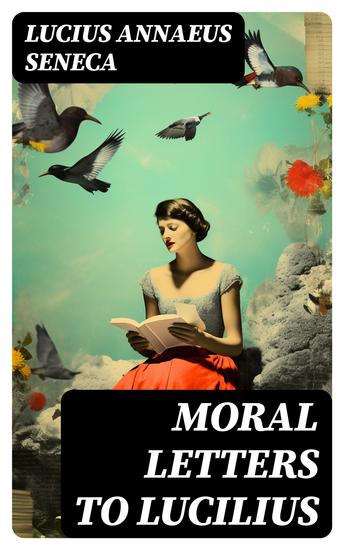
Moral Letters to Lucilius - Enriched edition Epistulae Morales ad Lucilium - cover
LER

Moral Letters to Lucilius - Enriched edition Epistulae Morales ad Lucilium

Lucius Annaeus Seneca

Tradutor Richard Mott Gummere

Editora: DigiCat

  • 0
  • 0
  • 0

Sinopse

In "Moral Letters to Lucilius," famed Stoic philosopher Seneca offers a profound collection of 124 epistolary reflections directed to his friend Lucilius, exploring themes of ethics, virtue, and the nature of the good life. Composed in a rich and accessible prose style, these letters blend passionate argumentation with practical advice, demonstrating Seneca's mastery of rhetoric and his nuanced understanding of human psychology. The work is firmly situated within the context of Roman Stoicism, serving both as a personal counsel on moral integrity and a broader commentary on the philosophical contemplations of the time, making it a vital text for understanding Stoic thought and its application to everyday life. Seneca, a prominent figure of the Silver Age of Latin literature, was deeply influenced by the turbulent political landscape of Rome as well as his own personal struggles with power, loss, and ethical living. His experiences as a statesman, dramatist, and moral philosopher informed his writings, allowing him to address universal human concerns with authenticity. The letters reflect his philosophical maturation and serve as a window into his interior life amidst the hazards of political intrigue. For readers seeking insight into the complexities of moral philosophy, "Moral Letters to Lucilius" is an indispensable text that resonates across centuries. This collection not only provides a treasure trove of wisdom for self-reflection but also encourages a dialogue on the enduring principles of Stoic thought, making it essential for anyone interested in ethics, philosophy, or personal growth.

In this enriched edition, we have carefully created added value for your reading experience:
- A comprehensive Introduction outlines these selected works' unifying features, themes, or stylistic evolutions.
- The Author Biography highlights personal milestones and literary influences that shape the entire body of writing.
- A Historical Context section situates the works in their broader era—social currents, cultural trends, and key events that underpin their creation.
- A concise Synopsis (Selection) offers an accessible overview of the included texts, helping readers navigate plotlines and main ideas without revealing critical twists.
- A unified Analysis examines recurring motifs and stylistic hallmarks across the collection, tying the stories together while spotlighting the different work's strengths.
- Reflection questions inspire deeper contemplation of the author's overarching message, inviting readers to draw connections among different texts and relate them to modern contexts.
- Lastly, our hand‐picked Memorable Quotes distill pivotal lines and turning points, serving as touchstones for the collection's central themes.
Disponível desde: 26/12/2023.
Comprimento de impressão: 724 páginas.
Outros livros que poderiam interessá-lo

  • Global Affairs - The Interconnected World and the Forces Shaping Our Future (3 in 1) - cover

    Global Affairs - The...

    Marcus Klein

    • 0
    • 0
    • 0
    This book contains 3 titles, which are the following: 
    · Cybersecurity: Cybersecurity is no longer a niche concern for IT professionals but a critical issue that impacts everyone. From personal data breaches to large-scale corporate hacks, the risks of cyber attacks are more real and damaging than ever. Hackers, cybercriminals, and even state-sponsored entities have the ability to infiltrate systems, steal sensitive data, and disrupt critical services. The consequences of these actions can range from financial loss to the erosion of privacy, and in some cases, even national security threats. 
    · Global Disasters: The world is increasingly vulnerable to a wide array of disasters, both natural and man-made, that threaten our lives, economies, and ecosystems. These crises, which range from catastrophic earthquakes to the far-reaching impacts of climate change, have become more frequent, intense, and interconnected. While the planet has always been subject to the forces of nature, human activity has amplified many of these events, while also introducing new, unprecedented risks. Natural disasters, like hurricanes, wildfires, and floods, have become an inevitable part of the global landscape, but they are now exacerbated by the ongoing environmental degradation we’ve caused. 
    · Drug Cartels: Drug cartels have become a pervasive and highly organized criminal force with a significant global reach. These powerful syndicates control large portions of the illegal drug trade, operating not only within their home countries but across continents. Their operations extend far beyond drug trafficking, often influencing global markets, politics, and even social structures. The history of drug cartels is intertwined with the rise of drug consumption worldwide, as their growth is directly linked to the increasing demand for illicit substances such as cocaine, heroin, methamphetamines, and marijuana.
    Ver livro
  • Food - Second Edition - cover

    Food - Second Edition

    John Coveney

    • 0
    • 0
    • 0
    In Food, John Coveney examines "food as . . . " identity, politics, industry, regulation, the environment, justice, and gastronomy. He explores how food helps us understand what it means to be human. 


    The centrality of food in life, and the importance of food as life, is undeniable. As a source of biological substrates, personal pleasure, and political power, food is and has been an enduring requirement of human biological, social, and cultural existence. Interest in food has increased across the academic, public, and popular spheres, fueled by popular media's constant play on the role of food and body size, and food and cooking, as a mass spectacle for TV audiences. Through food, we construct our social identities, our families and communities. However, Coveney also highlights the tensions between the industrialization of food, the environment, and the iniquitous distribution of food. He also considers how the food industries, on which most of us must rely, have also had direct effects on our bodies through diet, and the development of illness and diseases. 


    This accessible primer is for students and general listeners alike, indeed, for anyone with an interest in food. It questions the idea that food is merely something inert on the plate. Instead, it shows how influential, symbolic, powerful, and transformative food has come to be.
    Ver livro
  • The Confessions of Saint Augustine - cover

    The Confessions of Saint Augustine

    Saint Augustine

    • 0
    • 0
    • 0
    "The Confessions of Saint Augustine" is an autobiographical work by St. Augustine of Hippo, consisting of 13 books written between AD 397 and 400. This seminal work outlines his sinful youth and his conversion to Christianity. It is widely seen as the first Western autobiography ever written, and it provides deep philosophical and theological insights into faith and morality. Augustine explores the nature of time, memory, and the inner self, and the narrative is as much a chronicle of his spiritual journey as it is a theological treatise.
    Ver livro
  • Benito Mussolini - cover

    Benito Mussolini

    Cyril Taylor-Carr

    • 0
    • 0
    • 0
    “It’s better to live one day as a lion than 100 years as a sheep.”"I am the most terrible animal that's ever existed.""Democracy is beautiful in theory; in practice, it is a fallacy. You in America will see that someday.""It's good to trust others but, not to do so is much better."“I feel, when we have no friends upon whom to lean, or to look for moral guidance." (Mussolini)Benito Amilcare Andrea Mussolini, born on July 29, 1883, who went by the nickname “Il Duce” (“the Leader”), was a deeply unbalanced tyrannical Italian dictator who created the dreaded Fascist Party in 1919. Eventually, he held all power in Italy as the country’s prime minister from 1922 to 1943. An ardent socialist as a youth, Mussolini followed in his father's political footsteps but was expelled by the party for his overt support of World War I. As an evil dictator during World War II (even murdering his own son by lethal injection) he greatly overextended his forces and was eventually killed by his own people in Mezzegra, Italy. Here, for the first time, are the words of the great dictator himself in his twisted manifesto on the political movement he started and is still so feared to this very day.
    Ver livro
  • The Iranian Revolution - Rise of the Ayatollahs - cover

    The Iranian Revolution - Rise of...

    Nova Ashford

    • 0
    • 0
    • 0
    Before the streets of Tehran echoed with revolutionary chants and the name of Ayatollah Khomeini became a global symbol of defiance, Iran was ruled by Mohammad Reza Shah Pahlavi—a monarch whose ambition was to modernize his country at any cost. Known as the "King of Kings," the Shah envisioned an Iran that could rival Western nations in technology, infrastructure, and global prestige. His White Revolution, launched in the 1960s, was a sweeping series of reforms aimed at rapidly modernizing the nation. Land redistribution, women's suffrage, industrial expansion, and increased secular education were all central to his vision. In the eyes of Western powers, especially the United States, he was a key ally and a symbol of stability in a volatile region. 
    But beneath this polished exterior, discontent festered. The Shah’s modernization efforts, while bold, were top-down and often clashed with Iran’s deeply rooted religious and traditional structures. Many in the rural population saw land reforms as chaotic and unfair, while urban intellectuals criticized the regime's autocratic nature. The clergy, once influential in shaping public life and morality, saw their role increasingly diminished. Religious scholars and conservative families grew uneasy as Western influence crept deeper into Iranian society, challenging long-standing cultural and Islamic norms. 
    Moreover, the Shah ruled with an iron grip. Political dissent was crushed by SAVAK, the brutal secret police known for its surveillance, torture, and disappearances. Political parties were neutered or banned altogether, and elections were often staged performances. Public criticism of the monarchy was not tolerated, driving opposition voices either underground or into exile. Despite vast oil revenues, economic inequality widened, and rapid urbanization led to overcrowded cities, job shortages, and growing disillusionment among the working class and youth.
    Ver livro
  • Utahisms - Unique Expressions Inventions Place Names & More - cover

    Utahisms - Unique Expressions...

    David Ellingson Eddington

    • 0
    • 0
    • 0
    Utahisms: Unique Expressions, Inventions, Place Names and more ranges from the characteristic to the bizarreThe Beehive State's iconic vistas are singular and distinctive. So too are its colloquialisms, peculiar place names and landmark firsts. Confusion from local dialect ultimately thwarted a would be robber in Salt Lake City. The proper pronunciation of Tooele might surprise visitors, while residents still debate its origins. And, phrases once thought to be solely Utahn often prove otherwise. The world's first department store was born out of xenophobia and religious persecution in 1869. Martha Hughes Cannon followed through on Brigham Young's encouraging women to become physicians. She later became the first female state senator in the United States, defeating her own husband.Examining everything from phonetics to history, BYU Linguistics Professor David Eddington reveals the roots of what is truly, uniquely Utah.
    Ver livro