Junte-se a nós em uma viagem ao mundo dos livros!
Adicionar este livro à prateleira
Grey
Deixe um novo comentário Default profile 50px
Grey
Assine para ler o livro completo ou leia as primeiras páginas de graça!
All characters reduced
Twenties Seek Purpose - cover
LER

Twenties Seek Purpose

Lucas Morgan

Tradutor A AI

Editora: Publifye

  • 0
  • 0
  • 0

Sinopse

"Twenties Seek Purpose" addresses the widespread career dissatisfaction and underemployment experienced by young adults today. It highlights the pressures of the modern job market, where globalization and technology have disrupted traditional career paths. The book argues that a skills-focused approach to career planning is insufficient, advocating instead for integrating personal values and purpose into career decisions. The book examines societal and economic forces, such as social media and the gig economy, that contribute to career-related anxieties. It emphasizes self-discovery, guiding readers to identify their strengths and passions. Did you know that young adults often face pressure to achieve success based on external metrics rather than personal fulfillment? Moreover, many feel adrift due to a disconnect between education and available job opportunities. Beginning with an overview of the employment landscape, the book progresses to explore strategies for career exploration, networking, and skill development. It culminates in cultivating resilience and finding purpose in work. Through practical exercises and real-world examples, "Twenties Seek Purpose" empowers young adults to navigate the job market and find fulfilling career paths.
Disponível desde: 27/02/2025.
Comprimento de impressão: 133 páginas.

Outros livros que poderiam interessá-lo

  • The Dreamkeepers - Successful Teachers of African American Children 3rd Edition - cover

    The Dreamkeepers - Successful...

    Gloria Ladson-Billings

    • 0
    • 0
    • 0
    Discover how to give African American children the education they deserve with this updated new resource 


    In the newly revised Third Edition of The Dreamkeepers: Successful Teachers of African American Children, distinguished professor Dr. Gloria Ladson-Billings delivers an encouraging exploration of the future of education for African American students. She describes eight exemplary teachers, all of whom differ in their personal style and methods, who share an approach to teaching that affirms and strengthens cultural identity. 


    In this mixture of scholarship and storytelling, you'll learn how to create intellectually rigorous and culturally relevant classrooms that have the power to improve the lives of all children. This important book teaches: what successful teachers do, don't do, and what we can learn from them; why it's so important for teachers to work with the unique strengths each student brings to the classroom; and how to improve educational outcomes for African American children across the country. Perfect for teachers, parents, school leaders, and administrators, The Dreamkeepers will also earn a place in the libraries of school boards, professors of education, and urban sociologists, as well as anyone with an interest in issues of race and education.
    Ver livro
  • Works and Customs in Palestine Volume I 2 - The Course of the Year and the Course of the Day Second Half: Spring and Summer - cover

    Works and Customs in Palestine...

    Gustaf Dalman

    • 0
    • 0
    • 0
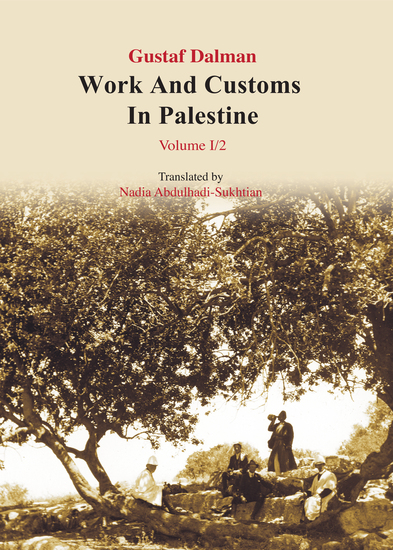
    Volume I; Part 2, Spring and Summer, continues dealing with agriculture in general, because the seasons of Palestine could not be described without describing the various farming tasks connected to them, and the religious customs associated with them.
    Ver livro
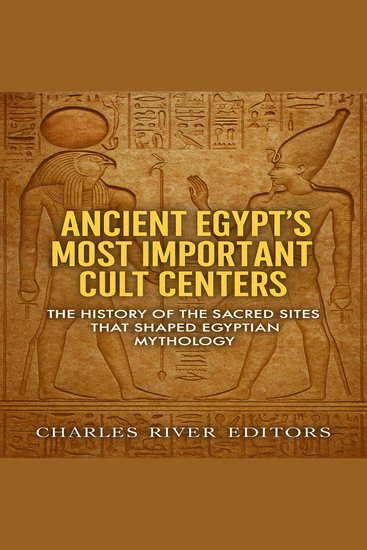
  • Ancient Egypt’s Most Important Cult Centers: The History of the Sacred Sites that Shaped Egyptian Mythology - cover

    Ancient Egypt’s Most Important...

    Charles River Editors

    • 0
    • 0
    • 0
    Perhaps the most intriguing aspect of ancient Egyptian civilization was its inception from the ground up, as the ancient Egyptians had no prior civilization which they could use as a template. In fact, ancient Egypt itself became a template for the civilizations that followed.  
    One of the primary reasons why modern scholars know so much about Egyptian history is due to many monuments found up and down the Nile. Although some of the tombs built on the west bank of the Nile River have suffered a fair amount of wind damage and all of the great monuments have endured the ravages of time, they are amazingly well-preserved, thanks both to Egypt’s arid climate and good workmanship. The Egyptian monument builders were truly a class above their contemporaries in terms of their trade, which was helped by the fact that they worked with the more permanent materials of sandstone and limestone, unlike Mesopotamian builders who were forced to primarily work with mud and brick.  
    In ancient Egypt, cities held political and religious significance, which meant that if the political or religious tides changed, so too could the fortunes of particular cities. Memphis is perhaps the best known of ancient Egypt’s cities because it was fortunate enough to be the political capital of the Egyptian state for most of its history. Hundreds of miles to Memphis’ south, Thebes became an important city during the Middle Kingdom and its stature grew during the New Kingdom when many of the pharaohs came from there and the national god, Amun, had its cult center in the city. Other cities, such as Tanis and Sais, were important for much shorter periods in Egyptian history. The city of Abju, which was known as Abydus to the Greeks, and later became known simply as “Abydos” had a history that was as long as Memphis’, and although its influence on pharaonic culture may not have been as apparent, it was no less profound.
    Ver livro
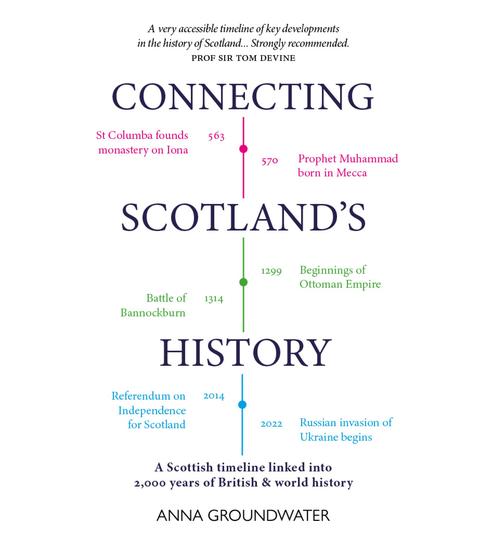
  • Connecting Scotland's History - A Scottish History Timeline Linked into 2000 Years of World History - cover

    Connecting Scotland's History -...

    Anna Groundwater

    • 0
    • 0
    • 0
    What was happening elsewhere in the world when Robert the Bruce was outlawed and Mary Queen of Scots lost her head? When Genghis Khan was on the warpath and Ivan the Terrible was the Russian czar, what was happening in Scotland? Find the answers to these questions in 2,000 years of Scottish history presented alongside what was happening in the rest of the world.
    By placing events in Scotland in relation to those elsewhere, we can see what is different or distinctive about Scotland's experience. Simultaneously we can also see where movements in Scottish history were part of wider cultural or political change in Europe and beyond. John Knox's fiery sermons of the 1560s were connected into a wider Protestant Reformation, but they also represented a singularly Scottish version of a European phenomenon.
    Connecting Scotland's History also gives us a history of 'many Scotlands'. We see the hybrid nature of a country where multiple peoples have come together in a distinctively Scottish mixture. From the Gaels, Picts and Norse people to more recent influxes from England, Ireland, continental Europe and beyond, Scotland's history tells us of internal connections as well as connections between Scotland and the wider world.
    Ver livro
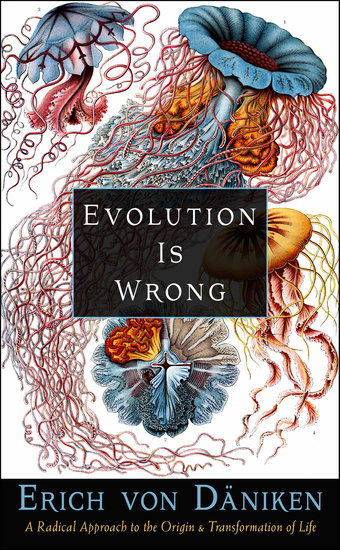
  • Evolution Is Wrong - A Radical Approach to the Origin and Transformation of Life - cover

    Evolution Is Wrong - A Radical...

    Erich von Däniken

    • 0
    • 0
    • 0
    A Fascinating Exploration on Why the Darwinists’ Theory No Longer Explains EverythingThere was once a set of ideas called the theory of evolution, conceived by clever people and confirmed by countless scientists. Then people discovered the electron microscope. This made it possible to make the molecules within the cell visible, and suddenly questions about evolution arose that were not possible before. Which force actually bundles the atoms in the right order? What moves the molecular chains into the correct position? How did the first living unit within the cell actually come about? How does inheritance work, how does information pass on to the next generation? Did humans descend only and exclusively from primates—as Charles Darwin and countless other great minds assumed—or did additional “engines” intervene in evolution? Today it is clear: countless questions can no longer be answered with the previous theory of evolution. There is a form of life called “Blob” (Physarum polycephalum). The “thing” has neither eyes nor ears, neither a mouth nor a nose or even a brain. Nevertheless, it takes in food, overcomes obstacles by the shortest route and exchanges information with other “blobs.” The “blob” contradicts any evolutionary thought that one develops from the other. Or the “gastric-brooding frogs” (Rheobatrachus) found in Australia. They hatch their young in the stomach. Impossible in a slow, evolutionary process. Everywhere there are characteristics of animals that do not want to fit into the theory of evolution anywhere. And man? Are we really the most adapted life-form on this planet? Today, more and more scientists who contradict the previous theory of evolution speak out. The theory fits the changes within the species, but it can no longer be reconciled with the inner workings of the cell. Some other influence that has so far escaped us is affecting evolution. It is called “Intelligent Design.” Intelligent planning is suspected behind this. Anyone or anything—a spirit of the universe? Aliens?—could be behind this planning. Erich von Däniken uses countless examples to demonstrate the impossibility of the previous evolutionary idea. He quotes scientists who argue against the previous teaching, but also those who defend it. Unfortunately, established science still refuses to look at discrepancies and holes in the theory of evolution, even though it is quite obvious that there is more going on with regard to the development of all species, as well as human culture, than could be explained by the theory of evolution alone.
    Ver livro
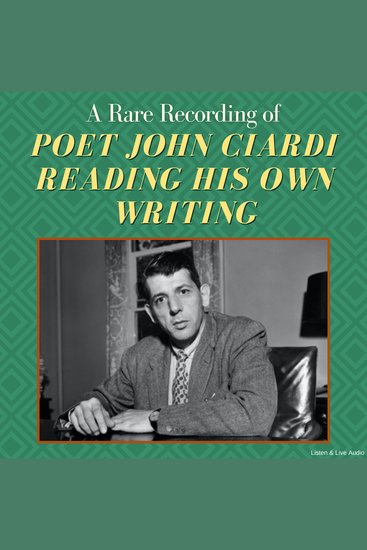
  • A Rare Recording of Poet John Ciardi Reading His Own Writing - cover

    A Rare Recording of Poet John...

    John Ciardi

    • 0
    • 0
    • 0
    John Anthony Ciardi (June 24, 1916 - March 30, 1986) was an American poet, translator, and etymologist. While primarily known as a poet, Ciardi pursued etymology, contributed to the Saturday Review as a columnist and long-time poetry editor, directed the Bread Loaf Writers' Conference in Vermont, and recorded commentaries for National Public Radio. In 1959, Ciardi published a book on how to read, write, and teach poetry, How Does a Poem Mean?, which has proven to be among the most-used books of its kind. In the following recordings, Ciardi reads "And They Lived Happily Ever After For Awhile," “To Judith, I,” “Happiness,” and “The Lamb.”
    Ver livro