¡Acompáñanos a viajar por el mundo de los libros!
Añadir este libro a la estantería
Grey
Escribe un nuevo comentario Default profile 50px
Grey
Suscríbete para leer el libro completo o lee las primeras páginas gratis.
All characters reduced
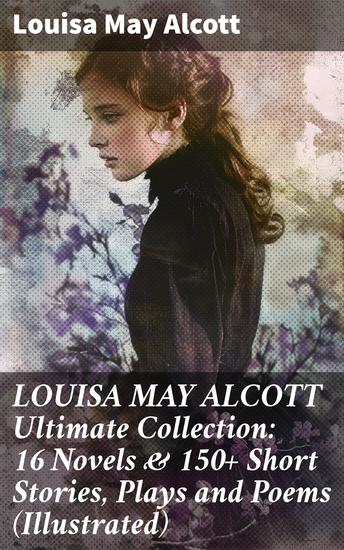
LOUISA MAY ALCOTT Ultimate Collection: 16 Novels & 150+ Short Stories Plays and Poems (Illustrated) - Enriched edition Capturing 19th Century America: A Literary Journey - cover

LOUISA MAY ALCOTT Ultimate Collection: 16 Novels & 150+ Short Stories Plays and Poems (Illustrated) - Enriched edition Capturing 19th Century America: A Literary Journey

Louisa May Alcott

Editorial: Good Press

  • 0
  • 0
  • 0

Sinopsis

Louisa May Alcott's "Ultimate Collection" is a remarkable compilation that encapsulates the multifaceted genius of one of America's most beloved authors. This extensive anthology presents 16 novels, alongside more than 150 short stories, plays, and poems, showcasing Alcott's distinctive literary style. Rich in character development and imbued with moral undertones, her works reflect the social issues of her time, including gender roles, poverty, and the pursuit of personal identity. The illustrations accompanying the texts further enhance the reader's experience, bridging literature and visual art in a manner that captures the essence of the 19th-century literary landscape. Louisa May Alcott, born in 1832 in Pennsylvania, was profoundly influenced by her transcendentalist upbringing and her experiences as a Civil War nurse. These influences are vividly manifested in her writing, where she often explores themes of self-discovery and societal constraints. Alcott's most famous work, "Little Women," emphasizes the internal struggles of women, reflecting her own life as an independent thinker in a male-dominated society. Alcott's literary journey was both a personal quest for recognition and a broader examination of women's roles in the Victorian era. This ultimate compendium is a must-read for scholars and casual readers alike, offering a comprehensive insight into Alcott's imaginative world. Whether you seek to understand her contribution to feminist literature or simply enjoy captivating storytelling, this collection serves as an invaluable resource, inviting readers to rediscover the timeless relevance of Alcott's themes and characters.

In this enriched edition, we have carefully created added value for your reading experience:
- A comprehensive Introduction outlines these selected works' unifying features, themes, or stylistic evolutions.
- The Author Biography highlights personal milestones and literary influences that shape the entire body of writing.
- A Historical Context section situates the works in their broader era—social currents, cultural trends, and key events that underpin their creation.
- A concise Synopsis (Selection) offers an accessible overview of the included texts, helping readers navigate plotlines and main ideas without revealing critical twists.
- A unified Analysis examines recurring motifs and stylistic hallmarks across the collection, tying the stories together while spotlighting the different work's strengths.
- Reflection questions inspire deeper contemplation of the author's overarching message, inviting readers to draw connections among different texts and relate them to modern contexts.
- Lastly, our hand‐picked Memorable Quotes distill pivotal lines and turning points, serving as touchstones for the collection's central themes.
Disponible desde: 10/01/2024.
Longitud de impresión: 2150 páginas.
Otros libros que te pueden interesar

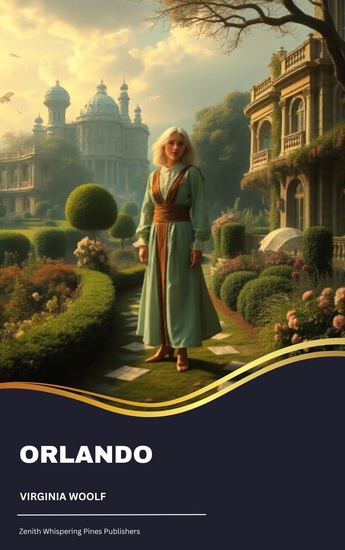
  • Orlando - cover

    Orlando

    Virginia Woolf

    • 0
    • 0
    • 0
    Step into the Most Bold and Imaginative "Biography" Ever Written.
    
    Spanning three centuries and two genders, Virginia Woolf's Orlando is a dizzying, poetic journey through history and identity. The story begins in the Elizabethan era with Orlando, a young nobleman and aspiring poet who enjoys the favor of the Queen. After falling into a deep sleep that lasts days, Orlando awakens in the 18th century to find they have undergone a mysterious transformation: they are now a woman.
    
    Unburdened by the constraints of time or biology, Orlando lives through the Enlightenment, the Victorian era, and into the "present" day of 1928. Throughout this incredible voyage, Woolf explores the fluidity of the human spirit, the art of writing, and the shifting roles of men and women in society.
    
    Written as a "love letter" to Vita Sackville-West, Orlando is a cornerstone of queer literature and a daring departure from the traditional novel. It remains one of Woolf's most accessible and joyful works—a high-spirited blend of historical fiction, satire, and fantasy.
    
    Experience a story that transcends time and gender. Buy "Orlando" today and discover a masterpiece of modern imagination.
    Ver libro
  • Blood - From their pens to your ears genius in every story - cover

    Blood - From their pens to your...

    Hanns Heinz Ewers

    • 0
    • 0
    • 0
    Hanns Heinz Ewers was born on 3rd November 1871 in Düsseldorf, Germany. 
    His first published poem was at 17 on the death, after a reign of only 99 days, of the German Emperor Frederick III. 
    A stint in the German military was cut short after only 44 days because of his myopia.  Writing was to be the way forward for him with a book of satiric verse published in 1901. At the same time he co-founded a literary vaudeville troupe that toured central and eastern Europe before censors and expenses forced its closure.  An inveterate traveller he was in South America when the Great War enveloped Europe and he relocated to New York. 
    From here his story darkens. Although by now a successful and admired author he was arrested in the U S in 1918 as a German Agent on the pretext of his travels and a falsified Swiss passport. Interned, he was released in 1921 and returned to Germany.  He claimed only to be raising money for the German Red Cross. 
    His literary fame is decidedly easier to clarify. His novels beginning with ‘The Sorcerer’s Apprentice’ in 1910 are dark, they bristle with evil intent and are littered with characters who have a dubious moral compass and yet, along with his short stories, are brazen, brilliant feats of literary narrative. 
    He also wrote and published plays, fairy tales, opera librettos, critical essays and lectured for many years on ‘The Religion of Satan’ and was one of the first to write scripts for the cinema, which he considered a legitimate art form. 
    As the Weimar republic began its chaotic death throes Ewers became attracted to the rising Nazi Party.  At first he was warmly received despite disagreeing with its anti-semitism (his most famed literary character had a Jewish mistress) and he was even commissioned by Hitler to write a biography of the Nazi martyr Horst Wessel.  This together with his own homosexuality culminated with his works being banned in 1934 and his assets and property seized.  It took him many years to have the ban lifted.  This association rightfully clouds his personal reputation but has meant his literary contributions are also overlooked and neglected. 
    Hanns Heinz Ewers died of tuberculosis on 12th June 1943 in his Berlin apartment.
    Ver libro
  • Washington Square - cover

    Washington Square

    Henry James

    • 0
    • 0
    • 0
    Washington Square" is a novel written by Henry James, first published in 1880. The story is set in the fashionable society of New York City in the mid-19th century and revolves around the life of Catherine Sloper, a plain and socially awkward young woman. The plot unfolds as Catherine becomes the heiress to a considerable fortune, leading to the attention of Morris Townsend, a charming but financially motivated suitor. The novel explores themes of love, wealth, societal expectations, and the complexities of human relationships.
    Ver libro
  • Immortal An - From their pens to your ears genius in every story - cover

    Immortal An - From their pens to...

    Sidney Benson Thorp

    • 0
    • 0
    • 0
    The bookshelves of British literature are incredible collections that have gathered together centuries of very talented authors.  From these Isles their fame spread and whilst among their number many are now forgotten or neglected their talents endure.  Among them is Sidney Benson Thorp.
    Ver libro
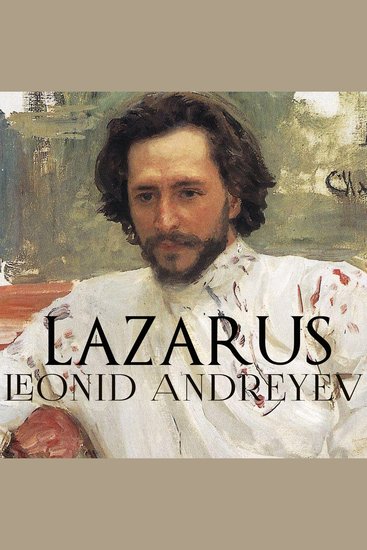
  • Lazarus - cover

    Lazarus

    Leonid Andreyev

    • 0
    • 0
    • 0
    What did Lazarus see beyond the veil of death?
    In this haunting masterpiece of psychological and philosophical fiction, Leonid Andreyev conjures a vision of resurrection unlike any ever imagined. Lazarus is not a tale of triumph over death—but of what death leaves behind.
    Strange, unsettling, and metaphysical, this is the story of a man raised from the grave only to cast a cold, unblinking gaze back upon the living. Wherever he walks, beauty withers, joy dissolves, and the veneer of meaning slips away. Those who look into his eyes do not die—they unravel.
    Written in a feverish prose that borders on the ecstatic and apocalyptic, Lazarus is a hypnotic meditation on the abyss that separates existence from extinction—and the unspeakable truth that might wait on the other side.
    Perfect for listeners drawn to existential horror, metaphysical fiction, or the eerie brilliance of Dostoevsky, Kafka, or Poe.
    Ver libro
  • Her Lover - From their pens to your ears genius in every story - cover

    Her Lover - From their pens to...

    Maxim Gorky

    • 0
    • 0
    • 0
    Alexei Maximovich Peshkov was born on 28th March 1868, in Nizhny Novgorod, Russia. 
    Better known as Maxim Gorky he was orphaned at 11 and ran away from home at 12.  At 19 he had already attempted suicide and thereafter travelled, by foot, across the Russian Empire for 5 years. 
    His first book ‘Essays & Stories’ in 1898 was a sensation and so began a long career as an author of short stories, novels and plays.  Gorky saw writing as a moral and political act that would help to change the unjust world around him.  He was an ardent early advocate of the emerging Marxist movement and publicly opposed the Tsarist regime leading several times to his arrest.  
    In 1904 he began his own theatre but the censor banned every play and Gorky was forced to abandon the project. 
    But Gorky was a financially successful author, editor, and playwright and gave monies to political parties as well as for civil rights and social reform.  The brutal shooting of workers, which set in motion the Revolution of 1905, pushed Gorky more decisively toward radical solutions.  
    In 1906 he went to the United States to raise funds for the Bolsheviks. Those experiences including a scandal over travelling with his lover and not his wife deepened his contempt for the ‘bourgeois soul.’ 
    Gorky now moved to Capri in Italy, both for health reasons and to escape the increasingly repressive times in Russia.  
    An amnesty for the 300th anniversary of the Romanov dynasty saw him return to Russia in 1914. His politics remained close to the Bolshevik cause.  But soon, after the 1918 revolution, his essays referred to Lenin as a tyrant for his senseless arrests and repression.  He was soon appealing to the outside world for food aid after the catastrophic crop failure. 
    In October 1921 Gorky returned to Italy, now in Fascist hands, and settled in Sorrento until 1932.  His health worsened with the onset of tuberculosis. 
    He wrote several successful books there but now decided to find an understanding with the communist regime. Stalin invited him home and his return was hailed as a major propaganda victory.  He was decorated with the Order of Lenin, and a province, a park, and various streets re-named in his honour. 
    But he had his faults too.  In 1933, Gorky co-edited a book on the White Sea-Baltic Canal and denied even a single prisoner died during its construction, but thousands had. As well, knowing that some Nazis were homosexual, a phrase was attributed to him that said ‘exterminate all homosexuals and fascism will vanish’.  Although he was himself was quoting another he was decidedly homophobic. 
    With the increase of Stalinist repression in 1935 Gorky was placed under unannounced house arrest. 
    Maxim Gorky died on the 18th June 1936 from pneumonia.  He was 68. 
    Stalin and Molotov were among those who carried Gorky's urn of ashes at his funeral.
    Ver libro