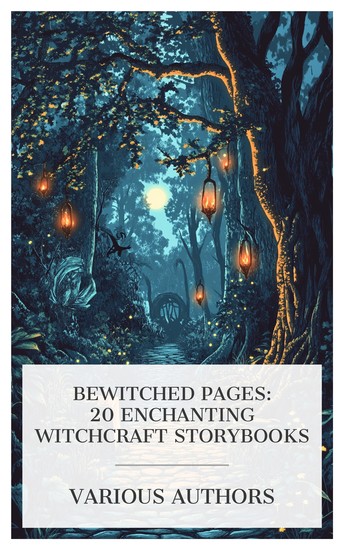
Bewitched Pages: 20 Enchanting Witchcraft Storybooks - The Shadow Witch The Discoverie of Witchcraft Discovery of Witches The Salem Belle etc
Louisa May Alcott, L. Frank Baum, Frederick Marryat, William Henry Giles Kingston, Howard Phillips Lovecraft, Ruth Plumly Thompson, Margaret Alice Murray, William Stearns Davis, Ebenezer Wheelwright, John R. Musick, Robert Bloomer Hare Bell, Gertrude Crownfield, M. V. B. Perley, Joanna E. Wood, Anna Bronson Alcott Pratt, Pauline Bradford Mackie, Reginald Scot, Thomas Lambert Sappington, Wallace Notestein, Thomas Potts, Kenneth James Beatty
Editorial: e-artnow
Sinopsis
Bewitched Pages: 20 Enchanting Witchcraft Storybooks is a captivating anthology that delves into the mystical world of witchcraft through an eclectic blend of literary styles and narratives. This collection traverses the genres of gothic horror, historical fantasy, and whimsical adventure, offering readers a diverse exploration of enchantment and sorcery. Amidst tales of mysterious rituals and enchanting creatures, the anthology beautifully juxtaposes the dark allure of spellcasting with the moral complexities that magic imparts. Notable stories within the volume reveal both the sinister and benign facets of witchcraft, ensuring an intriguing reading experience that resonates with literary enthusiasts. The collection, meticulously curated, presents a rich tapestry of narratives that capture the reader's imagination and highlight the enduring fascination with the supernatural. The contributing authors, drawn from different literary backgrounds and historical contexts, collectively enrich the anthology's thematic depth. Howard Phillips Lovecraft and L. Frank Baum offer contrasting viewpoints from American literature, while British voices like Margaret Alice Murray provide a scholarly lens on historical witchcraft. The pioneering women authors, including Louisa May Alcott and Joanna E. Wood, bring forth narratives that intertwine elements of empowerment and magical realism, reflecting societal shifts during their times. Collectively, these authors, spanning centuries and continents, contribute to a multifaceted understanding of witchcraft and its portrayal in literature, often aligning with movements of romanticism, feminism, and early modern mystical traditions. For readers eager to explore the intersection of folklore, history, and fiction, Bewitched Pages serves as an invaluable trove of literary enchantment. This anthology not only offers an immersive exploration of varied stylistic expressions and thematic interpretations but also fosters a unique dialogue between disparate authors from different epochs. Whether seeking to understand the cultural underpinnings of witchcraft or simply indulging in fantastical storytelling, this collection provides a comprehensive and educational journey. The anthology invites readers to immerse themselves in a spellbinding world, illuminating the rich tapestry of perspectives on witchcraft through the agesâ€"a testament to the timeless allure of the magical and mysterious.
Disponible desde: 04/03/2025.
Longitud de impresión: 2000 páginas.