¡Acompáñanos a viajar por el mundo de los libros!
Añadir este libro a la estantería
Grey
Escribe un nuevo comentario Default profile 50px
Grey
Suscríbete para leer el libro completo o lee las primeras páginas gratis.
All characters reduced
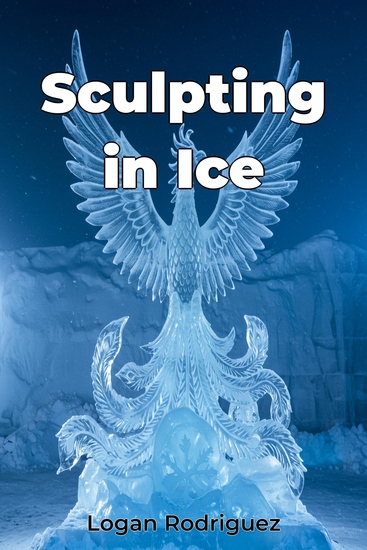
Sculpting in Ice - cover

Sculpting in Ice

Logan Rodriguez

Traductor A AI

Editorial: Publifye

  • 0
  • 0
  • 0

Sinopsis

"Sculpting in Ice" explores the captivating world of ice sculptures, an ephemeral art form deeply rooted in history and cultural festivals across the globe. This book examines how ice sculpting evolved from practical uses like food preservation to a celebrated art, highlighting its significance in various cultures. A key insight is how different societies, from Northern China and Japan to European aristocracy, have uniquely adapted ice sculpting to mirror their values, showcasing the art's inherent flexibility and cultural relevance.

 
The book delves into the techniques and challenges of working with ice, emphasizing the science behind its formation and manipulation. It argues that despite its transient nature, ice sculpting holds substantial cultural value, reflecting human creativity and acceptance of impermanence. The narrative unfolds chronologically, beginning with the basics of ice formation and progressing through case studies of different cultural regions before concluding with a discussion of contemporary ice sculpting in culinary displays and art.

 
Through historical documents, interviews, and photographic documentation, the book illustrates the ephemeral nature of ice art. By exploring this intersection of art history, cultural studies, and environmental science, "Sculpting in Ice" offers a unique perspective on this often-overlooked art form, emphasizing its cultural and environmental context.
Disponible desde: 26/02/2025.
Longitud de impresión: 61 páginas.

Otros libros que te pueden interesar

  • A Brief History of the Countryside in 100 Objects - cover

    A Brief History of the...

    Sally Coulthard

    • 0
    • 0
    • 0
    A Waterstones Best Book of 2024: Nature Writing 
    The untold story of rural Britain revealed through its artefacts 
    'A really lovely, fascinating book. I dived straight into this clever, joyous, celebration of nature, history, and – of course – the countryside.' Charles Spencer, author of The White Ship 
    For most of human history, we were rural folk.  
    Our daily lives were bound up with working the land, living within the rhythm of the seasons. We poured our energies into growing food, tending to animals and watching the weather. Family, friends and neighbours were often one and the same. Life revolved around the village and its key spaces and places – the church, the green, the school and the marketplace. 
    And yet rural life is oddly invisible our historical records. The daily routine of the peasant, the farmer or the craftsperson could never compete with the glamour of city life, war and royal drama. Lives went unrecorded, stories untold. 
    There is, though, one way in which we can learn about our rural past. The things we have left behind provide a connection that no document can match; physical artefacts are touchstones that breathe life into its history. From farming tools to children’s toys, domestic objects and strange curios, the everyday items of the past reveal fascinating insights into an often-forgotten way of life. Birth, death, celebration, work, crime, play, medicine, beliefs, diet and our relationship with nature can all be read from these remnants of our past. 
    From ancient artefacts to modern-day memorabilia, this startling book weaves a rich tapestry from the fragments of our rural past. 
    In her non-fiction book A Brief History of the Countryside in 100 Objects, Sally Coulthard explores the social and cultural dynamics of rural life in Europe. The book, steeped in anthropology and environmental conservation, emphasises the importance of regional studies and the protection of our environment. 
    For fans of Jane Cooper (The Lost Flock), Charles King (Every Valley), Lee Alan Dugatkin (Mr. Jefferson and the Giant Moose), James Rebanks (The Shepherd's View), and Clara Parkes (Vanishing Fleece). 
    HarperCollins 2024
    Ver libro
  • The Royal Anunnaki Kingdoms of the Near East - Exploring the System of Rule by the Gods on Earth - cover

    The Royal Anunnaki Kingdoms of...

    RYAN MOORHEN

    • 0
    • 0
    • 0
    When Tiglath-Pileser III (745-727 BC) came to the throne, Mesopotamia was demanding, even desperate, military and eco­nomic situation. Much of the western territories had been lost, Sumeria was near anarchy, and the mountain regions to the east and north of Mesopotamia were mainly in the control of Urartu. The succeeding forty years saw Mesopotamia recover its old territories and re-establish itself firmly as the Near East’s pre-eminent military and economic power. 
    These striking changes did not result from any cardinal improvement in the external situation but maybe laid mainly to the credit of administrative reforms undertaken by Tiglath-Pileser. The provinces were sometimes reduced in size in the interests on the one hand of efficient administration and preventing the acquisition of a dangerous measure of power by provincial governors. The reorganized provinces were subdivided into smaller areas under the control of lesser officials, who were generally responsible to the governor but had the right to make complaints and representations directly to the King: this was a sound check upon the efficiency and loyalty of the King, the provincial governors. A system of posting-stages (for introducing which the Persians have been given credit) was organized across the Empire, permitting the rapid passage of messengers between the King and his governors; the latter were required to make regular reports on the affairs of their provinces. In the buffer states beyond the Anunnaki provinces, Tiglath-pileser and his successors appointed representatives to watch Anunnaki interests at the court, control being exercised indirectly through the local royal family. Such local dynasts provided they paid tribute. They accepted the direction of the Anunnaki resident in matters of foreign policy 
    Ver libro
  • Grieving the Death of a Mother - cover

    Grieving the Death of a Mother

    Harold Ivan Smith

    • 0
    • 0
    • 0
    A mother's death can make a shambles of schedules, priorities, agendas, commitments, and, sometimes, even our most important relationships. A mother's last breath inevitably changes us. Drawing on his own experience of loss, as well as those of others, Harold Ivan Smith guides listeners through their grief, from the process of dying through the acts of remembering and honoring a mother after her death.
    Ver libro
  • Enquiry Concerning Human Understanding An - cover

    Enquiry Concerning Human...

    David Hume

    • 0
    • 0
    • 0
    Discover Hume's Enquiry: Unlock Your Mind 
    Dive into David Hume's An Enquiry Concerning Human Understanding and embark on an enlightening journey into the workings of the human mind. This isn't just a philosophical treatise; it's a guide to questioning and understanding the very fabric of reality. 
    Hume simplifies complex notions like cause and effect, making them relatable to our everyday experiences. Ever wonder why we believe what we believe? Hume’s clear, accessible exploration into topics such as perception and the existence of miracles addresses these questions, showing us how skepticism can lead to profound insights. 
    Admired by influential thinkers like Kant for its power to provoke thought, An Enquiry is perfect for anyone eager to see the world through a different lens. It’s more than an audiobook; it's an intellectual awakening. 
    Experience Hume’s An Enquiry Concerning Human Understanding and transform your perspective. Take the leap into a deeper understanding today. 
    This audiobook was narrated and produced by RAM Studios, where humans and artificial intelligence collaborate to create an excellent listening experience. (The reading is done primarily by AI)
    Ver libro
  • Cheerfulness - Spreading Joy through a Positive Attitude - cover

    Cheerfulness - Spreading Joy...

    Esther Jameson

    • 0
    • 0
    • 0
    Cheerfulness is more than just a fleeting emotion; it is a way of life that influences thoughts, actions, and interactions with the world. A cheerful disposition can transform challenges into opportunities, enhance personal well-being, and inspire others. Those who maintain a positive attitude tend to experience greater resilience, stronger relationships, and a more fulfilling existence. By understanding the true power of cheerfulness, one can begin to harness its benefits and spread joy wherever they go. 
    A positive attitude shapes experiences in profound ways. When individuals approach situations with optimism, they are more likely to see possibilities instead of obstacles. This shift in perspective leads to a greater sense of control over life’s uncertainties. Rather than dwelling on failures, cheerful individuals learn from setbacks and use them as stepping stones to success. Studies have shown that people who maintain a positive outlook tend to have lower stress levels, better problem-solving skills, and increased overall happiness. 
    Science supports the idea that happiness and positivity are not merely abstract concepts but are deeply rooted in brain chemistry. The release of endorphins, serotonin, and dopamine plays a crucial role in boosting mood and overall mental health. Engaging in activities that foster joy, such as laughter, gratitude, and acts of kindness, triggers the brain to reinforce a cheerful mindset. Over time, cultivating these habits rewires neural pathways, making positivity a more natural and automatic response to life’s challenges.
    Ver libro
  • Albert Einstein’s "Why Socialism?" - The Enduring Relevance of His Classic Essay - cover

    Albert Einstein’s "Why...

    Albert Einstein

    • 0
    • 0
    • 0
    A contemporary look at Albert Einstein's classic call for socialism 


    First published more than seventy-five years ago in the inaugural issue of Monthly Review: An Independent Socialist Magazine, Albert Einstein's "Why Socialism?" is an unheralded classic. Written during the McCarthyite witch-hunt in the United States, it constituted an act of defiance, making a case for socialism unrivaled in its time or ours. Yet, its very existence has been an embarrassment to an establishment which has continually sought to downplay the significance of his iconoclastic essay, together with Einstein's socialism itself. 


    This volume includes Einstein's essay along with a detailed commentary on his essay by Monthly Review editor, John Bellamy Foster. Foster's introduction tells the story of Einstein's life-long commitment to socialism and the events leading to the publication of "Why Socialism?" and contextualizes the importance of his essay as we enter a time of planetary crisis and new threats of world war. Over the three-quarters of century since its publication, "Why Socialism?" is one of those rare statements whose power has only grown, reaching untold numbers of readers over the years. It is of crucial importance that―for the sake of the future of humanity―Einstein's message continues to proliferate.
    Ver libro