¡Acompáñanos a viajar por el mundo de los libros!
Añadir este libro a la estantería
Grey
Escribe un nuevo comentario Default profile 50px
Grey
Suscríbete para leer el libro completo o lee las primeras páginas gratis.
All characters reduced
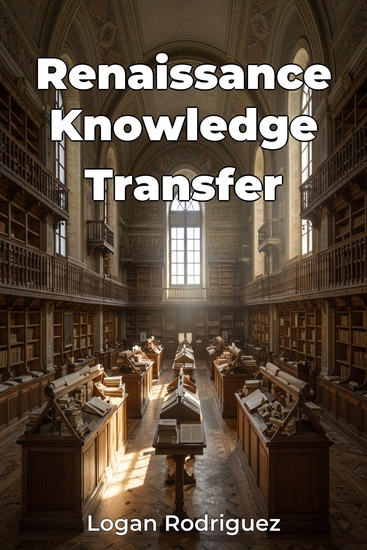
Renaissance Knowledge Transfer - cover

Renaissance Knowledge Transfer

Logan Rodriguez

Traductor A AI

Editorial: Publifye

  • 0
  • 0
  • 0

Sinopsis

"Renaissance Knowledge Transfer" delves into how Europe, recovering from hardship, sparked an era of intellectual and artistic growth. It examines how scientific and artistic ideas rapidly spread, transforming society and setting the stage for the modern world. The book highlights that the Renaissance wasn't merely a revival of classical antiquity. Instead, it was a dynamic adaptation, innovation, and dissemination of knowledge.

 
The rise of humanism, which emphasized human potential, played a crucial role, as did revolutionary technologies like the printing press, which enabled mass distribution of ideas. The book explores key channels of knowledge transmission, such as universities, libraries, and artistic workshops. It investigates the spread of scientific ideas in fields like astronomy and medicine, as well as the diffusion of artistic techniques.

 
By starting with the historical context and key concepts, it then moves to specific examples, ultimately assessing the long-term impact of Renaissance knowledge transfer and its relevance to modern cultural exchange. This approach allows readers to appreciate the complex interplay between inherited wisdom and novel discoveries during the European Renaissance.
Disponible desde: 05/05/2025.
Longitud de impresión: 56 páginas.

Otros libros que te pueden interesar

  • Murder of an Artist - cover

    Murder of an Artist

    George Callaghan

    • 0
    • 0
    • 0
    Truth described as fiction. Art where did it all go wrong?This book lays bare the facts that have led to the demise of art in Tasmania, the island state of Australia.Disguised a murder mystery....
    Ver libro
  • How I Found the Lost Atlantis! by Dr Paul Schliemann - a hilarious 1912 archaeological hoax - cover

    How I Found the Lost Atlantis!...

    Dr. Paul Schliemann

    • 0
    • 0
    • 0
    The article on which this audio book is based was published in the 'New York American' on October 20th, 1912.  
    The author, Dr. Paul Schliemann, claimed to be the grandson of Heinrich Schliemann (1822 - 1890), a founder of modern archaeology. In this famous archaeological hoax he makes outrageous and sensational claims about the lost continent Atlantis, and his grandfather’s research.  
    The text was written in an age when many of the Victorian adventure writers, like H. Rider Haggard in Britain, Emilio Salgari in Italy and Karl May in Germany topped reading lists. In 1912, the jungle calls of Tarzan echoed through American pulp magazines for the very first time.  
    Paul Schliemann capitalizes on the contemporary craze for his grandfather’s archaeological discoveries, for lost worlds and legendary characters like the queen of Sheba and Prester John. Since 1907, Howard Carter had been excavating in Egypt, and in 1922 Carter made his historical discovery of the tomb of Tutankhamun. 
    Paul Schliemann’s article is highly entertaining, and features passages reminiscent of Indiana Jones. Michael Henrik Wynn, the editor of the educational net radio stream Historyradio.org, gives a spirited performance of what has become a classic and much loved hoax in archaeological circles.
    Ver libro
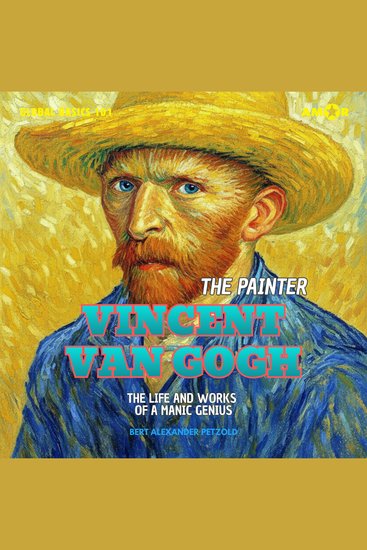
  • Painter Vincent van Gogh The - The Life and Works of a Manic Genius - Global Basics 101 - Your Series for Modern Knowledge Folge 3 (unabridged) - cover

    Painter Vincent van Gogh The -...

    Bert Alexander Petzold

    • 0
    • 0
    • 0
    Anyone who knows Vincent van Gogh only as a tragic myth has seen only the frame. This non-fiction book goes straight to the paintings and shows how radical colour, urgent brushwork and a searching mind helped push Impressionism into Post-Impressionism and shape modern art. Author and editor Bert Alexander Petzold offers a fact-rich, entertaining, clearly structured tour that replaces legend with usable knowledge: how to place works, read motifs, and see why the paint feels so immediate.
    Born on 30 March 1853 in Groot Zundert, the pastor's son tried several paths - Goupil & Cie. in The Hague, London and Paris, teaching and lay preaching - before committing to art in 1880. From Brussels, Etten and The Hague he developed his early realism and painted 'The Potato Eaters'. In Paris (1886), living with his brother Theo, he met the avant-garde, absorbed Impressionism, and brightened his palette in works such as 'Self-Portrait with Grey Felt Hat' and 'Flowering Orchard', forging a style that intensified rather than imitated.
    Arles in 1888 brought the southern light and iconic images - 'The Bedroom', 'Starry Night Over the Rhône', 'Café Terrace at Night' - as well as the dream of an artists' community. The collapse of his partnership with Paul Gauguin led to crisis and, in 1889, to Saint-Rémy, where unrest and discipline produced paintings of extraordinary force, including 'The Starry Night', 'Cypresses', 'Wheat Field with Cypresses' and the 'Sunflowers'. In May 1890 he moved to Auvers-sur-Oise near Dr Paul Gachet and Theo, made nearly eighty pictures in weeks-among them 'Portrait of Dr Gachet' and 'Wheatfield with Crows' - and died on 29 July 1890 after shooting himself.
    Perfect for GCSE and A-level revision as well as university study, the book uses biography and masterpieces as a key to looking, so you can not only recognise Van Gogh but truly understand him.
    Ver libro
  • Bogart and Huston - Their Lives Their Adventures and the Classic Movies They Made Together - cover

    Bogart and Huston - Their Lives...

    Nat Segaloff

    • 0
    • 0
    • 0
    From 1941 to 1953, director John Huston and actor Humphrey Bogart made one classic film after another, from The Maltese Falcon to The African Queen. Here is the story of their close but combative friendship that produced some of the best movies ever made. 


    Every time they made a movie together, they made a classic—or so it seemed for star Humphrey Bogart and writer/director John Huston. Their six collaborations include many of the "golden age" hits from Hollywood's fabled film legacy: The Maltese Falcon, Across the Pacific, The Treasure of the Sierra Madre, Key Largo, The African Queen, and Beat the Devil. 


    At the same time, both men led fiercely separate lives—except when they were making pictures together. Sometimes they agreed and sometimes they argued, always keeping their eyes on the results. What did each man bring to the collaboration, and how did their films together reflect their disparate personalities? 


    Their friendship was as dramatic as any of their movies. It survived nine marriages, a world war, the blacklist, leeches, alcohol, and Jack L. Warner. Here is the story of these two legendary talents, their films, their lives, their foes, and their devotion to each other.
    Ver libro
  • Pierce the Design Fog - Develop High-Quality Products Faster through Team Innovation - cover

    Pierce the Design Fog - Develop...

    Dianna Deeney

    • 0
    • 0
    • 0
    A proven framework to align teams, define clear design inputs, and accelerate product success 
      
    In product development, great ideas can get lost in translation. Teams kick off with enthusiasm, but somewhere between the first design iteration meeting and the engineering handoff, misaligned assumptions lead to costly rework, stalled timelines, and products that miss the mark. 
    In Pierce the Design Fog, quality advocate and senior engineer Dianna Deeney reveals why 85% of companies struggle to get product development right—and how to fix it. Drawing from over 25 years in manufacturing, quality engineering, and cross-functional leadership, she shares practical methods for bridging the gap between concept development and engineering-ready designs. 
    Using her ADEPT Team Framework and Concept Space Model, Deeney provides a repeatable process to unite diverse perspectives, surface hidden requirements, and define clear design inputs focused on user experience. This hands-on playbook for managers, engineers, and product leaders uses step-by-step guidance, real-world examples, and ready-to-use templates to engage every stakeholder from the start and turn ideas into high-quality, customer-focused design inputs. 
    You will learn how to:Identify and avoid the "Ta-da Flop" by validating concepts before engineering begins.Lead efficient, collaborative meetings that produce actionable design inputs.Translate end user needs into prioritized, measurable requirements.Apply quality engineering tools to reduce design loops and speed approvals.Foster stronger cross-functional team alignment and earlier buy-in. 
    If you lead engineers, market products, or manage cross-functional teams, Pierce the Design Fog will change the way you start projects—with results your customers will notice.
    Ver libro
  • Lurking Under the Surface - Horror Religion and the Questions that Haunt Us - cover

    Lurking Under the Surface -...

    Brandon R. Grafius

    • 0
    • 0
    • 0
    Horror can be a valuable conversation partner for the spiritual questions that animate so many of us. 


    Whether through a movie, television show, novel, or even myth, horror as a genre has always spoken to our deepest human fears and anxieties: fear of death, of the unknown, of knowing too much. Whether you're looking at classic narratives like Frankenstein, or contemporary films like Get Out, which explores racism and white guilt, horror provides a window into our culture and what makes us human. The same can be said of religion. 


    Horror movie buff and religion scholar Brandon Grafius finds common ground between these two seemingly disparate bedfellows—horror and religion—in Lurking under the Surface. What parallels can we draw between The Walking Dead and sacred texts? How do the stories of Hebrew Christian scriptures and apocalyptic films like A Quiet Place and Bird Box help us find hope when it's in short supply? When we treat them both seriously, we see that horror movies and religion lead us through the same sets of questions. Both explore questions of justice, hope, and our relationship to the world and the cosmos. And both offer us ways to make meaning out of the contradictory pieces of our world—a world filled with so much hope and so many recognizable fears lurking just beneath the surface.
    Ver libro