Junte-se a nós em uma viagem ao mundo dos livros!
Adicionar este livro à prateleira
Grey
Deixe um novo comentário Default profile 50px
Grey
Assine para ler o livro completo ou leia as primeiras páginas de graça!
All characters reduced
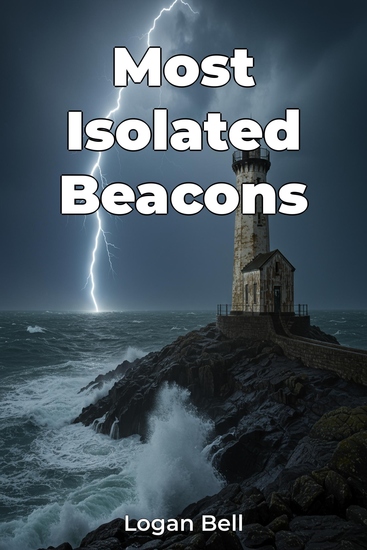
Most Isolated Beacons - cover
LER

Most Isolated Beacons

Logan Bell

Tradutor A AI

Editora: Publifye

  • 0
  • 0
  • 0

Sinopse

Most Isolated Beacons explores the captivating history of remote lighthouses and the extraordinary lives of those who maintained them. The book delves into the architectural marvels that served as beacons of hope in extreme environments and examines the profound impact of isolation on lighthouse keepers and their families. You'll discover how these structures, often located in the most inaccessible corners of the world, played a crucial role in maritime navigation, safeguarding ships and enabling global commerce.

 
 The book progresses by first introducing the historical significance of remote lighthouses, then examining advancements in lighthouse design and technology. It further explores the daily routines and psychological coping mechanisms of the keepers who endured prolonged solitude. Through historical records and personal diaries, Most Isolated Beacons offers a unique perspective, combining technical descriptions with intimate portraits, highlighting human resilience and the psychological effects of extreme isolation.
Disponível desde: 20/02/2025.
Comprimento de impressão: 59 páginas.

Outros livros que poderiam interessá-lo

  • Top of the World - Surviving the Manchester Bombing to Scale Kilimanjaro in a Wheelchair - cover

    Top of the World - Surviving the...

    Martin Hibbert, Fiona Duffy, Dan...

    • 0
    • 0
    • 0
    Martin Hibbert was left paralysed from the waist down by the Manchester Arena bombing which killed twenty-two people on 22 May 2017. Martin’s teenage daughter Eve was one of the 940 injured, in Eve’s case, gravely. The dad from Bolton has since become a leading campaigner both for victims of the atrocity and those with spinal cord injuries. 
    Determined to make a difference he took on the ultimate challenge, scaling Kilimanjaro in a wheelchair, becoming the second paraplegic to do so, and raising a million pounds for charity. Reaching the summit, on 13 June 2022 Martin, who was the closest person to the bomber to survive, said, ‘I’ve often wondered why I was saved. Now I know why. It was for this moment.’ 
    This is Martin’s incredible story. 
    'Everything about this extraordinary story is as inspiring as it is humbling' Ben Fogle
    Ver livro
  • Heartbreak in the Himalayas: Part One – The Fated Female - cover

    Heartbreak in the Himalayas:...

    Ray Hodgson

    • 0
    • 0
    • 0
    Set in the foothills of the spectacular Himalayas, Australian surgeon Dr Ray Hodgson and his exceptional team of volunteers battle to improve the lives of desperate Nepalese women. Tackling the overwhelming prevalence of genital prolapse and pregnancy loss in this exotic corner of the world, this spellbinding story details the struggles the team face as they strive to overcome scarce supplies, gender discrimination, and cultural roadblocks.Brilliantly narrated by the author with absorbing, heartfelt emotion, Heartbreak in the Himalayas gives readers a priceless insight into Nepal’s true culture and its intimate relationship with the health of its people. Dr Ray weaves his way into the heart of this captivating country, and shines a light on its hopes, heartbreaks, and exhilarating joy. All profits from the sale of Heartbreak in the Himalayas will fund the construction of a Mothers’ and Babies’ Hospital in rural Nepal.
    Ver livro
  • Walk Britain - 90 inspirational car-free walks in England Scotland and Wales - cover

    Walk Britain - 90 inspirational...

    Elise Downing

    • 0
    • 0
    • 0
    Walk Britain by Elise Downing is an inspirational collection of 90 walking routes accessible by public transport which can enable you to see the best of Great Britain in an environmentally friendly way.
    The book is organised into easily accessible base locations throughout England, Scotland and Wales – simply choose where you want to stay or day-trip to and then pick your adventure. There are several walks from each base, ranging from relaxed shorter routes through to longer day walks, and working up to multi-day options if you want a bigger challenge.
    Explore the rugged Cornish moorland and coastal trails around Penzance, traverse the trails of the Brecon Beacons stopping for a wild swim along the way, see the remote lochs and coastline of the Isle of Arran, or escape the crowds of London with a day trip to the Chilterns – Elise takes all the hassle out of planning your next adventure.
    Each walk includes handy details to help with planning, including an Ordnance Survey overview map and public transport information, along with engaging text about what you'll see on your walk and stunning photography of each location. GPX files for the routes are available to download to help you plan and navigate your adventures.
    Ver livro
  • Aksumite Empire - Ethiopia's Ancient Power and the First Christian Kingdom - cover

    Aksumite Empire - Ethiopia's...

    Rolf Hedger

    • 0
    • 0
    • 0
    The Aksumite Empire was one of the most significant and influential civilizations of ancient Africa. Emerging around the first century AD, it became a powerful and sophisticated state that played a crucial role in connecting diverse cultures and trade networks across continents. Its strategic location, bridging the Red Sea and the interior of the African continent, allowed Aksum to flourish as both a political and economic hub, facilitating exchanges between the Mediterranean world, the Arabian Peninsula, and beyond. 
    At the heart of Aksum’s success was its remarkable ability to integrate various cultural and economic influences. The empire was not only a center for commerce but also a melting pot of traditions, languages, and beliefs. This rich cultural mosaic is reflected in its unique art, architecture, and inscriptions, which have provided modern scholars with invaluable insights into the life and achievements of this ancient society. The monuments and stelae scattered across the landscape serve as enduring testaments to the empire's power and its sophisticated understanding of both artistry and engineering. 
    The rise of Aksum was deeply intertwined with the development of its political structures and the establishment of a centralized administration. Early rulers of the empire forged alliances through both diplomacy and military might, thereby securing their territories against external threats and internal discord. As the state grew in power, it adopted innovative approaches to governance that balanced traditional practices with the demands of a rapidly expanding empire. These innovations laid the groundwork for what would later be recognized as the first Christian kingdom in Africa.
    Ver livro
  • Flourishing Chinese Empires - Art Trade and Power (3 in 1) - cover

    Flourishing Chinese Empires -...

    Rolf Hedger

    • 0
    • 0
    • 0
    After centuries of division, China experienced an extraordinary renaissance through three dynasties that elevated the empire to unprecedented heights of cultural brilliance and global influence. "Flourishing Chinese Empires: Art, Trade, and Power" examines the Sui, Tang, and Song dynasties—a golden age when China stood as the world's most advanced civilization. 
    The short-lived Sui Dynasty (581-618 CE) accomplished the crucial task of reunification through ambitious projects including the Grand Canal, standardized administration, and reformed examination system. Though bankrupted by these massive undertakings and unsuccessful military campaigns, the Sui created the essential foundation for the glory that followed. 
    The Tang Dynasty (618-907 CE) transformed this unified state into a cosmopolitan empire of unrivaled splendor. China's borders expanded dramatically while its capital at Chang'an became the world's largest and most sophisticated city—a multicultural metropolis where Persian merchants, Japanese monks, and Korean scholars mingled in bustling markets and elegant gardens. This was the era of China's greatest poets, its artistic zenith in sculpture and painting, and unprecedented openness to foreign influences. 
    The Song Dynasty (960-1279 CE) compensated for military vulnerability with stunning economic and technological advancement. Urbanization accelerated as printing spread literacy, commerce flourished through paper money, maritime trade expanded, and scientific innovation thrived. Though constantly threatened by powerful northern neighbors, the Song fostered a refined cultural environment where landscape painting, philosophical inquiry, and scholarly pursuits reached remarkable sophistication.
    Ver livro
  • History of Machu Picchu - The Greatest Symbol of the Inca Empire - cover

    History of Machu Picchu - The...

    Kelly Mass

    • 0
    • 0
    • 0
    Machu Picchu, one of the most iconic symbols of Inca civilization, is a 15th-century fortress perched high on a mountain crest in southern Peru's Eastern Cordillera. Sitting at an altitude of 2,430 meters (7,970 feet), it is located 80 kilometers (50 miles) northwest of Cusco, within the Machupicchu District of Urubamba Province. The fortress overlooks the Sacred Valley, and the Urubamba River winds through the valley below, cutting through the Cordillera and forming a tropical mountain canyon. This stunning geographical setting has made Machu Picchu one of the most visited and revered archaeological sites in the world. 
    Unlike the Mayans, the Incas had no written language, and thus, no records of the site existed during its operation. The first Europeans to visit Machu Picchu did so only in the 19th century, and as a result, much of its history remained shrouded in mystery. Modern archaeologists, relying on tangible evidence such as graves and structural remains, have attributed names and proposed functions for the buildings, but much of the site’s exact purpose remains speculative. 
    Most contemporary archaeologists believe that Machu Picchu was built as a royal estate for the Inca emperor Pachacuti, who ruled from 1438 to 1472. Constructed in 1450, the site functioned as a private residence for the emperor and his court. Over time, Machu Picchu became the most well-known image of Inca civilization and is often referred to as the "Lost City of the Incas." However, the estate was abandoned in the early 16th century, following the Spanish conquest of the Inca Empire. Recent radiocarbon dating indicates that the site was occupied from around 1420 to 1532.
    Ver livro