Unisciti a noi in un viaggio nel mondo dei libri!
Aggiungi questo libro allo scaffale
Grey
Scrivi un nuovo commento Default profile 50px
Grey
Iscriviti per leggere l'intero libro o leggi le prime pagine gratuitamente!
All characters reduced
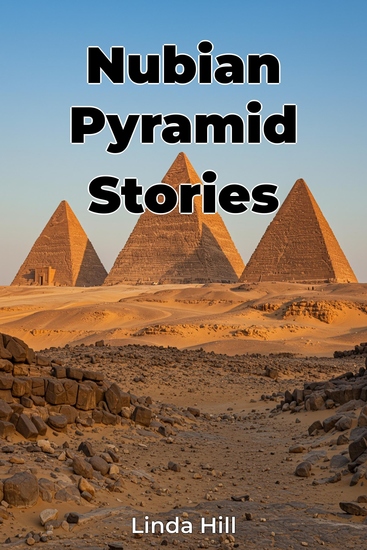
Nubian Pyramid Stories - cover

Nubian Pyramid Stories

Linda Hill

Traduttore A Ai

Casa editrice: Publifye

  • 0
  • 0
  • 0

Sinossi

Nubian Pyramid Stories unveils the fascinating history of the pyramids of Sudan, built by the Kingdom of Kush, a civilization that rivaled ancient Egypt. This book challenges the conventional focus on Egyptian pyramids by highlighting the unique architectural and cultural achievements of the Kushites. Unlike the widely recognized Egyptian pyramids, Nubian pyramids are more numerous and possess distinct design elements reflecting indigenous Kushite traditions. The book explores the Kingdom of Kush, from its early foundations in Kerma to its later centers at Napata and Meroe, and its complex relationship with Egypt, including both conflict and shared rule. It presents evidence from archaeological reports and historical texts to argue that Nubian pyramids are not mere imitations but a unique expression of Kushite culture and innovation. Readers will gain insight into why Nubian history and archaeology have been relatively overlooked.

 
Organized into four parts, the book progresses from the geographical and historical context of Nubia to the construction and symbolism of its pyramids, comparing them with Egyptian examples. It then examines archaeological discoveries supporting Kushite originality and concludes by exploring the legacy of these pyramids and ongoing preservation efforts. This approach offers a fresh perspective on African history and cultural identity.
Disponibile da: 20/02/2025.
Lunghezza di stampa: 58 pagine.

Altri libri che potrebbero interessarti

  • Who Needs College Anymore? - Imagining a Future Where Degrees Won't Matter - cover

    Who Needs College Anymore? -...

    Kathleen deLaski, Robert B....

    • 0
    • 0
    • 0
    With keen insight, Kathleen deLaski reimagines what higher education might offer and whom it should serve in Who Needs College Anymore? In the wake of declining US university enrollment and widespread crises of confidence in the value of a college degree, deLaski urges a mindset shift regarding the learning routes and credentials that best prepare students for success after high school. 


    The work draws on a decade of design-thinking research from the nonprofit Education Design Lab as well as 150 interviews of educational experts, college and career counselors, teachers, employers, and learners. DeLaski applies human-centered design to higher education reform, engaging the perspective of end users to search for better solutions. She highlights ten top principles based on user feedback and considers how well they are currently being enacted by colleges. 


    In particular, she urges institutions to better attend to the needs of new-majority learners, often described as nontraditional students, including people from low-income backgrounds, people of color, first-generation students, veterans, single mothers, rural students, part-time attendees, and neurodivergent students. She finds ample opportunity for colleges to support learners via alternative pathways to marketable knowledge. This work suggests innovation as a means of evolution.
    Mostra libro
  • African Empires of Influence - Dominant Forces Shaping Regional African Politics and Culture (5 in 1) - cover

    African Empires of Influence -...

    Rolf Hedger

    • 0
    • 0
    • 0
    This book contains the following titles, all related to African history: 
    - Aksumite Empire  
    - Benin Empire  
    - Kanem-Bornu Empire  
    - Mutapa Empire  
    - Sosso Empire  
    Get this discounted bundle now!
    Mostra libro
  • The Secret Life of John le Carre - cover

    The Secret Life of John le Carre

    Adam Sisman

    • 0
    • 0
    • 0
    The extraordinary secret life of a great novelist, which his biographer could not publish while le Carré was alive.  
     
    Secrecy came naturally to John le Carré, and there were some secrets that he fought fiercely to keep. Adam Sisman's definitive biography, published in 2015, provided a revealing portrait of this fascinating man; yet some aspects of his subject remained hidden. 
    Nowhere was this more so than in his private life. Apparently content in his marriage, the novelist conducted a string of love affairs over five decades. To these relationships he brought much of the tradecraft that he had learned as a spy - cover stories, cut-outs and dead letter boxes. These clandestine operations brought an element of danger to his life, but they also meant deceiving those closest to him. Small wonder that betrayal became a running theme in his work. 
    In trying to manage his biography, the novelist engaged in a succession of skirmishes with his biographer. While he could control what Sisman wrote about him in his lifetime, he accepted that the truth would eventually become known. Following his death in 2020, what had been withheld can now be revealed. 
    The Secret Life of John le Carré reveals a hitherto-hidden perspective on the life and work of the spy-turned-author and a fascinating meditation on the complex relationship between biographer and subject. “Now that he is dead,” Sisman writes, “we can know him better.”
    Mostra libro
  • The Emerald Tablet - Alchemy for Personal Transformation - cover

    The Emerald Tablet - Alchemy for...

    Dennis William Hauck

    • 0
    • 0
    • 0
    The Emerald Tablet—an ancient document that contains the essence of the alchemical teachings—has had an important influence on many Western spiritual and religious traditions. Ostensibly concerned with turning base metals into gold, alchemy was in fact dedicated to transforming the lead of self into the gold of spirit. This brilliant history of alchemy traces its sources back to ancient Egypt, and presents alchemy as a useful, practical system of self-transformation. Each of the seven steps of alchemical transformation is explained, with hands-on techniques and exercises, treating alchemy as a living discipline for achieving a spiritual awakening.
    Mostra libro
  • Breaking the Gender Code - Women and Urban Public Space in the Twentieth-Century United States - cover

    Breaking the Gender Code - Women...

    Georgina Hickey

    • 0
    • 0
    • 0
    From the closing years of the nineteenth century, women received subtle—and not so subtle—messages that they shouldn't be in public. Or, if they were, that they were not safe. Breaking the Gender Code tells the story of both this danger narrative and the resistance to it. 


    Historian Georgina Hickey investigates challenges to the code of urban gender segregation in the twentieth century, focusing on organized advocacy to make the public spaces of American cities accessible to women. She traces waves of activism from the Progressive Era, with its calls for public restrooms, safe and accessible transportation, and public accommodations, through and beyond second-wave feminism, and its focus on the creation of alternative, women-only spaces and extensive anti-violence efforts. In doing so, Hickey explores how gender segregation intertwined with other systems of social control, as well as how class, race, and sexuality shaped activists' agendas and women's experiences of urban space. Drawing connections between the vulnerability of women in public spaces, real and presumed, and contemporary debates surrounding rape culture, bathroom bills, and domestic violence, Hickey unveils both the strikingly successful and the incomplete initiatives of activists who worked to open up public space to women.
    Mostra libro
  • Anatolia in the Iron Age: The History of the Empires that Dominated the Region Before Alexander the Great - cover

    Anatolia in the Iron Age: The...

    Editors Charles River

    • 0
    • 0
    • 0
    During the Late Bronze Age, from about 1500-1200 BCE, the Near East was a time and place where great kingdoms and empires vied for land and influence, playing high stakes diplomatic games, trading, and occasionally going to war with each other in the process. The Egyptians, Hittites, Babylonians, Assyrians, and several smaller Canaanite kingdoms were all part of this system, which was one of the first true “global” systems in world history and also one of the most materially prosperous eras in antiquity.  
    Thus, the transition from the Bronze to the Iron Age during the late 13th and early 12th centuries BCE arguably changed the structure and course of world history more fundamentally than any period before or since, and at the center of this period of turmoil was a group of people known today as the Sea Peoples, the English translation of the name given to them by the Egyptians. Despite their prominent role in history, however, the Sea Peoples remain as mysterious as they were influential; while the Egyptians documented their presence and the wars against them, it has never been clear exactly where the Sea Peoples originated from, or what compelled them to invade various parts of the region with massive numbers. Whatever the reason, the Sea Peoples posed an existential threat to the people already living in the region, as noted by an Egyptian inscription: “The foreign countries made a conspiracy in their islands. All at once the lands were removed and scattered in the fray. No land could stand before their arms: from Hatti, Qode, Carchemish, Arzawa and Alashiya on, being cut off at one time. A camp was set up in Amurru. They desolated its people, and its land was like that which has never come into being. They were coming forward toward Egypt, while the flame was prepared before them."
    Mostra libro