¡Acompáñanos a viajar por el mundo de los libros!
Añadir este libro a la estantería
Grey
Escribe un nuevo comentario Default profile 50px
Grey
Suscríbete para leer el libro completo o lee las primeras páginas gratis.
All characters reduced
Norman Land Changes - cover

Norman Land Changes

Linda Hill

Traductor A AI

Editorial: Publifye

  • 0
  • 0
  • 0

Sinopsis

Norman Land Changes explores the sweeping changes that followed the Norman Conquest, fundamentally reshaping England and Wales. It examines how William the Conqueror's victory at the Battle of Hastings led to a complete restructuring of land ownership, the imposition of a new feudal system, and the overhaul of Anglo-Saxon legal frameworks. This wasn't a mere change of rulers, but a systemic revolution affecting everything from agriculture to justice. For example, the creation of the Domesday Book allowed for unprecedented control and assessment of conquered territories.

 
The book uniquely contrasts the pre-Norman Anglo-Saxon system with the new Norman order, detailing concepts like bookland and folkland to highlight the scale of change. It progresses chronologically, starting with the events leading up to 1066, then moves through land redistribution, the establishment of feudalism, and the transformation of the legal system.

 
The book’s strength lies in its accessible presentation of complex legal and historical concepts, making it valuable for anyone interested in medieval history and the foundations of English and Welsh society. Grounded in diverse primary sources, including the Domesday Book and manorial court rolls, the book offers a nuanced account of Norman rule and its consequences. It also considers the often-overlooked Welsh experience alongside the English, providing a broader perspective on the era's impact.

 
The analysis explores the long-lasting effects on language, culture, and political institutions, showcasing how the Norman conquest laid the groundwork for the medieval social and political order.
Disponible desde: 05/05/2025.
Longitud de impresión: 65 páginas.
Otros libros que te pueden interesar

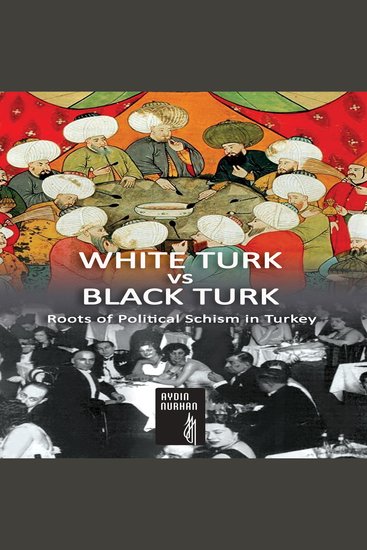
  • WHITE TURK vs BLACK TURK - Roots of Political Schism in Turkey - cover

    WHITE TURK vs BLACK TURK - Roots...

    Aydin Nurhan

    • 0
    • 0
    • 0
    White Turk vs Black Turk is a thought-provoking exploration of the complex interplay between clashing lifestyles in Turkey and their impact on the country's political arena. Former Ambassador Nurhan provides a comprehensive understanding of the intricate tapestry that is Turkey's political landscape by skill- fully incorporating human aspirations, and inferiority complexes while navigating through history, religion, cultural shifts, and economic disparities to paint a holistic picture of the dynamics at play.
    Ver libro
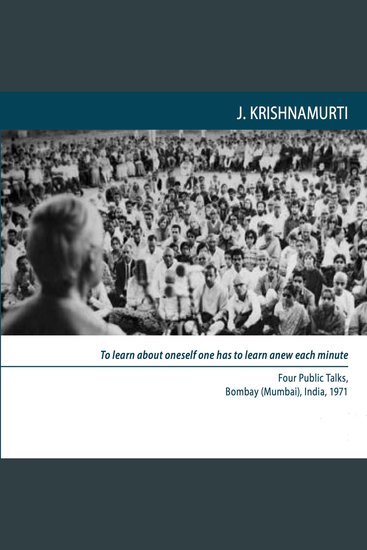
  • To Learn About Oneself One Has to Learn Anew Each Minute - Four Public Talks Bombay (Mumbai) India 1971 - cover

    To Learn About Oneself One Has...

    Jiddu Krishnamurti

    • 0
    • 0
    • 0
    "To perceive 'what is' is the basis of truth," 7 February 1971. Duration: 86 minutes.
    Where there is division, there must be conflict. A mind in conflict must inevitably be distorted, and therefore it cannot possibly see clearly what is truth.
    
    We need a total change, a deep revolution, psychological revolution, the inward revolution, without which you cannot possibly create a new society. Is it possible to observe, to perceive without the observer?
    
    How are images formed? Can the image building come to an end? Knowledge is absolutely necessary. Is it possible that knowledge, which the brain has accumulated through centuries, does not interfere with relationships?
    
    "Direct perception is freedom," 10 February 1971. Duration: 80 minutes.
    Can the mind living in this world ever be free, not only superficially but profoundly, at the very root of its existence? 'Freedom from' is an abstraction, but freedom in observing 'what is' and going beyond it is actual freedom.
    
    How do I observe greed? Do I observe it as an outsider looking in, or do I observe it without the observer? Without the mind being free, you cannot live in order. Three years have passed; I have no energy to be aware of my reactions. Can we seek God through observation?
    
    "Love is that quality of mind in which there is no division," 14 February 1971. Duration: 89 minutes.
    To live in this world with intelligence, in spite of all the complications. Is it possible to be free of fear, not only the superficial fear in relationship but the deep-rooted fear? Thought nourishes, sustains and gives continuity to fear and pleasure.
    
    When you are learning, your mind is awake. Truth isn't second-hand; you can't get it through a guru, a book; you have to learn about it. The beauty of learning is that you don't know what truth is.
    
    What is love? A man who has not love in his heart but the things made by thought will make a monstrous world, will construct a society that is totally immoral. To find out, you must undo everything that you have done.
    
    What does it mean to die?
    
    "A mind in meditation is concerned only with meditation, not with the meditator," 17 February 1971. Duration: 87 minutes.
    If you can put aside your favourite systems, if you can understand that concentration is merely a resistance and therefore constant conflict and wastage of energy, then we can find out for ourselves what is necessary for a mind that is in a state of meditation. To learn about oneself, a living thing, you have to watch, learn anew each minute.
    
    What is will? Consciousness is heritage, the result of time. Consciousness is the content of itself, which is time, sorrow, confusion, misery. Intelligence has no heritage.
    
    What is a mind that is completely silent? How does one cope with the extraordinary energy that human beings have?
    Ver libro
  • The Industrial Revolution - cover

    The Industrial Revolution

    Onofre Quezada

    • 0
    • 0
    • 0
    This audiobook is narrated by an AI Voice. The Industrial Revolution explores one of the most momentous periods in human history. From the textile factories of England to the expansion of the railroad and the emergence of new industrial cities, this book analyzes how technological innovation, trade, and social transformation changed the course of the world. 
     
    Throughout its pages, readers will discover the inventions that drove progress, the impact of machinery on everyday life, the harsh working conditions of the time, and the birth of labor movements that fought for social justice. 
     
    More than just a historical overview, this book offers a clear and accessible view of how the Industrial Revolution laid the foundations for the modern economy, changed the organization of work, and ushered in a new era in human history. 
     
    Ideal for students, history buffs, and anyone who wishes to understand the true scope of this change that forever transformed the world.
    Ver libro
  • Self-Reliance - cover

    Self-Reliance

    Ralph Waldo Emerson

    • 0
    • 0
    • 0
    "Self-Reliance" is an 1841 essay written by American transcendentalist philosopher and essayist Ralph Waldo Emerson. It contains the most thorough statement of one of Emerson's recurrent themes: the need for each individual to avoid conformity and false consistency, and follow his own instincts and ideas. It is the source of one of Emerson's most famous quotations: "A foolish consistency is the hobgoblin of little minds, adored by little statesmen and philosophers and divines. 
    Emerson focuses on seemingly insignificant details explaining how life is "learning and forgetting and learning again".
    Ver libro
  • The Navy - cover

    The Navy

    Harold Clark

    • 0
    • 0
    • 0
    "The Navy" by Harold Clark takes you from the streets of Baltimore to the dark thirty chaos of Grenada's invasion, where Marines hit the beaches with guns blazing. The book displays what the real Navy looks like—where sailors live by mottos like 'Keep the screws turning and the lights burning' and learn hard lessons like 'tonnage has its privileges in the shipping channel.' Relive the Gator Navy days aboard LCU 1655 during Operation Northern Wedding, when a near-collision with a tanker in the Norwegian Sea taught Clark's crew to scan everything—high and low. Feel the tension of Beirut's Red Beach operations and the bitter retreat when the American flag came down, and the Syrian flag went up. Clark tells about his distinctive journey—a Navy life—told straight from the gut by a sailor who lived every minute of it, from boot camp to his final voyage aboard the USS Whidbey Island.
    Ver libro
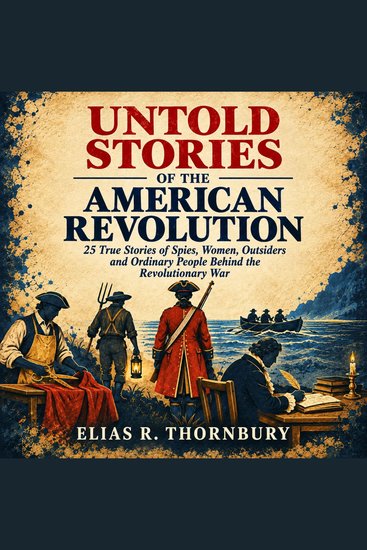
  • Untold Stories of the American Revolution - 25 True Stories of Spies Women Outsiders and Ordinary People Behind the Revolutionary War - cover

    Untold Stories of the American...

    Elias R. Thornbury

    • 0
    • 0
    • 0
    This audiobook is narrated by an AI Voice. 
    A tailor said to have saved George Washington's life twice. A spy ring famous for a clothesline that appears in none of its surviving letters. A soldier who served seventeen months under a man's name. A poet who wrote to the commander of the American army, and got an answer. 
    Every one of them is real. Some of what is said about them is not. 
    Untold Stories of the American Revolution gathers twenty-five true stories of the spies, women, outsiders and ordinary people whose lives ran through the war for independence, and it separates what the record shows from what legend added. 
    Inside, you'll meet: 
    The Long Island farmers, tavern keeper and whaleboat captain who carried a spy's letters across the Sound in invisible ink, and the code number that turned into "Agent 355" 
    Hercules Mulligan, the New York tailor whose spy stories rest on a footnote printed fifty-five years later, and the one wartime letter that names him 
    Deborah Sampson, who enlisted in disguise in 1782 and was never at Yorktown, whatever the legends say 
    Phillis Wheatley, free for two years when she sent her poem to George Washington, and the reply he wrote 
    A one-man submarine, a burned customs ship, a smallpox gamble and the prison ships of New York Harbor 
    Why it reads differently: 
    Twenty-five stand-alone chapters, each about ten minutes long. Start anywhere. 
    Real people, real dates, no invented dialogue. 
    Every story shows where the evidence is strong, where it is thin, and where it turns to folklore. 
    Five themed parts: spies and secret keepers, women of the Revolution, outsiders and allies, the strange and the desperate, and ordinary people at the war's end. 
    Perfect for readers who like narrative history with the myths checked, book clubs, gift-givers, and anyone who has ever wondered whether a famous story is actually true. 
    Scroll up and start with any chapter. 
    Elias R. Thornbury writes narrative history about the people the textbooks skip. This is his first book.
    Ver libro