¡Acompáñanos a viajar por el mundo de los libros!
Añadir este libro a la estantería
Grey
Escribe un nuevo comentario Default profile 50px
Grey
Suscríbete para leer el libro completo o lee las primeras páginas gratis.
All characters reduced
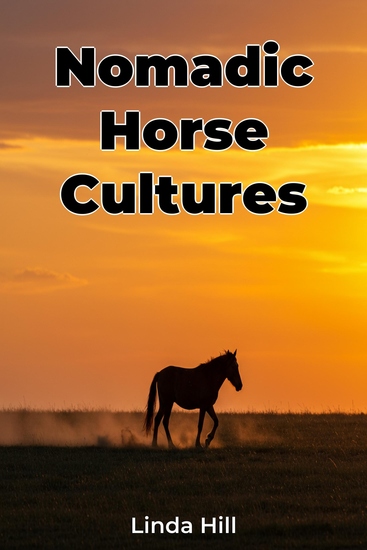
Nomadic Horse Cultures - cover

Nomadic Horse Cultures

Linda Hill

Traductor A Ai

Editorial: Publifye

  • 0
  • 0
  • 0

Sinopsis

Nomadic Horse Cultures explores the transformative impact of the horse on indigenous societies across Eurasia, Africa, and the Americas. It examines how the domestication of horses reshaped hunting practices, warfare, and social structures, leading to significant cultural adaptations. The book challenges traditional narratives by highlighting the agency of indigenous peoples in co-evolving with the horse, demonstrating how they actively integrated the animal into their existing lifestyles.For example, the adoption of the horse revolutionized hunting techniques, enabling more efficient hunting of bison and other large game. This study traces the horse's journey across continents, analyzing how various groups integrated it into their cultures. Early chapters focus on domestication and diffusion, while later sections delve into the horse's impact on warfare, examining the rise of horse-based warrior societies. It emphasizes the profound ways in which the horse spurred a re-organization of societies, economies, and belief systems. The book's multidisciplinary approach, drawing from archaeology, oral histories, and anthropology, provides a holistic understanding of human-animal relationships and cultural transformation in world history.
Disponible desde: 29/03/2025.
Longitud de impresión: 60 páginas.

Otros libros que te pueden interesar

  • Warnings From Nostradamus - cover

    Warnings From Nostradamus

    Raphael Terra

    • 0
    • 0
    • 0
    This audiobook has been recorded using Text to speech (TTS). 
     
    From a dark age, the light of prophecy shines forth. From deep in the bowels of a divided Europe emerge stark warnings to mankind that resonate within us even now. 
     
    Prophecies that are seemingly impossible and yet are there for all to see. The outbreak of a worldwide pandemic, the death of Queen Elizabeth, the invasion of Ukraine, global warming, terror attacks, world war and the end of times. These, and more, were foreseen by a 16th century physician. Indeed we are told that a coming war, starting in Europe, will engulf the globe and cause catastrophic numbers of deaths. The materialistic Christian West will do battle with the united forces of the East and the Muslim world following a Russian invasion of Europe. Ballistic rockets will reign down upon us all. 
     
    Are we ready for the truth? 
     
    This is the tale of that man and his unique insight into the global events set in motion by mankind. This is the story of the end of the world and the man we know as Nostradamus. This is the story of how he became infamous.
    Ver libro
  • Power and Politics - The Structure and Struggles of Roman Rule (3 in 1) - cover

    Power and Politics - The...

    Rogan Fish

    • 0
    • 0
    • 0
    This bundle offers an in-depth exploration of how political institutions, civil unrest, and power dynamics shaped the Roman Republic and Empire. Beginning with the early Republic, this book dives into the foundational structures of Roman governance—such as the Senate, consuls, and tribunes—highlighting how the balance of power evolved in response to internal challenges and external expansion. The early sections emphasize the ideals of civic virtue and republicanism that underpinned Rome’s initial governance, and how those ideals were tested by growing inequality and political rivalry. 
    As Rome expanded, the book traces the emergence of social conflict between the patricians and plebeians, the rise of populist leaders, and the violence that accompanied land reform and calls for justice. From the Gracchi brothers to Julius Caesar, readers will witness how political ambition and civil war undermined the Republic’s foundations. Key events such as Caesar’s dictatorship, the assassination that followed, and the shifting alliances during the subsequent power vacuum demonstrate how Rome’s political system struggled to contain individual ambition and the burden of imperial management. 
    Finally, the book examines the transformation into empire, where power became centralized under emperors who ruled with divine authority and military backing. Though the empire brought relative stability, it came with corruption, oppression, and loss of representative governance. This section looks closely at the early emperors, the role of the Senate under imperial rule, and the public’s shifting relationship with authority. Power and Politics serves as a gripping account of how Roman ideals clashed with political reality, offering timeless lessons about governance, ambition, and civic duty.
    Ver libro
  • Derrida - Deconstruction and the Play of Meaning - cover

    Derrida - Deconstruction and the...

    Hector Davidson

    • 0
    • 0
    • 0
    Jacques Derrida, one of the most influential philosophers of the 20th century, revolutionized the way we think about language, meaning, and interpretation. His development of the concept of deconstruction has left a profound impact on philosophy, literary theory, and critical thought. To understand Derrida's legacy, it is essential to explore the key elements of his intellectual journey and how his ideas continue to shape contemporary discourse. 
    Derrida was born in Algeria in 1930, and his philosophical development was deeply influenced by the intellectual currents of post-war Europe, particularly phenomenology, structuralism, and existentialism. His work challenged the assumptions that underpinned much of Western thought, especially the metaphysical foundations of philosophy. One of his central concerns was the question of meaning and how it is constructed. He argued that meaning is never fixed, but instead is constantly shifting and dependent on a network of differences. This idea of différance, a term Derrida coined to describe the interplay of differences in language, became a cornerstone of his philosophy. 
    At the heart of Derrida's thought is the critique of the Western philosophical tradition, which he believed had centered itself around binary oppositions—such as presence/absence, speech/writing, and mind/body. These oppositions, Derrida argued, are not natural or inherent, but rather are constructed and perpetuated through language. By deconstructing these binaries, Derrida aimed to reveal the hidden power structures and assumptions that shaped our understanding of the world. He proposed that language itself is unstable, always in flux, and that meaning can never be fully contained or reduced to simple terms.
    Ver libro
  • If I Don'T Change Now What Will the Future Be? - Brockwood Park 1972 Public Talk 1 - cover

    If I Don'T Change Now What Will...

    Jiddu Krishnamurti

    • 0
    • 0
    • 0
    If I don’t change now what will the future be? - 10 September 1972 
    • Is thought responsible for fragmentation? 
    • Does fragmentation have its own activity? 
    • What is the energy that perceives the total and doesn’t live in fragmentation? 
    • Does comparison bring about fear and pleasure? 
    • Is thought seeking security in belief and dogma? 
    • Can the mind learn instantly all the content of the unconscious in which there 
    are deep, secret fears? 
    • Does analysis imply time and division? Is consciousness separate from its 
    content? 
    • To get at the root of fear means learning about not being. 
    • Q: What about guilt?
    Ver libro
  • Celia A Slave - cover

    Celia A Slave

    Melton A. McLaurin, Jennifer L....

    • 0
    • 0
    • 0
    Celia was only fourteen years old when she was acquired by John Newsom, an aging widower and one of the most prosperous and respected citizens of Callaway County, Missouri. The pattern of sexual abuse that would mark their entire relationship began almost immediately. After purchasing Celia in a neighboring county, Newsom raped her on the journey back to his farm. He then established her in a small cabin near his house and visited her regularly. Over the next five years, Celia bore Newsom two children; meanwhile, she became involved with a slave named George and resolved at his insistence to end the relationship with her master. When Newsom refused, Celia one night struck him fatally with a club and disposed of his body in her fireplace. 


    Her act quickly discovered, Celia was brought to trial. She received a surprisingly vigorous defense from her court-appointed attorneys. Nevertheless, the court upheld the tenets of a white social order that wielded almost total control over the lives of slaves. Celia was found guilty and hanged. 


    Melton A. McLaurin uses Celia's story to reveal the tensions that strained the fabric of antebellum southern society. Celia's case demonstrates how one master's abuse of power over a single slave forced whites to make moral decisions about the nature of slavery.
    Ver libro
  • What the Other Mothers Know - A Practical Guide to Child Rearing Told in a Really Nice Funny Way That Won't Make You Feel Like a Complete Idiot the Way All Those Other Parenting Books Do - cover

    What the Other Mothers Know - A...

    Michele Gendelman, Ilene Graff,...

    • 0
    • 0
    • 0
    Written by three mothers who've been through it all, What the Other Mothers Know gives you straight, funny, realistic talk on:getting drool stains out of clothing finding the perfect babysitter and maintaining her loyaltytaking car trips with toddlers recognizing how to set limits and holding to themsucking up to preschool directorskeeping your child off ihatemymom.comAnd much, much moreThe maternal wisdom of the ages is right in your hands—delivered with a heaping spoonful of humor.
    Ver libro