Begleiten Sie uns auf eine literarische Weltreise!
Buch zum Bücherregal hinzufügen
Grey
Einen neuen Kommentar schreiben Default profile 50px
Grey
Jetzt das ganze Buch im Abo oder die ersten Seiten gratis lesen!
All characters reduced
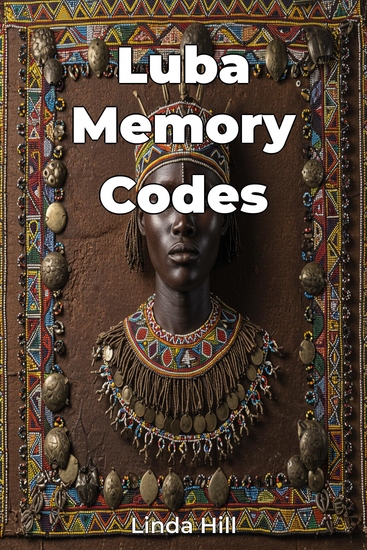
Luba Memory Codes - cover

Luba Memory Codes

Linda Hill

Übersetzer A AI

Verlag: Publifye

  • 0
  • 0
  • 0

Beschreibung

Luba Memory Codes explores the ingenious methods employed by the pre-literate Luba Kingdom of Central Africa to preserve and transmit their history and governance. Lacking a written language, the Luba people developed sophisticated memory aids, most notably the lukasa, a wooden board adorned with beads and carvings. These served as mnemonic devices, enabling trained specialists (basangwa) to recount intricate narratives and legal precedents. This book delves into the Luba's system of indigenous knowledge, highlighting their capacity for abstract thought.

 
The book examines the lukasa in detail, deciphering its symbolic language and demonstrating its function as a memory aid. It also considers the broader cultural context, including oral traditions and initiation ceremonies, that reinforced the memory codes. By understanding these elements, readers gain insight into the complex governance structures of the Luba Kingdom, which flourished from the 16th to the 19th centuries.

 
Organized into three parts, Luba Memory Codes first introduces the Luba Kingdom, then analyzes the lukasa and finally explores the social context of memory in Luba culture. Through a combination of historical accounts, museum collections, and ethnographic research, the book offers a nuanced perspective on pre-colonial African history and challenges conventional views reliant solely on written records. This interdisciplinary approach will appeal to scholars, students, and anyone interested in African history, cultural preservation, and the fascinating world of mnemonic devices.
Verfügbar seit: 03.05.2025.
Drucklänge: 58 Seiten.

Weitere Bücher, die Sie mögen werden

  • The Philosophy - A Critical Upgrade For Humanity - cover

    The Philosophy - A Critical...

    Alex Kain

    • 0
    • 0
    • 0
    What if the world doesn’t have to be this way? 
    The Philosophy opens with the most human of questions—“What’s the point?”—and dares to follow it wherever it leads. This isn’t just another thought experiment or self-help book. It’s a rallying cry for those who feel the systems around us are broken, yet refuse to believe we are powerless to change them. 
    In a world driven by competition, inequality, and disconnection, The Philosophy is your invitation to radically rethink the game. With bold, practical strategies inspired by transformative ideas like Doughnut Economics and the empowering spirit of The Secret, Alex Kain delivers a deeply personal yet universal exploration of how we can build a society rooted in justice, equity, and shared well-being—not someday, but starting now. 
    Why You Can’t Afford to Miss This Opportunity 
    - It demystifies systemic failure—revealing how poverty, homelessness, and inequality aren’t inevitable but solvable when we treat root causes, not just symptoms. 
    - It reawakens agency—offering a counter-narrative to helplessness by showing how you can contribute meaningfully to lasting social transformation. 
    - It inspires collective ambition—moving beyond personal success to challenge how we measure value, power, and impact in our communities. 
    - It’s not just a book—it’s a blueprint for anyone who wants to live with purpose and be part of something bigger than themselves. 
    This is a manifesto for the change-makers, the questioners, the quietly dissatisfied, and the fiercely hopeful. The Philosophy hands you the lens—and the tools—to see and shape a more humane future. 
    It serves as a harbinger of what is possible if we choose the road less travelled vs continuing to stay the course. Moreover, The Philosophy is an opportunity for us to uncover the world we want to gift to the future. 
    What kind of world will you help create?
    Zum Buch
  • Cognitive Behavioral Therapy - A Complete Guide to Retraining Your Brain to Overcome Anxiety and Depression - cover

    Cognitive Behavioral Therapy - A...

    Franz Bement

    • 0
    • 0
    • 0
    If you're struggling with excessive anxiety, chronic depression, or crippling fear that might be a phobia, and you're unsure about the treatment options available, then "Cognitive Behavioral Therapy: Complete Guide to Retraining Your Brain to Overcome Anxiety and Depression" is the audiobook you've been waiting for. 
    Cognitive Behavioral Therapy (CBT) is a type of psychotherapy that examines your reactions to specific stimuli and explores the reasons behind those reactions. Anxiety, depression, low self-esteem, and phobias, if left untreated, can lead to irrational responses to everyday situations, distorted thinking, and altered perceptions of reality. CBT provides a realistic and healthy thought process, offering an effective alternative for those struggling with these issues. 
    In this audiobook, you will:Learn about Cognitive Behavioral Therapy and how it effectively treats anxiety and depressive disorders.Discover professional CBT techniques used to address anxiety, depression, low self-esteem, suicidal thoughts, and negative thinking.Understand how to manage your symptoms successfully.Identify common symptoms and side effects of anxiety and depressive disorders.Explore different methods to overcome anxiety, depression, low self-esteem, and negative thoughts.And much more! 
    Don't wait any longer. Get your copy today and start your healing journey!
    Zum Buch
  • Through the Morgue Door - One Woman’s Story of Survival and Saving Children in German-Occupied Paris - cover

    Through the Morgue Door - One...

    Colette Brull-Ulmann,...

    • 0
    • 0
    • 0
    In 1934, at the age of fourteen, Colette Brull-Ulmann knew that she wanted to become a pediatrician. By 1942, Brull-Ulman and her family had become registered Jews under the ever-increasing statutes against them enacted by Petain's government. Her father had been arrested and interned at the Drancy detention camp and Brull-Ulman had become an intern at the Rothschild Hospital. 


    Under Claire Heyman, a charismatic social worker who was a leader of the hospital's secret escape network, Brull-Ulmann began working tirelessly to rescue Jewish children treated at the Rothschild. Ultimately, Brull-Ulmann was forced to flee the Rothschild in 1943, when she joined her father's resistance network, gathering and delivering information for De Gaulle's secret intelligence agency until the Liberation in 1945. 


    In 1970, Brull-Ulmann finally became a licensed pediatrician. It wasn't until decades later when she finally started to speak publicly—not only about her own work and survival, but about the one child who affected her most deeply. Originally published in French in 2017, Brull-Ulmann's memoir fearlessly illustrates the horrors of Jewish life under the German Occupation and casts light on the heretofore unknown story of the Rothschild Hospital during this period.
    Zum Buch
  • This Is Your Body on Trauma - How to Nourish Safety Resilience and Connection with Polyvagal-Informed Nutrition - cover

    This Is Your Body on Trauma -...

    MS Meg Bowman

    • 0
    • 0
    • 0
    This Is Your Body on Trauma is the first book to teach readers how to use nutrition to heal underlying trauma that presents in physical symptoms. It features a unique do-it-yourself approach, allowing people to completely customize their care plan. 
      
    Trauma is pervasive, and recovery usually involves extensive talk therapy. What is often overlooked is using nutrition as a way to restore a sense of safety and self-trust. Research shows between 75 and 90 percent of physician visits are due to the wear and tear on the body from stress hormones. The gut is often our first indicator that something is awry; it is the watchtower raising the alarm, and the existence of trauma can create a negative feedback loop with the brain that leads to several quite common gut-brain axis complaints, such as anxiety, depression, IBS, and pain. 
      
    More than “just” a nutrition book, This Is Your Body on Trauma helps people make connections between what is going on in their mind and body with a unique 360-degree integrative approach to mental health. Using a unique, customizable approach, readers are given a series of experiments based on recommendations, formulating their needs and providing actionable solutions to lessen the perception of stress with nutrition. This book will help people who have experienced traumatic events as both a child and an adult, those who experience chronic stress, as well as people who have experienced food trauma heal and manage the physiological impacts of that trauma throughout their lives. 
      
    • The experiments provided in the book can be done in collaboration with a therapy or nutrition provider. 
    • This book is the only one that discusses not only nutrition for trauma (what to eat), but also applies it in a trauma-informed way (how to eat to avoid triggers).
    Zum Buch
  • When Science Meets Power - 1st Edition - cover

    When Science Meets Power - 1st...

    Geoff Mulgan

    • 0
    • 0
    • 0
    Science and politics have collaborated throughout human history and science is repeatedly invoked today in political debates, from pandemic management to climate change. 


    Leading policy analyst Geoff Mulgan here calls attention to the growing frictions caused by the expanding—and unsolicited—authority being heaped upon science. As science increasingly competes with politics, a defined plan of cooperation is urgently needed. 


    Mulgan outlines science and politics as two distinct, imperfect forms of collective intelligence. Whereas science is ordered around what we know and what is, politics engages what we feel and what matters. Politics functions because it recognizes the limits of power, the need for delegation and expert advice. The intellectual logic of science, on the other hand, focuses on detail and depth, struggling to place its knowledge in wider contexts. The crux of the matter, Mulgan argues, is how can we ensure that crucial decisions taken in democracies are both well informed and legitimate? 


    Rooted in understanding that science and politics are not just fields of ideas but also fields of action, this book proposes ways to ensure that the two work effectively together.
    Zum Buch
  • Warfare in Ancient Greece: The History of the Greeks’ Wars on Land and Sea in Antiquity - cover

    Warfare in Ancient Greece: The...

    Editors Charles River

    • 0
    • 0
    • 0
    Although the armies of the ancient Greek, or “Hellenic”, city-states (poleis, singular polis) included both cavalry (hippeis) and light infantry (psiloi, peltastes, gymnetes), their mainstay was undoubtedly the heavy infantry known today as hoplites. Armed to the teeth with their distinctive round shield (aspis or hoplon), high-crested helmet (corys) and long spear (dory), the hoplites were some of the most efficient soldiers of their time. They fought in the tight phalanx formation, and beyond the confines of their small poleis, Greek hoplites were also prized as mercenaries throughout the ancient world.  
    	Most historians believe that the hoplite became the dominant infantry soldier in nearly all the Greek city-states around the 8th century BCE. Hoplites were responsible for acquiring their own equipment, so not every hoplite might have been equally armed, but considering the style of warfare, they needed as much uniformity as possible. Like most infantry outside of Greece, the hoplites also carried spears, but while the Persian weapons were short and light for example, the Greek spears were thick shafts anywhere between seven and nine feet long. These spears were topped by a 9-inch spearhead, with a “lizard-sticker” buttspike at the bottom which could be used as a secondary spearhead if the main weapon was snapped off, or to plant the spear upright when at rest. Each hoplite also carried a shortsword, designed specifically for thrusting in the close confines of a melee (the Spartan weapon, the xiphos, was so short as to be virtually a dagger, its blade barely over a foot long).  
    It was only with the advent of the more mobile Roman legion, and the defeat of phalanxes in battles like Cynoscephalae (197 BCE) and Pydna (168 BCE), that the hoplite phalanx was finally outclassed
    Zum Buch