
¡Acompáñanos a viajar por el mundo de los libros!
Añadir este libro a la estantería
Grey
Escribe un nuevo comentario Default profile 50px
Grey
Suscríbete para leer el libro completo o lee las primeras páginas gratis.
All characters reduced
Hawaii Kingdom - cover

Hawaii Kingdom

Linda Hill

Traductor A AI

Editorial: Publifye

  • 0
  • 0
  • 0

Sinopsis

Hawaii Kingdom explores the dramatic story of how the Kingdom of Hawaii, a culturally rich and independent nation, was annexed by the United States. This pivotal moment in world history was influenced by a complex interplay of political, economic, and social factors, including the growing influence of American businessmen and expansionist ambitions. The book argues that annexation was not inevitable but rather a calculated act driven by external forces.

 
The book chronicles the reigns of Hawaiian monarchs, from Kamehameha I, who unified the islands, to Queen Liliʻuokalani, the last sovereign ruler. It carefully analyzes the impact of European and American influence, particularly through missionary activity and the sugar industry, which dramatically reshaped Hawaiian society and set the stage for annexation.

 
The narrative progresses chronologically, from ancient Hawaiian society to the overthrow of Queen Liliʻuokalani in 1893 and the subsequent annexation by the United States in 1898, concluding with an exploration of the lasting impact on Hawaiian culture and identity.

 
Through a range of primary and secondary sources, Hawaii Kingdom provides a nuanced perspective on the Kingdom of Hawaii, avoiding simplistic narratives. It emphasizes the agency of Hawaiian leaders while acknowledging the overwhelming force of American expansionism. The book presents the historical evidence and competing perspectives, allowing readers to understand the long-term consequences of imperialism and the ongoing struggle for Hawaiian sovereignty and indigenous rights.
Disponible desde: 20/03/2025.
Longitud de impresión: 57 páginas.

Otros libros que te pueden interesar

  • Krantikari - Bharat ke Swatantrata Sangram ki Ek Alag Kahani - cover

    Krantikari - Bharat ke...

    Sanjeev Sanyal

    • 0
    • 0
    • 0
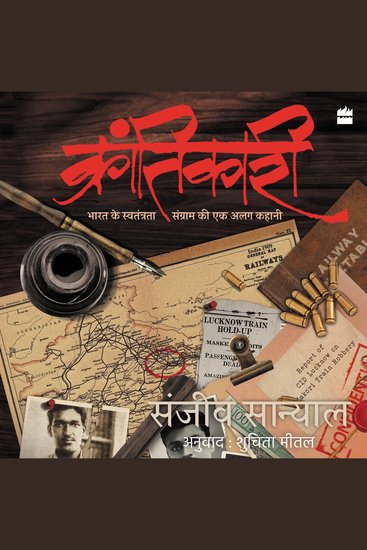
    The history of India's struggle for freedom is usually told from the perspective of the non-violent movement. Yet, the story of armed resistance to colonial occupation is just as important. Names such as Vinayak Savarkar, Aurobindo Ghosh, Rashbehari Bose, Bagha Jatin, Sachindra Nath Sanyal, Bhagat Singh, Chandrashekhar Azad and Subhas Chandra Bose are still widely remembered. Their story is almost always presented as acts of individual heroism and not as part of a wider movement that had any overarching strategy or significant impact on the overall struggle for Independence. In reality, the revolutionaries were part of a large network that sustained armed resistance against the British Empire for half a century. They not only created a wide network inside India but also established nodes in Britain, France, Thailand, Germany, Persia, Russia, Italy, Ireland, the United States, Japan and Singapore. At various points, they received official support and recognition from the governments of some of these countries. Even the internal dynamics of the Indian National Congress of the time cannot be understood without the revolutionaries, who enjoyed widespread support within the organization. This was no small-scale movement of naive individual heroism but one that involved a large number of extraordinary young men and women who were connected in multiple ways to each other and to the evolving events of their times.  
    Krantikari, the Hindi translation of the bestselling Revolutionaries, tells their story, one that is replete with swashbuckling adventure, intrigue, espionage, incredible bravery, diabolical treachery and shockingly unpredictable twists of fate.
    Ver libro
  • We Agnostics: How William James Father of American Psychology Advanced A Spiritual Solution to Addiction: How a Venerated Harvard Doctor Inspired the 12 Step Movement - cover

    We Agnostics: How William James...

    Paul Schulte

    • 0
    • 0
    • 0
    Bill Wilson was a washed up Wall Street analyst after the Great Crash of 1929 who was dying of alcoholism and decided to clean up. He read “Varieties off Religious Experience” by eminent Harvard Professor William James (whose own brother had died of alcoholism). The rest, as they say, is history and the result was what Aldous Huxley called the most Important social movement of the 20th century. This book weaves together brief excerpts from James’ book (which had radical ideas about spirituality being an end to itself and mostly separate from religion) with the writings of Bill Wilson to show how the two men’s thinking interacted to create the 12 Step movement. It sheds light on the profound influence James had on early 20th Century Agnosticism. It is solid analysis of James’ important contribution to American Spiritualism. Most of all, though, it is a reflection on the 12 Steps of AA & a meditation on what ‘Higher Power’ means. It is a soothing hot soak in the great writing of two men who developed a way out of the soul sickness that is addiction. They both saw spirituality as separate from religion which arises from the basic human need for some private higher power during moments of self-despair. The relief that comes makes life larger, allows us (finally) to belong and offers dignity — for alcoholics or those who live with alcoholics. It works. It really does. Read a sentence or a page per day. This book is a journey of reflection and meditation.
    Ver libro
  • Blood on the Moon - cover

    Blood on the Moon

    Alan K. Rode

    • 0
    • 0
    • 0
    Of the movies that writers and historians call "Noir Westerns," none is more celebrated than 1948's Blood on the Moon. The comingling of the Western genre and the noir style crystalized in this extraordinary film, in turn influencing Westerns in the 1950s to become darker and more psychological. Produced during the height of the post-World War II film noir movement, Blood on the Moon is a classic Western immersed in the film noir netherworld of double crosses, government corruption, shabby barrooms, gun-toting goons, and romantic betrayals. With this volume, biographer and noir expert Alan K. Rode brings the film to life for a new generation of listeners and film lovers.
    Ver libro
  • Mallaika Arora - cover

    Mallaika Arora

    Tenzim Norzom

    • 0
    • 0
    • 0
    Actor Malaika Arora announces Malaika Arora Ventures; eyes overall wellness sector
    Ver libro
  • Chip War: Book Summary & Analysis - cover

    Chip War: Book Summary & Analysis

    Briefly Summaries

    • 0
    • 0
    • 0
    This is a concise summary and analysis of Chip War , by Chris Miller.
     
    It is not the original book and is not affiliated with or endorsed by Chris Miller.
     
    Ideal those seeking a quick and insightful overview.
    
     
    Chip War explores the global race for dominance in semiconductor technology, a field that underpins modern economies and national security. The book delves into the history, politics, and economic strategies behind the production of microchips, highlighting how this seemingly invisible technology has shaped global power dynamics. It examines the geopolitical struggle for control over semiconductor supply chains and its implications for future conflicts in the tech world.
    Ver libro
  • The Story of the Printing Press – How It Changed Civilization - The Invention That Sparked the Renaissance Reformation and the Modern World - cover

    The Story of the Printing Press...

    Zayn Anderson

    • 0
    • 0
    • 0
    Before the internet, before television, and even before mass literacy, one invention transformed the way humans communicated: the printing press. It gave birth to the Renaissance, the Reformation, and the Scientific Revolution, shaping the modern world as we know it. 
    This audiobook takes you deep into the fascinating story of the printing press, uncovering its origins, impact, and revolutionary effects on civilization. Discover: 
    ✅ How Johannes Gutenberg’s invention democratized knowledge 
    ✅ The printing press’s role in spreading religious and scientific revolutions 
    ✅ How it challenged kings, empowered thinkers, and reshaped societies 
    ✅ Why the printing press is considered one of the most important inventions in human history 
    The Story of the Printing Press – How It Changed Civilization is a must-listen for history lovers, technology enthusiasts, and anyone fascinated by the forces that shaped the modern world.
    Ver libro