¡Acompáñanos a viajar por el mundo de los libros!
Añadir este libro a la estantería
Grey
Escribe un nuevo comentario Default profile 50px
Grey
Suscríbete para leer el libro completo o lee las primeras páginas gratis.
All characters reduced
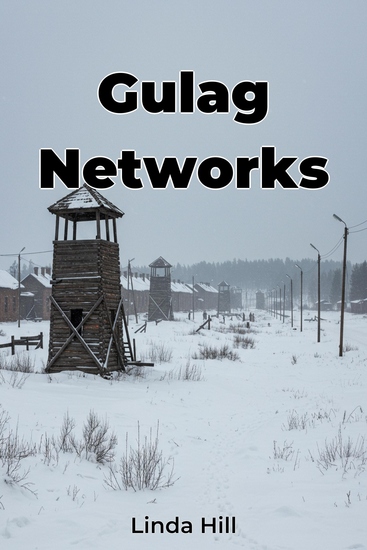
Gulag Networks - cover

Gulag Networks

Linda Hill

Traductor A AI

Editorial: Publifye

  • 0
  • 0
  • 0

Sinopsis

Gulag Networks explores the vast network of forced labor camps within the Soviet Union, revealing its integral role in Soviet politics, society, and the economy. The book highlights that the Gulag system was not merely a tool for political repression under Stalin, but a fundamental component of the Soviet economic model. This system provided essential labor for large-scale industrial projects like mining and forestry, showcasing the interconnectedness between the camps and the state's ambitions. The book analyzes the evolution of the Gulag, the harsh realities of life within the camps, and its deep connection to the Communist Party's political goals.

 
The book examines how the Gulag system expanded from its inception into a massive network of camps and settlements filled with political prisoners and others deemed undesirable. It traces the policies that led to mass arrests and deportations, and details the camp hierarchy and survival strategies employed by prisoners. By drawing on archival documents, memoirs, and statistical data, Gulag Networks presents a quantitative analysis of the Gulag's impact, connecting it to broader fields like criminology and economic history. The book uniquely focuses on the Gulag as a complex, interconnected network rather than isolated camps, emphasizing how deeply forced labor penetrated Soviet society.

 
Progressing from the origins and expansion of the Gulag to its economic functions and lasting legacy, the book provides a comprehensive understanding of this dark chapter of world history, offering valuable insights for anyone interested in Soviet history, human rights, and the dangers of unchecked state power.
Disponible desde: 21/03/2025.
Longitud de impresión: 68 páginas.
Otros libros que te pueden interesar

  • Middle East in World War I The: The History and Legacy of the Biggest Campaigns in the Great War’s Forgotten Theater - cover

    Middle East in World War I The:...

    Editors Charles River

    • 0
    • 0
    • 0
    World War I, also known in its time as the “Great War” or the “War to End all Wars”, was an unprecedented holocaust in terms of its sheer scale. Fought by men who hailed from all corners of the globe, it saw millions of soldiers do battle in brutal assaults of attrition which dragged on for months with little to no respite. Tens of millions of artillery shells and untold hundreds of millions of rifle and machine gun bullets were fired in a conflict that demonstrated man’s capacity to kill each other on a heretofore unprecedented scale, and as always, such a war brought about technological innovation at a rate that made the boom of the Industrial Revolution seem stagnant.  
    	Most books and documentaries about the First World War focus on the carnage of the Western Front, where Germany faced off against France, the British Empire, and their allies in a grueling slugfest that wasted millions of lives. The shattered landscape of the trenches has become symbolic of the war as a whole, and it is this experience that everyone associates with World War I, but that front was not the only experience. There was the more mobile Eastern Front, as well as mountain warfare in the Alps and scattered fighting in Africa and the Far East. 
    	Then there was the Middle Eastern Front, fought across the Levant and Mesopotamia, which captured the imagination of the European public. There, the British and their allies fought the Ottoman Turkish Empire under harsh desert conditions hundreds of miles from home, struggling for possession of places most people only knew from the Bible and the Koran.
    Ver libro
  • A Rare Recording of EE Cummings Reading His Own Poetry - cover

    A Rare Recording of EE Cummings...

    EE Cummings

    • 0
    • 0
    • 0
    Edward Estlin Cummings (October 14, 1894 - September 3, 1962), commonly known as e e cummings, was an American poet, painter, essayist, author, and playwright. During World War I, he worked as an ambulance driver and was imprisoned in an internment camp, which provided the basis for his 1922 novel The Enormous Room. The following year he published his first collection of poetry. Cummings wrote approximately 2,900 poems and is often regarded as one of the most important American poets of the 20th century. He is associated with modernist free-form poetry, and much of his work uses idiosyncratic syntax and lower-case spellings for poetic expression. In the following recordings, Cummings reads his poems "somewhere i have never travelled,gladly beyond" (1931), "next to of course god america i" (1926), "anyone lived in a pretty how town" (1940), "Buffalo Bill's (1920), "in Just–" (1920), i carry your heart with me(i carry it in)" (1952). The final audio clip is from a 1955 Cummings speech, "A Poet's Advice to Students."
    Ver libro
  • The Divine Companion - A Spiritual Guide to Inner Strength and Enlightenment - cover

    The Divine Companion - A...

    James Allen, Tim Zengerink

    • 0
    • 0
    • 0
    What if you always felt supported and guided by a higher presence—empowering you to face life’s trials with courage and grace? 
    In this inspirational work, James Allen offers a profound look at the spiritual resources available to all who earnestly seek them. Adapted for contemporary readers, The Divine Companion provides teachings on faith, moral integrity, and inner strength, helping you align your earthly actions with your loftiest spiritual aspirations. 
    What You’ll Discover in This Modern Translation: 
    - Ways to develop a personal connection with the divine or higher self 
    - Guidance for overcoming moral and emotional struggles 
    - The transformative power of devotion, prayer, and reflective practice 
    - A blueprint for living in harmony with universal spiritual laws 
    Imagine moving through each day with renewed hope, knowing you are never truly alone and that higher guidance is always within reach. James Allen’s wisdom points the way to a life of uplifted purpose and abiding spiritual comfort.
    Ver libro
  • Dr Mary Edwards Walker: The Life and Legacy of the Civil Rights Activist Who Became the Only Woman to Receive the Medal of Honor - cover

    Dr Mary Edwards Walker: The Life...

    Editors Charles River

    • 0
    • 0
    • 0
    In the process of becoming one of the most famous Americans of her era, Susan B. Anthony’s legacy has overshadowed many of her contemporaries who were also active in the fight for civil rights. Among them, few led as interesting or progressive a life as Dr. Mary Edwards Walker, who grew up in a family that encouraged every kind of pursuit for girls and provided an educational foundation that would propel Walker in many fields. In addition to becoming a surgeon, Walker and her family eschewed conventional dress styles in favor of being comfortable, doing so in an era that ensured she would be ridiculed for it. Undeterred, Walker’s work took her across enemy lines during the Civil War, leading to her arrest in the South and to her recognition as one of only eight civilians in American history to be awarded the Medal of Honor for rendering "valuable service to the Government, and her efforts have been earnest and untiring in a variety of ways."  
    	Although her legacy has not endured quite as much as some of the other activists who fought for civil rights in the late 19th century, she has been remembered and celebrated in the past few decades, including the unveiling of a giant statue of her in her hometown of Oswego, New York. She has also been commemorated with a stamp, and in the near future, a U.S. Army fort may be named after her in recognition of her service during the Civil War. 
    Ver libro
  • The Sterilization Experiments - The Barbaric Legacy of Carl Clauberg - cover

    The Sterilization Experiments -...

    Davis Truman

    • 0
    • 0
    • 0
    In the shadows of history, some stories challenge our understanding of humanity. 'The Sterilization Experiments: The Barbaric Legacy of Carl Clauberg' is one such story. 
    The atrocities committed during the Nazi era are a dark stain on human history. Among the many horrors of this period were the medical experiments conducted on concentration camp prisoners by Nazi doctors. One of the most notorious of these doctors was Carl Clauberg, an expert in gynecology who was tasked with developing a method for sterilizing women quickly and inexpensively. Clauberg's experiments were carried out with a callous disregard for human life and dignity, resulting in immeasurable suffering for his victims. The legacy of these experiments continues to shape our understanding of medical ethics, human rights, and the dangers of unchecked power and ideology.  
    The Sterilization Experiments' is not just a recounting of facts; it is a solemn reminder of the depths to which humanity can sink and a call to remember the victims who endured unimaginable suffering. 
    This book is an essential read for those who seek to understand the true cost of hatred and the importance of vigilance against such evils. It challenges us to confront the past and ensure that such atrocities never happen again.
    Ver libro
  • Vanishing Act - The Enduring Mystery Behind the Legendary Doolittle Raid Over Tokyo - cover

    Vanishing Act - The Enduring...

    Dan Hampton

    • 0
    • 0
    • 0
    From New York Times bestselling author Dan Hampton comes the gripping, untold story of a vital secret mission set during the darkest days of the Second World War. 


    In the dark days after the devastating Pearl Harbor attacks during the spring of 1942, the United States was determined to show the world that the Axis was not invincible. Their bold plan? Bomb Tokyo. On April 18, 1942, sixteen B-25s, known as the Doolittle Raiders, hit targets across Japan before escaping to China. 


    The eighth plane, however, did not follow the other raiders. Instead, Plane 8's pilots, Captain Edward "Ski" York and Lieutenant Bob Emmens, never attacked Tokyo, but headed across Japan to the Soviet Union, supposedly due to low fuel. Yet, this bomber was the only plane on the mission with maps of the Soviet Union aboard. And why did Plane 8's route, recently discovered in the Japanese Imperial Archives, show them nowhere near their target? Uncovered facts reveal that bombing Tokyo was merely a cover for Plane 8's real mission, but what was their secret objective? No one, aside from the two pilots and whomever sent them on this mission, truly knew why they were there, nor has the reason ever been revealed. 


    Until now.
    Ver libro