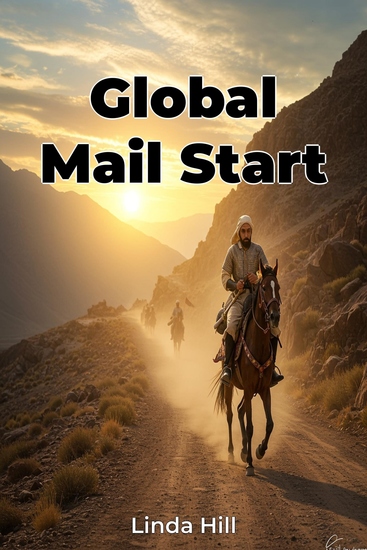
Junte-se a nós em uma viagem ao mundo dos livros!
Adicionar este livro à prateleira
Grey
Deixe um novo comentário Default profile 50px
Grey
Assine para ler o livro completo ou leia as primeiras páginas de graça!
All characters reduced
Global Mail Start - cover
LER

Global Mail Start

Linda Hill

Tradutor A AI

Editora: Publifye

  • 0
  • 0
  • 0

Sinopse

Global Mail Start explores the history of communication by examining the origins and evolution of mail systems. It argues that modern communication networks are not sudden inventions, but rather the result of centuries of development. The book highlights how early courier systems laid the groundwork for modern postal services, impacting trade, governance, and the spread of knowledge. For example, the development of formal postal routes in ancient empires like Persia and Rome facilitated political control and economic activity.

 
The book examines two key themes: the evolution of logistical infrastructure and the development of societal trust in centralized communication. It looks at how early messengers overcame physical and organizational challenges, and how mechanisms like seals and codes helped ensure message integrity. By tracing the development of these early systems, Global Mail Start connects the history of communication to broader fields like logistics, political science, and economic history. It begins with informal messenger services and progresses through organized courier networks in ancient civilizations, culminating in the standardized postal systems of the modern era.
Disponível desde: 20/02/2025.
Comprimento de impressão: 60 páginas.
Outros livros que poderiam interessá-lo

  • A Therapist's Guide to Consensual Nonmonogamy - Polyamory Swinging and Open Marriage - cover

    A Therapist's Guide to...

    Rhea Orion

    • 0
    • 0
    • 0
    Consensual nonmonogamy (CNM) means that all partners in a relationship consent to expanded monogamy or polyamory. Clinicians are on the front line in providing support for the estimated millions pioneering these modern relationships. This first available guide for therapists provides answers to prevalent questions: What is the difference between expanded monogamy and polyamory? Is CNM healthy and safe? Why would someone choose the complexities of multiple partners? What about the welfare of children? Through illustrative case studies from research and clinical practice, therapists will learn to assist clients with CNM agreements, jealousy, sex, time, family issues, and much more. A Therapist's Guide to Consensual Nonmonogamy serves as a step forward toward expanding standard clinical training and helps inform therapists who wish to serve the CNM population.
    Ver livro
  • Way of the Spartan Life Lessons to Strengthen Your Character Build Mental Toughness Mindset Self Discipline & a Healthy Body - cover

    Way of the Spartan Life Lessons...

    Thomas Swan

    • 0
    • 0
    • 0
    Why Most People Will Never Be Great 
    The world we are living in today is a toxic place. Modern society is soft, unfit, and mentally weak.... And there is so much dissatisfaction with life.  
    If you're reading this, I know you probably want more from life.  
    Save Yourself From Destruction - The Spartan Way 
    The Spartans will be forever known as strong warriors, with a simple philosophy of life. Their heroic legacies live on through films and stories. But modern society has fallen far from them.  
    We are now infected with worriers, wimps, and whiners. Of course, we no longer live in the days where our heads could be decapitated by an axe-wielding enemy. But there are still wars to fight. Not wars against armies, but wars against our demons and struggles.  
    There is a lot to learn from the Spartans. 
    They were born with nothing in a harsh world thousands of years ago. But that didn’t mean they would become no one. By building a better mind, body, and living the Spartan way, you'll become a stronger and a better person for this life.  
    Whether you're an executive seeking to climb the ladder or a student pushing towards better grades. You could even be a parent looking to guide their children.  
    This book will help to succeed, make you stronger, and teach you much more. 
    Ver livro
  • The Great Book of Journaling - How Journal Writing Can Support a Life of Wellness Creativity Meaning and Purpose - cover

    The Great Book of Journaling -...

    Eric Maisel, Lynda Monk

    • 0
    • 0
    • 0
    Learn how to quell worry and anxiety and fuel creativity with journaling in this informative guide. 
     
    From psychotherapist Eric Maisel and Lynda Monk, Director of the International Association for Journal Writing, a guide to journal writing for higher self-esteem. This is the next-generation book on journaling techniques that introduces a younger generation to the immense benefits of journaling and provides all journal writers with the tools they need to grow, heal, and deepen their personal writing experience. 
     
    Therapeutic journal writing can promote individual healing, creativity, and community-building. The Great Book of Journaling offers multiple perspectives on journaling techniques in an easy-to-use, practical format, along with providing a comprehensive introduction to various techniques and methods for deepening your personal writing. 
     
    Learn from the best.We’ve rounded up forty of the top journal experts in the world to explain exactly what journal writing can do for you! The Great Book of Journaling is full of practical tips, evidence-based research, and rich anecdotes from their coaching, teaching, therapy work with journal writers, or their personal journal writing. 
     
    The Great Book of Journaling can help:Create high self-esteem, self-love, and self-confidenceImprove your health and your sense of wellbeingCalm your worry and anxietyServe your creative needsDeepen your personal writing 
     
    Readers of books on journal writing such as Mindfulness Journal, The Self-Discovery Journal, or No Worries will love The Great Book of Journaling.
    Ver livro
  • Crypto Investment - cover

    Crypto Investment

    Isidore Weeks

    • 0
    • 0
    • 0
    Investing in cryptocurrency can offer several potential benefits such as high volatility leading to potentially high returns, increased accessibility and 24/7 trading, and the potential for digital currencies to become widely adopted as a new asset class. Additionally, blockchain technology underlying cryptocurrencies offers secure and transparent transactions. However, it is important to thoroughly research and understand the risks involved before investing, as the market is highly volatile and not backed by any government.
    Ver livro
  • Geratology - Understanding Old Age Challenges and Triumphs - cover

    Geratology - Understanding Old...

    Mike Crawford

    • 0
    • 0
    • 0
    Geratology is the scientific study of aging, encompassing its biological, psychological, and social dimensions. While often confused with geriatrics, which focuses on medical care for older adults, geratology takes a broader approach, examining aging as a lifelong process that affects individuals and societies in complex ways. Understanding geratology is crucial as global life expectancy rises and aging populations reshape economic, healthcare, and social structures. 
    The origins of geratology trace back to early philosophical and medical inquiries into longevity. Ancient Greek and Roman scholars explored aging as a natural phenomenon, while modern scientific advancements have provided deeper insights into the mechanisms of aging. Over the past century, geratology has evolved into an interdisciplinary field, drawing from biology, psychology, sociology, and public health to analyze how people age and how societies can better support aging populations. 
    At its core, geratology investigates the biological changes that occur with age. These include cellular senescence, genetic factors, and the gradual decline of organ function. Research into longevity has uncovered key processes such as telomere shortening, oxidative stress, and the role of inflammation in age-related diseases. While aging is an inevitable process, scientific advancements continue to explore ways to slow its progression and improve quality of life in later years.
    Ver livro
  • Ancient Egyptian Festivals - Celebrations of Deity and Life - cover

    Ancient Egyptian Festivals -...

    Omar Khalil

    • 0
    • 0
    • 0
    Festivals played a central role in the cultural and religious life of ancient Egypt. These grand celebrations were not just an occasion for communal enjoyment but were deeply tied to the spiritual and societal fabric of the civilization. They served as a means of honoring gods and goddesses, ensuring the prosperity of the land, and reinforcing the divine order, which was vital for the Egyptians. The festivals helped to maintain cosmic balance and provided a way for the people to connect with the divine. 
    The ancient Egyptians viewed the natural and spiritual worlds as intricately linked. Their gods were believed to control all aspects of life, from the annual flooding of the Nile to the harvests and the afterlife. Therefore, festivals were seen as essential in securing divine favor and maintaining order. These events allowed the people to express their devotion, offering prayers, sacrifices, and rituals to appease the gods. For instance, the Festival of Opet, one of the most significant, symbolized the renewal of the king’s power and his bond with the gods. It was an opportunity for the people to reassert their allegiance to the pharaoh, who was seen as the living deity on earth. 
    In addition to reinforcing the divine relationship, festivals also played a key role in community cohesion. The ancient Egyptians, despite the challenges of life, were brought together by shared rituals and celebrations. This unity was expressed in grand processions, feasts, music, and dance, where the people could experience a sense of collective identity. These events transcended social status and served as a reminder of the interconnectedness of all people under the divine. Festivals were not just for the elite but were a part of the communal life, extending to all citizens, from farmers to nobles.
    Ver livro