Junte-se a nós em uma viagem ao mundo dos livros!
Adicionar este livro à prateleira
Grey
Deixe um novo comentário Default profile 50px
Grey
Assine para ler o livro completo ou leia as primeiras páginas de graça!
All characters reduced
Famous Fake Photos - cover
LER

Famous Fake Photos

Linda Hill

Tradutor A AI

Editora: Publifye

  • 0
  • 0
  • 0

Sinopse

Famous Fake Photos explores the hidden history of photo manipulation, revealing how altered images have shaped our understanding of history and culture. It uncovers the evolution of techniques, from early darkroom tricks to today's digital wizardry, and examines the motivations behind photo fakery, including propaganda and profit. The book emphasizes the ethical implications of these deceptions and challenges us to become more critical consumers of visual media.

 
The book navigates a timeline of image manipulation, providing historical context and highlighting technological advancements. For example, early staged portraiture shows how manipulation has always been part of photography. It dives into specific cases of famous fake photos, analyzing the techniques used and their impact on public opinion. This approach combines forensic analysis with historical context, offering a unique perspective on the power and potential pitfalls of visual communication.

 
The book begins by introducing the fundamental principles of photo manipulation and progresses through major sections. It examines specific cases, explores the motivations behind image alteration, and discusses the ethical challenges. Ultimately, Famous Fake Photos calls for increased awareness and critical engagement with visual media, emphasizing the importance of fact-checking in an era saturated with visual content.
Disponível desde: 26/02/2025.
Comprimento de impressão: 78 páginas.
Outros livros que poderiam interessá-lo

  • Baikonur Man - Space Science American Ambition and Soviet Chaos at the Cold War's End - cover

    Baikonur Man - Space Science...

    Barry L. Stoddard

    • 0
    • 0
    • 0
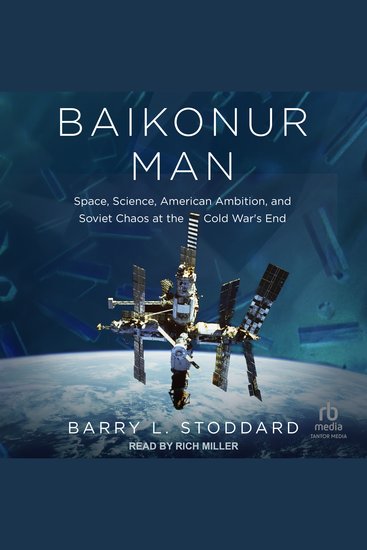
    Against the backdrop of the late Cold War, a tiny American start-up company forged a secret deal to place American scientific payloads aboard the Soviet space station MIR. Born out of sheer desperation after the Challenger explosion and grounding of the United States space shuttle program, the agreement was negotiated and approved behind the backs of NASA and Congress, with the help of United States government officials inside the Commerce and Defense departments. 


    On a cold gray morning in February 1988, the company founder met with three graduate students and their professor at the Massachusetts Institute of Technology to put his plans into action. Baikonur Man, written by one of those students, recounts the subsequent five-year saga of how science, comradery, hardship, drama, and occasional lunacy led to the first American experiments and payloads to fly on Russian rockets.
    Ver livro
  • Russo-Turkish Wars The: The History and Legacy of the Conflicts Between the Russian Empire and Ottoman Empire - cover

    Russo-Turkish Wars The: The...

    Editors Charles River

    • 0
    • 0
    • 0
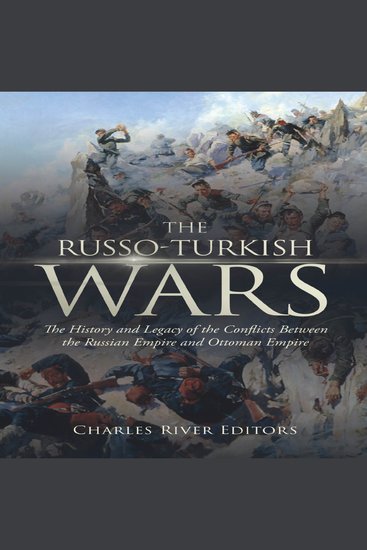
    In the wake of taking Constantinople, the Ottoman Empire would spend the next few centuries expanding its size, power, and influence, bumping up against Eastern Europe and becoming one of the world’s most important geopolitical players. It was a rise that would not truly start to wane until the 19th century, and in the centuries before the decline of the “sick man of Europe,” the Ottomans frequently tried to push further into Europe. 
    Some of those forays were memorably countered by Western Europeans and the Holy League, but the Ottomans’ most frequent foe was the Russian Empire, which opposed them for both geopolitical and religious reasons. From negotiations to battles, the two sides jockeyed for position over the course of hundreds of years, and the start of the fighting may have represented the Ottomans’ best chance to conquer Moscow and change the course of history. 
    By the 19th century, the tsar was notoriously referring to the Ottoman Empire as the “sick man of Europe,” and by the start of World War I, the Ottoman Empire was often described as a dwindling power, mired by administrative corruption, using inferior technology, and plagued by poor leadership. The general idea is that the Ottoman Empire was “lagging behind,” likely coming from the clear stagnation of the empire between 1683 and 1826. Yet it can be argued that this portrayal is often misleading and fails to give a fuller picture of the state of the Ottoman Empire. Looking at the reforms, technological advances and modernization efforts made by the Ottoman elite between 1826 and the beginning of World War I, one could really wonder why such a thirst for change failed to save the Ottomans when similar measures taken by other nations, such as Japan during the Meiji era, did in fact result in the rise of a global power in the 20th century.
    Ver livro
  • The Assassination of the Archduke - Sarajevo 1914 and the Romance That Changed the World - cover

    The Assassination of the...

    Greg King, Sue Woolmans

    • 0
    • 0
    • 0
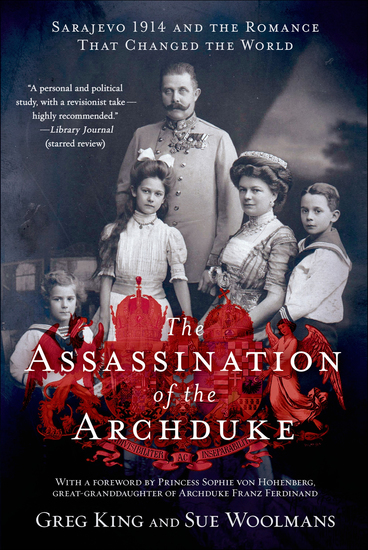
    Drawing on unpublished letters and rare sources, this is the true story behind the tragic romance and brutal assassination that ignited World War I.In the summer of 1914, three great empires dominated Europe: Germany, Russia, and Austria-Hungary. Four years later all had vanished in the chaos of World War I. One event precipitated the conflict, and at its heart was a tragic love story. When Austrian heir Archduke Franz Ferdinand married for love against the wishes of the emperor, he and his wife Sophie were humiliated and shunned, yet they remained devoted to each other and to their children. The two bullets fired in Sarajevo not only ended their love story, but also led to war and a century of conflict.Set against a backdrop of glittering privilege, Greg King and Sue Woolmans's The Assassination of the Archduke combines royal history, touching romance, and political murder in a moving portrait of the end of an era. One hundred years after the event, it offers the startling truth behind the Sarajevo assassinations, including Serbian complicity and examines rumors of conspiracy and official negligence. Events in Sarajevo also doomed the couple's children to lives of loss, exile, and the horrors of Nazi concentration camps, their plight echoing the horrors unleashed by their parents' deaths.Challenging a century of myth, The Assassination of the Archduke resonates as a very human story of love destroyed by murder, revolution, and war.With a foreword by Princess Sophie von Hohenberg, great-granddaughter of Archduke Franz Ferdinand
    Ver livro
  • Second Crusade The: The History of the Controversial Campaign that Led to the Collapse of the Crusader States - cover

    Second Crusade The: The History...

    Charles River Editors

    • 0
    • 0
    • 0
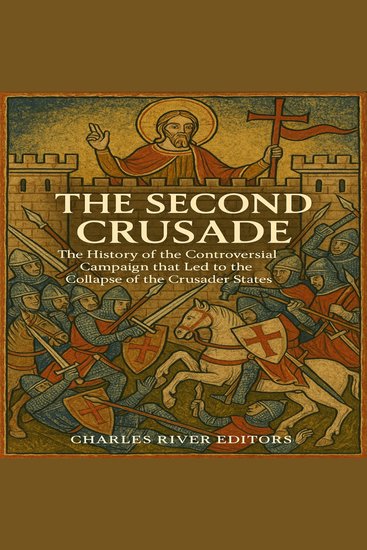
    In the 50 years following the First Crusade, the Latin states in the East were consolidated, but there were also growing tensions and new challenges. Against this backdrop, the fall of the County of Edessa in December 1144 at the hands of Zengi, the atabeg of Aleppo and Mosul, was a catastrophic event. Founded in 1098 by the future King Baldwin of Boulogne, Edessa was the first Crusader state, as well as the northernmost, weakest, and least populated. It was constantly exposed to Muslim attacks, and news of its fall reached Europe at the beginning of 1145, and the fall was the catalyst for the Second Crusade. Furthermore, the Crusader states were also concerned about their relationship with the Byzantine Empire. Relations with the Empire were often tense. As early as 1105, Bohemond of Antioch travelled to the West in search of troops to fight the Muslims while concealing his intention to attack parts of the Byzantine Empire. He reportedly obtained papal acquiescence, though not an explicit bull.  
    Historically, writers have given little prominence to the Second Crusade because of its failure, and it is understandably overshadowed by the triumphant First Crusade and the more captivating Third Crusade. For a long time, historiography attributed a central role to Bernard of Clairvaux, sometimes portraying him as the sole architect of the enterprise due to the political difficulties experienced by Pope Eugene III in Rome. However, more recent studies have re-evaluated the Pope's role, emphasizing his commitment to planning and coordinating the crusade through a network of legates and advisors. Contrary to the portrayal of him as a naïve monk, Eugene III had a profound grasp of the dynamics of crusading and the boundaries of Christendom, which informed his bull and overall strategy. Another historiographical issue concerns the scope of the crusade itself:
    Ver livro
  • The Book of Five Rings - cover

    The Book of Five Rings

    Miyamoto Musashi

    • 0
    • 0
    • 0
    'When you attain the Way of strategy, there will not be one thing you cannot see.'
    
    Shortly before his death in 1645, the undefeated swordsman Miyamoto Musashi retreated to a cave to live as a hermit. There he wrote five scrolls describing the "true principles" required for victory in the martial arts and on the battlefield. Instead of relying on religion or theory, Musashi based his writings on his own experience, observation, and reason.
    Ver livro
  • Ferdinand Magellan – The First Circumnavigation of the World - The Story of the Man Who Proved the World Was Bigger Than We Imagined - cover

    Ferdinand Magellan – The First...

    Harley Adams

    • 0
    • 0
    • 0
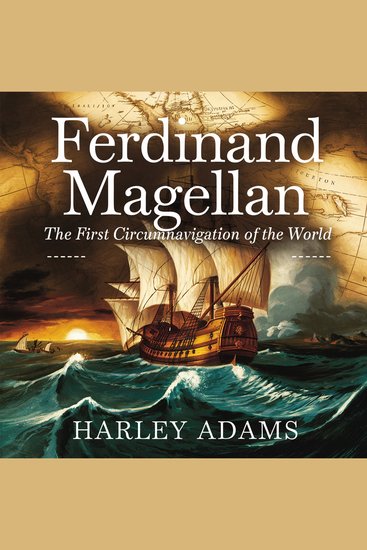
    Ferdinand Magellan’s daring expedition changed the world forever. In 1519, he set sail to find a western route to the Spice Islands, unknowingly embarking on the greatest voyage in human history. Though he would not live to see the journey completed, his fleet became the first to sail around the globe, proving the Earth’s vastness and interconnectedness. 
    This audiobook takes you on an unforgettable journey through mutiny, uncharted waters, and the ultimate test of human endurance. Discover: 
    ✅ The real story behind Magellan’s vision and why Spain funded his expedition 
    ✅ The dangers of the voyage—storms, starvation, and conflict 
    ✅ How Magellan met his tragic end in the Philippines 
    ✅ The impact of his journey on global trade and exploration 
    Ferdinand Magellan – The First Circumnavigation of the World is a must-listen for history lovers, adventure seekers, and anyone fascinated by the Age of Exploration.
    Ver livro