Junte-se a nós em uma viagem ao mundo dos livros!
Adicionar este livro à prateleira
Grey
Deixe um novo comentário Default profile 50px
Grey
Assine para ler o livro completo ou leia as primeiras páginas de graça!
All characters reduced
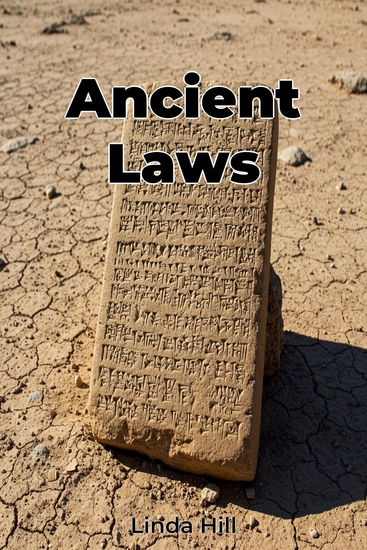
Ancient Laws - cover
LER

Ancient Laws

Linda Hill

Tradutor A AI

Editora: Publifye

  • 0
  • 0
  • 0

Sinopse

Ancient Laws explores the fascinating origins and development of legal systems in early civilizations, revealing how these ancient codes shaped our modern understanding of justice. The book examines legal innovations from Mesopotamia to Rome, highlighting the Code of Hammurabi, one of the earliest known examples of written law, and the Law of the Twelve Tables, a cornerstone of Roman legal tradition. These early legal systems weren't just about punishment; they established principles of social order, property rights, and governance that continue to influence legal thought today. The book approaches this complex topic with clear explanations and avoids focusing solely on Western traditions, thus offering a more balanced perspective on world history. It begins by laying the groundwork with an overview of codification and its importance, then systematically analyzes individual legal codes like the Code of Ur-Nammu and the Mosaic Law. Later chapters shift to the Roman legal system, tracing its evolution to the Justinian Code, and ultimately assess the lasting legacy of ancient law on modern legal systems. By connecting historical context with the specific provisions of ancient laws, Ancient Laws reveals the profound and enduring impact of these early attempts to codify human behavior.
Disponível desde: 29/03/2025.
Comprimento de impressão: 62 páginas.


Outros livros que poderiam interessá-lo

  • The Uses of Delusion - Why It's Not Always Rational to Be Rational - cover

    The Uses of Delusion - Why It's...

    Stuart Vyse

    • 0
    • 0
    • 0
    Although reason and rationality are our friends in almost all contexts, in some cases people are better off putting reason aside. In a number of very important situations, we benefit by not seeing the world as it is, and by not behaving like logic-driven machines. 


    The Uses of Delusion is about aspects of human nature that are not altogether rational but, nonetheless, help us achieve our social and personal goals. Psychologist Stuart Vyse presents a lively, accessible exploration of the psychological concepts behind "useful delusions," fleshing out how delusional thinking may play a role in love and relationships, illness and loss, and personality and behavior. Along the way Vyse draws on the work of William James, Daniel Kahneman, and Joan Didion—who wrote about her compelling belief that her husband, though deceased, would soon return to her. 


    Throughout, Vyse strives to answer the question: why would some of our most illogical beliefs be as helpful as they are? The concluding chapter offers an explanation grounded in natural selection—the ability to fool ourselves, Vyse argues, has actually helped us to survive. In the last section of The Uses of Delusion, Vyse offers suggestions for determining when reason should rule and when intuition and emotion should be allowed to take over.
    Ver livro
  • The Darkness Has Not Overcome - Lessons on Faith and Politics from Inside the Halls of Power - cover

    The Darkness Has Not Overcome -...

    Cliff Sims

    • 0
    • 0
    • 0
    Former special assistant to President Trump, New York Times bestselling author, and evangelical Christian Cliff Sims shares the lessons he learned on faith, politics, and the Christian witness while working in the halls of power.   American life today is consumed by politics. Even our churches are tearing themselves apart over political candidates, cultural flashpoints, and debates about whether certain pastors are vessels for the Holy Spirit or an unholy political agenda.   So how should Christians approach our lives in this time of strife and division? How should we engage in politics and respond when we find that our beliefs are at odds with the culture? And how do we keep our focus on eternity when the present attractions of the world are there in front of us at every turn? Cliff Sims, the son of a Baptist minister and man of deep Christian faith, has walked the halls of power, serving as a Special Assistant to President Trump and Deputy Director of National Intelligence. While working at the highest levels of the American government, he experienced firsthand the cutthroat world of power politics, an environment that can test the character of any follower of Jesus, and he wrestled continually with how to live out his faith.   In this book, Cliff shares hard-earned wisdom from his time serving in government, giving Christians lessons on how to live faithfully and with integrity. Recounting stories from the West Wing, Air Force One, and top secret bunkers, Sims offers practical advice and biblical insight on how to let the light of Christ shine in our dark world, regardless of our politics.  The Darkness Will Not Overcome is a must-read for every Christian who has found themselves exasperated by politics, fearful about the future, or discouraged by the times in which we live.
    Ver livro
  • Destiny of Liberty - cover

    Destiny of Liberty

    Mwanandeke Kindembo

    • 0
    • 0
    • 0
    In this book, author Mwanandeke Kindembo presented the reader with his manifesto, or a shared reality that exemplifies his ultimate mission. Which is based on finding within himself the motivation, or the correct vision to improve the world around him. He showed us the geography of his passions and how he is ready to step in to lead people to the promised land of liberty. The author delved into his own hidden agendas to find a more realistic worldview based on direct experience, rather than imaginary subjects. He placed more emphasis on land reform, the history of the D.R.Congo, the social and cultural influence, economic and political struggles of Africa. The book is filled with drastic, yet beautiful transformations that will change the course of the lives of many. Change for the better, thereby enabling citizens to live according to their fullest desires and potentials. The author has demonstrated an ideal view that will progress over time to developing his own unique understanding of his process, rather than relying on socially accepted belief systems. 
    Dedication (in the author's own words): I want to take this precious time to dedicate this book to my continent mama Africa, and especially to my compatriots in the Democratic Republic of Congo and any believer in the destiny of liberty. I am truly one of you. I come to you in the name of peace and love. Oh Africa! My love for you will never cease or end until I see that day that you get your full freedom; with your children. I ask this in the name of democracy and all the attributes that are associated with the redemption and freedom of nations.
    Ver livro
  • The First Airplane Flight – The Wright Brothers’ Legacy - How Two Brothers Changed the World with the Power of Flight - cover

    The First Airplane Flight – The...

    Charlie Hill

    • 0
    • 0
    • 0
    From bicycles to the skies, two brothers changed the course of history forever. But how did Orville and Wilbur Wright achieve the impossible? 
    This audiobook takes you deep into the story of the first airplane flight, uncovering the inventions, failures, and groundbreaking moments that led to the dawn of aviation. Discover: 
    ✅ How the Wright brothers turned their bicycle shop into an innovation lab 
    ✅ The secrets behind their early flight experiments and wind tunnel tests 
    ✅ The dramatic first successful flight at Kitty Hawk 
    ✅ How their discovery sparked a revolution in modern aviation and space travel 
    The First Airplane Flight – The Wright Brothers’ Legacy is a must-listen for history lovers, aviation enthusiasts, and anyone fascinated by the pioneers who dared to reach for the skies.
    Ver livro
  • The History of Venezuela - Economic Troubles - cover

    The History of Venezuela -...

    Anya Solace

    • 0
    • 0
    • 0
    Venezuela’s economic history is deeply intertwined with its political and social landscape, shaped by cycles of prosperity and crisis. While the country has vast natural resources, particularly oil, mismanagement, external pressures, and political instability have contributed to its economic troubles. Understanding the roots of these challenges requires examining Venezuela’s early economic foundations, the role of oil in its development, and the influence of political decisions on its financial stability.  
    In its early history, Venezuela’s economy was primarily based on agriculture and trade. Before the discovery of oil in the early 20th century, the country relied on exports of coffee, cocoa, and other agricultural products. While these industries provided some level of economic growth, wealth distribution remained highly uneven, favoring a small elite class while the majority of the population struggled with poverty. The transition from an agrarian economy to an oil-driven one dramatically altered Venezuela’s financial structure, offering immense opportunities but also creating long-term vulnerabilities.  
    The discovery of vast oil reserves in the early 20th century transformed Venezuela into one of the world’s leading oil producers. By the mid-20th century, petroleum had become the backbone of the national economy, contributing to rapid industrialization, urbanization, and infrastructure development. The influx of oil wealth led to economic booms and improved social programs, but it also fostered dependence on a single commodity. This overreliance on oil made Venezuela’s economy highly sensitive to fluctuations in global oil prices. Whenever oil prices soared, the government expanded public spending and welfare programs, but during downturns, the country faced severe financial instability. 
    Ver livro
  • Race Rights and Rifles - The Origins of the NRA and Contemporary Gun Culture - cover

    Race Rights and Rifles - The...

    Alexandra Filindra

    • 0
    • 0
    • 0
    An eye-opening examination of the ties between American gun culture and white male supremacy from the American Revolution to today. 


    One-third of American adults—approximately 86 million people—own firearms. This is not just for protection or hunting. Although many associate gun-centric ideology with individualist and libertarian traditions in American political culture, Race, Rights, and Rifles shows that it rests on an equally old but different foundation. Instead, Alexandra Frilindra shows that American gun culture can be traced back to the American Revolution when republican notions of civic duty were fused with a belief in white male supremacy and a commitment to maintaining racial and gender hierarchies. 


    Drawing on wide-ranging historical and contemporary evidence, Race, Rights, and Rifles traces how this ideology emerged during the Revolution and became embedded in America's institutions, from state militias to the National Rifle Association (NRA). Utilizing original survey data, Filindra reveals how many white Americans—including those outside of the NRA's direct orbit—embrace these beliefs, and as a result, they are more likely than other Americans to value gun rights over voting rights, embrace antidemocratic norms, and justify political violence.
    Ver livro