¡Acompáñanos a viajar por el mundo de los libros!
Añadir este libro a la estantería
Grey
Escribe un nuevo comentario Default profile 50px
Grey
Suscríbete para leer el libro completo o lee las primeras páginas gratis.
All characters reduced
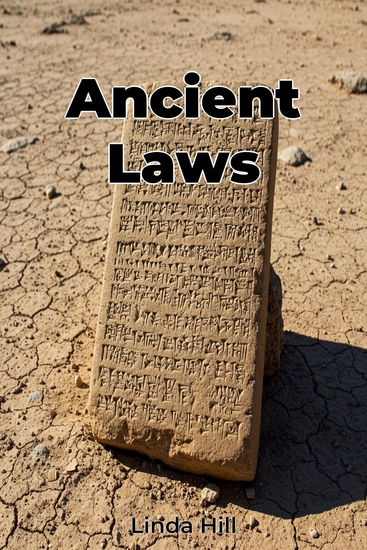
Ancient Laws - cover

Ancient Laws

Linda Hill

Traductor A Ai

Editorial: Publifye

  • 0
  • 0
  • 0

Sinopsis

Ancient Laws explores the fascinating origins and development of legal systems in early civilizations, revealing how these ancient codes shaped our modern understanding of justice. The book examines legal innovations from Mesopotamia to Rome, highlighting the Code of Hammurabi, one of the earliest known examples of written law, and the Law of the Twelve Tables, a cornerstone of Roman legal tradition. These early legal systems weren't just about punishment; they established principles of social order, property rights, and governance that continue to influence legal thought today. The book approaches this complex topic with clear explanations and avoids focusing solely on Western traditions, thus offering a more balanced perspective on world history. It begins by laying the groundwork with an overview of codification and its importance, then systematically analyzes individual legal codes like the Code of Ur-Nammu and the Mosaic Law. Later chapters shift to the Roman legal system, tracing its evolution to the Justinian Code, and ultimately assess the lasting legacy of ancient law on modern legal systems. By connecting historical context with the specific provisions of ancient laws, Ancient Laws reveals the profound and enduring impact of these early attempts to codify human behavior.
Disponible desde: 29/03/2025.
Longitud de impresión: 62 páginas.

Otros libros que te pueden interesar

  • The Art of War - A New Translation - cover

    The Art of War - A New Translation

    Sun Tzu, Filibooks

    • 0
    • 0
    • 0
    The Art of War dates to the fifth century B.C and is arguably the most famous military treatise ever written. 
    Throughout its history, The Art of War has been highly influential. Figures as diverse as Japanese daimyō Takeda Shingen, Chinese communist Mao Tse-Tung, and Finnish field marshal Carl Gustaf Emil Mannerheim have cited the book as inspirational. 
    During the Vietnam War the book served as an inspiration and guide for the Vietcong, which brought the book to the attention of the American military. 
    The focus of this reworking is to preserve the original intent of Sun Tzu as closely as possible.
    Ver libro
  • The An Lushan Rebellion and Its Famine - China's Internal Crisis - cover

    The An Lushan Rebellion and Its...

    Sarah Willards

    • 0
    • 0
    • 0
    The An Lushan Rebellion, one of the most significant uprisings in Chinese history, did not emerge overnight. The roots of the rebellion can be traced back to the political, social, and military tensions that plagued the Tang Dynasty in the mid-8th century. The Tang Empire, once at its peak, was experiencing a slow but steady decline, marked by corruption, factionalism, and a weakening central authority. These conditions set the stage for the rise of regional military leaders like An Lushan. 
    An Lushan was a general of mixed Sogdian and Turkish descent, originally serving in the Tang military. His talents as a military strategist, combined with his ability to garner the loyalty of his troops, made him a powerful figure. He rose through the ranks of the imperial court, earning favor from Emperor Xuanzong. Initially, An Lushan was appointed to oversee the northern frontier, where he successfully defended the empire from external threats. However, his growing influence, both militarily and politically, began to stir unease at the imperial court. 
    The Tang Dynasty’s reliance on powerful military governors, known as jiedushi, to maintain order in the frontier regions allowed these individuals to amass significant power. This decentralization of authority undermined the emperor's control over the empire and contributed to widespread corruption. The power struggles within the court and the lavish spending of Emperor Xuanzong’s court, especially during his later years, further distanced the ruling elite from the needs of the common people.
    Ver libro
  • Everything You Need to Know About OCD - cover

    Everything You Need to Know...

    Laura J. Edwards, Dr. Lynne M....

    • 0
    • 0
    • 0
    Do you ever find yourself overwhelmed by troublesome and persistent thoughts that make you feel anxious? Do you feel an urge to wash your hands repeatedly, or check appliances over and over, to help ease your anxiety? Do you feel panicked about what might happen if you did not perform these rituals? You may be struggling with Obsessive Compulsive Disorder (OCD). OCD is a common, yet distressing condition, but one that is responsive to modern treatments. Everything You Need to Know About OCD gives you a comprehensive insight in to this condition, how to spot symptoms of it in yourself or a loved one, and outlines the treatment options available. The book features self-help chapters that guide you through Graded Exposure therapy, a highly effective psychological treatment for OCD. These chapters will equip you with strategies to banish unwanted thoughts and help you regain control of your life.
    Ver libro
  • Franco-Prussian War - One of the Main Causes of World War I - cover

    Franco-Prussian War - One of the...

    Kelly Mass

    • 0
    • 0
    • 0
    The Franco-Prussian War, also known as the Franco-German War or, in France, the War of 1870, was a pivotal conflict between the Second French Empire and the North German Confederation, which was led by the Kingdom of Prussia. This war lasted from 19 July 1870 to 28 January 1871, and its consequences would shape European geopolitics for decades. The primary cause of the war stemmed from France's desire to reaffirm its dominance in continental Europe, which had been seriously challenged after Prussia's decisive victory over Austria in the Austro-Prussian War of 1866. This defeat shifted the balance of power in Europe, making France anxious about its standing. 
    Historians have debated the exact motivations behind the war, particularly regarding the role of Otto von Bismarck, the Prussian chancellor. Some argue that Bismarck intentionally provoked France into declaring war to unite the southern German states—Baden, Württemberg, Bavaria, and Hesse-Darmstadt—under the North German Confederation. Other historians maintain that Bismarck exploited the situation as it developed, recognizing the potential for new alliances but not necessarily seeking war. Regardless of the intent, Bismarck saw the war as an opportunity to strengthen German unity. 
    The war officially began when France mobilized its army on 15 July 1870, prompting the North German Confederation to follow suit with its own mobilization the same day. On 16 July, the French parliament declared war on Prussia, and by 2 August, France had invaded German territory. The German coalition responded swiftly and efficiently, invading northeastern France on 4 August. The Germans had several advantages: superior numbers, better training, more effective leadership, and access to advanced military technology, especially in railways and artillery.
    Ver libro
  • My Lai Massacre and Operation Speedy Express The: The History of the US Army’s Most Controversial Operations during the Vietnam War - cover

    My Lai Massacre and Operation...

    Editors Charles River

    • 0
    • 0
    • 0
    The Vietnam War could have been called a comedy of errors if the consequences weren’t so deadly and tragic. In 1951, while war was raging in Korea, the United States began signing defense pacts with nations in the Pacific, intending to create alliances that would contain the spread of Communism. As the Korean War was winding down, America joined the Southeast Asia Treaty Organization, pledging to defend several nations in the region from Communist aggression. One of those nations was South Vietnam.  
    	The Vietnam War remains one of the most controversial events in American history, and it bitterly divided the nation in 1968, but it could have been far worse. That’s because, unbeknownst to most Americans that year, American forces had carried out the most notorious mass killing of the war that March. On March 16, perhaps as many as 500 Vietnamese villagers in the Son My village complex - men, women, and children - were killed by American soldiers in Task Force Barker. The worst of the violence, carried out by members of Charlie Company, 1st Battalion, 11th Infantry, occurred in a small village known locally as Xom Lang. On American maps, the location was marked as My Lai (4), and when news of the killings leaked into the American press over a year and a half later in November 1969, it was under that name that the incident became infamous as the “My Lai Massacre.”  
    	The controversy surrounding Operation Speedy Express led to an investigation by the U.S. Army and the House Armed Services Committee. The Army was ultimately cleared of wrongdoing, but resistance to U.S. involvement in Vietnam continued to grow, and in the nearly 60 years since, modern historians have tried to uncover more about the controversial Speedy Express and whether it represented a massive war crime. Thus, even though it remains less well known than My Lai, the operation’s notoriety has started to grow in its own right recently. 
    Ver libro
  • Famous Men of Greece - cover

    Famous Men of Greece

    John Henry Haaren, A. B. Poland

    • 0
    • 0
    • 0
    Greeks were history’s great men of thought. John Haaren has collected stories from the lives of thirty famous Greek men, detailing the rise, Golden Age, and fall of Greece. Among these men are Aristotle, Ptolemy, Ulysses, Pericles, and Alexander the Great. Children will be delighted to read and understand why the scope of Greek accomplishment is still known today as the “Greek Miracle.” 
    This book provides a great introduction to ancient Greece, not only for children, but for adults who missed out on a classical education. The title (originally given when the book was first published in 1904) is a little misleading, as the book introduces gods and goddesses, as well as talking about the famous heroes and leaders of the former nation. However, the book is a very good resource to help both adults and children understand references in literature and elsewhere to these individuals who have had influence on our own stories and government.
    Ver libro