Junte-se a nós em uma viagem ao mundo dos livros!
Adicionar este livro à prateleira
Grey
Deixe um novo comentário Default profile 50px
Grey
Assine para ler o livro completo ou leia as primeiras páginas de graça!
All characters reduced
On the Trail - "An Outdoor Book for Girls" - cover
LER

On the Trail - "An Outdoor Book for Girls"

Lina Beard, Adelia Beard

Editora: E-Kitap Projesi & Cheapest Books

  • 0
  • 0
  • 0

Sinopse

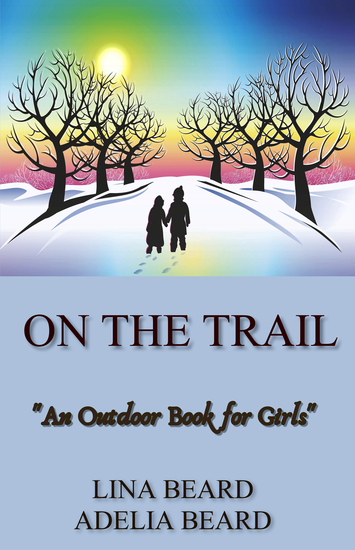
The joyous, exhilarating call of the wilderness and the forest camp is surely and steadily penetrating through the barriers of brick, stone, and concrete; through the more or less artificial life of town and city; and the American girl is listening eagerly. It is awakening in her longings for free, wholesome, and adventurous outdoor life, for the innocent delights of nature-loving Thoreau and bird-loving Burroughs. Sturdy, independent, self-reliant, she is now demanding outdoor books that are genuine and filled with practical information; books that tell how to do worth-while things, that teach real woodcraft and are not adapted to the girl supposed to be afraid of a caterpillar or to shudder at sight of a harmless snake.In answer to the demand, "On the Trail" has been written. The authors' deep desire is to help girls respond to this new, insistent call by pointing out to them the open trail. It is their hope and wish that their girl readers may seek the charm of the wild and may find the same happiness in the life of the open that the American boy has enjoyed since the first settler built his little cabin on the shores of the New World. To forward this object, the why and how, the where and when of things of camp and trail have been embodied in this book. Thanks are due to Edward Cave, president and editor of Recreation, for kindly allowing the use of some of his wild-life photographs.Lina Beard, Adelia Belle Beard.Flushing, N. Y., March 16, 1915.CHAPTER ITRAILINGWhat the Outdoor World Can Do for Girls. How to Find the Trail and How to Keep ItThere is a something in you, as in every one, every man, woman, girl, and boy, that requires the tonic life of the wild. You may not know it, many do not, but there is a part of your nature that only the wild can reach, satisfy, and develop. The much-housed, overheated, overdressed, and over-entertained life of most girls is artificial, and if one does not turn away from and leave it for a while, one also becomes greatly artificial and must go through life not knowing the joy, the strength, the poise that real outdoor life can give.What is it about a true woodsman that instantly compels our re-spect, that sets him apart from the men who might be of his class in village or town and puts him in a class by himself, though he may be exteriorly rough and have little or no book education? The real Adirondack or the North Woods guide, alert, clean-limbed, clear-eyed, hard-muscled, bearing his pack-basket or duffel-bag on his back, doing all the hard work of the camp, never loses his poise or the simple dignity which he shares with all the things of the wild. It is bred in him, is a part of himself and the life he leads. He is as conscious of his superior knowledge of the woods as an astronomer is of his knowledge of the stars, and patiently tolerates the ignorance and awkwardness of the "tenderfoot" from the city. Only a keen sense of humor can make this toleration possible, for I have seen things done by a city-dweller at camp that would enrage a woodsman, unless the irresistibly funny side of it made him laugh his inward laugh that seldom reaches the surface....
Disponível desde: 04/12/2024.
Comprimento de impressão: 300 páginas.

Outros livros que poderiam interessá-lo

  • A Midsummer Night's Dream - cover

    A Midsummer Night's Dream

    Maria Krestovskaya

    • 0
    • 0
    • 0
    Maria Krestovskaya demonstrates her incredibly astute understanding of human mind as she gives us a unique glimpse into the mental turmoils associated with one boy's first love.
    Ver livro
  • Oh Whistle and I'll Come to You My Lad - cover

    Oh Whistle and I'll Come to You...

    M. R. James

    • 0
    • 0
    • 0
    Title: Oh, Whistle, and I’ll Come to You, My Lad 
    Author: M. R. James 
    Narrator: Jonathan Dunne 
    Original Publication: 1904 
    Public Domain: Yes 
    Series Placement: Timeless Terrors No. 60 
    Description: 
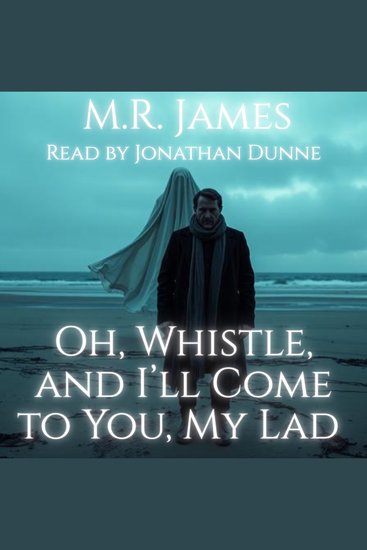
    Oh, Whistle, and I’ll Come to You, My Lad is among M. R. James’s most chilling and influential ghost stories — a masterpiece of creeping dread where the rational mind meets forces far beyond its understanding. 
    Professor Parkins, a staunch skeptic, takes a seaside holiday expecting rest and quiet. Instead, he unearths a mysterious bronze whistle at the remains of an ancient Templar site — an artifact inscribed with warnings that curiosity ignores at its peril. One careless blow of the whistle calls forth a presence woven from nightmares: a silent, predatory shape that haunts the spare bed and hunts the unbeliever who summoned it. 
    James conjures terror not through spectacle but through atmosphere — empty beaches, salt-stung winds, and a room where bedclothes stir with malevolent intent. This is horror born of scholarship, superstition, and the unseen prowling just beyond the candle’s reach. 
    Narrated by Amazon-bestselling horror author Jonathan Dunne, this performance restores the full tension and terror of one of the greatest ghost stories ever written. While the text is fully in the public domain, this narration and production are copyright © 2025 Jonathan Dunne. 
    Part of Timeless Terrors, a series dedicated to resurrecting the legends of classic horror, Oh, Whistle, and I’ll Come to You, My Lad reminds us that some relics were buried for a reason — and some calls should never be answered. 🕯️
    Ver livro
  • Evening Guest An - From their pens to your ears genius in every story - cover

    Evening Guest An - From their...

    Alexander Kuprin

    • 0
    • 0
    • 0
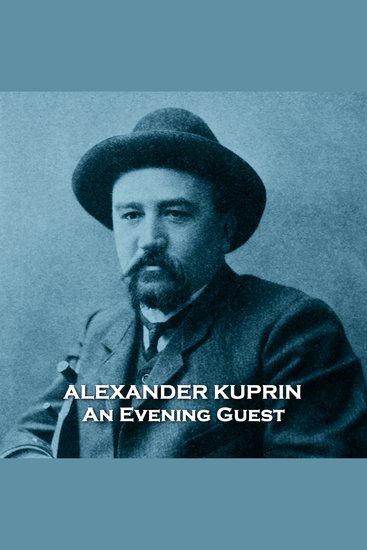
    Alexander Kuprin was born in Narovchat, Penza in Russia on 7th September 1870. 
    At 3 his Father died and he and mother moved to Moscow. By 10 he was enrolled at the Second Moscow Military High School and there his interest in literature began. The Alexander Military Academy followed and two years later he was a sub-lieutenant and posted to an Infantry Regiment for a further four years. 
    Despite his duties he was a now a keen writer and published his first short story at this time. His military duties also garnered him experiences for his breakthrough work ‘The Duel’.  Leaving the military he left for Kiev to work for local newspapers.  He continued to publish both stories and novels and by 1901 he was in St Petersburg becoming part of a group that included Chekhov, Ivan Bunin, Maxim Gorky and Leonid Andreyev.  
    In the years that followed further controversial works and acclaim followed.  His comments on the regime meant he was also put under secret police surveillance.   
    As World War I erupted, Kuprin opened a military hospital but was then given command of an infantry company in Finland. He was soon discharged on grounds of ill health.  
    The October Revolution saw him praise Lenin, but he warned that the Bolsheviks threatened Russian culture and might cause further widespread suffering to the peasants.  As Civil War raged he took his family to Helsinki and then on to Paris. 
    Exile saw his talents decline further and his succumbing to alcoholism. He became lonely and withdrawn. The family's poverty increased his malaise.   
    In May 1937, the Kuprin’s returned to Moscow.  He now saw his work published but wrote almost nothing new.  In 1938 his health rapidly deteriorated.  Already suffering from a kidney problems and sclerosis, he had now developed cancer of the oesophagus.  
    Alexander Kuprin died on 25th August 1938.
    Ver livro
  • The Vicar of Wakefield - cover

    The Vicar of Wakefield

    Oliver Goldsmith

    • 0
    • 0
    • 0
    The story revolves around the vicar's family, their trials, and tribulations, including financial difficulties, social challenges, and unexpected twists of fate. Despite the hardships, the vicar remains steadfast in his commitment to his principles and his love for his family. The novel explores themes of resilience, morality, and the importance of virtue in the face of adversity.
    Ver livro
  • The House of Mapuhi - cover

    The House of Mapuhi

    Jack London

    • 0
    • 0
    • 0
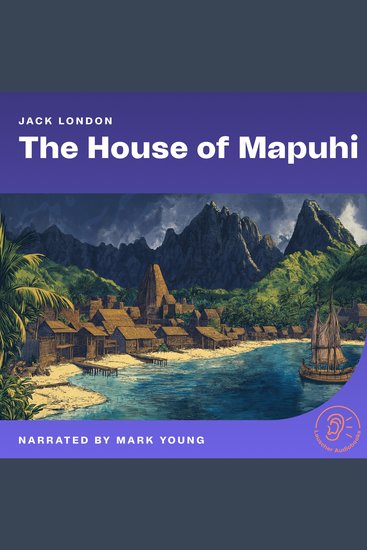
    Despite the heavy clumsiness of her lines, the Aorai handled easily in the light breeze, and her captain ran her well in before he hove to just outside the suck of the surf. The atoll of Hikueru lay low on the water, a circle of pounded coral sand a hundred yards wide, twenty miles in circumference, and from three to five feet above high-water mark. On the bottom of the huge and glassy lagoon was much pearl shell, and from the deck of the schooner, across the slender ring of the atoll, the divers could be seen at work. But the lagoon had no entrance for even a trading schooner. With a favoring breeze cutters could win in through the tortuous and shallow channel, but the schooners lay off and on outside and sent in their small boats.
    Ver livro
  • Cymbeline King of Britain - cover

    Cymbeline King of Britain

    William Shakespeare

    • 0
    • 0
    • 0
    Cymbeline, also known as The Tragedie of Cymbeline or Cymbeline, King of Britain, is a play by William Shakespeare set in Ancient Britain (c. 10–14)[a] and based on legends that formed part of the Matter of Britain concerning the early Celtic British King Cunobeline. Although listed as a tragedy in the First Folio, modern critics often classify Cymbeline as a romance or even a comedy. Like Othello and The Winter's Tale, it deals with the themes of innocence and jealousy. While the precise date of composition remains unknown, the play was certainly produced as early as 1611.
    Cymbeline, the Roman Empire's vassal king of Britain, once had two sons, Guiderius and Arvirargus, but they were stolen twenty years earlier as infants by an exiled traitor named Belarius. Cymbeline discovers that his only child left, his daughter Imogen (or Innogen), has secretly married her lover Posthumus Leonatus, a member of Cymbeline's court. The lovers have exchanged jewellery as tokens: Imogen with a bracelet, and Posthumus with a ring. Cymbeline dismisses the marriage and banishes Posthumus since Imogen — as Cymbeline's only child — must produce a fully royal-blooded heir to succeed to the British throne. In the meantime, Cymbeline's Queen is conspiring to have Cloten (her cloddish and arrogant son by an earlier marriage) married to Imogen to secure her bloodline. The Queen is also plotting to murder both Imogen and Cymbeline, procuring what she believes to be deadly poison from the court doctor. The doctor, Cornelius, is suspicious and switches the poison with a harmless sleeping potion. The Queen passes the "poison" along to Pisanio, Posthumus and Imogen's loving servant — the latter is led to believe it is a medicinal drug. No longer able to be with her banished Posthumus, Imogen secludes herself in her chambers, away from Cloten's aggressive advances.
    Although the play is named Julius Caesar, Brutus speaks more than four times as many lines as the title character; and the central psychological drama of the play focuses on Brutus' struggle between the conflicting demands of honour, patriotism, and friendship. 
    Among the most significant works William Shakespeare: Hamlet, Othello, King Lear, Macbeth, Orpheus, Romeo and Juliet, Julius Caesar, Troilus and Cressida, The Tempest, Venus and Adonis, Antony and Cleopatra, Measure for Measure, The Winter's Tale and many more.
    Ver livro