Join us on a literary world trip!
Add this book to bookshelf
Grey
Write a new comment Default profile 50px
Grey
Subscribe to read the full book or read the first pages for free!
All characters reduced
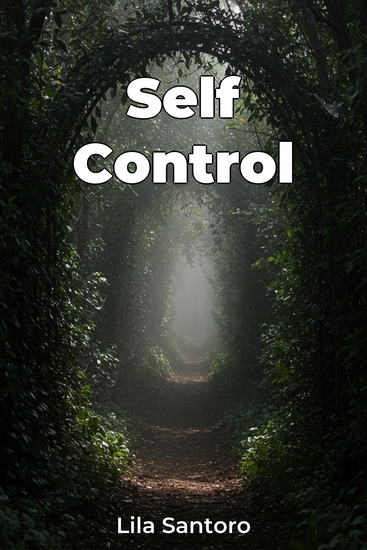
Self Control - cover

Self Control

Lila Santoro

Translator A AI

Publisher: Publifye

  • 0
  • 0
  • 0

Summary

Self Control provides a comprehensive guide to understanding and overcoming addictive behaviors by cultivating self-control. It emphasizes that self-control isn't just willpower, but a skill developed through understanding the psychology of addiction, including cognitive biases, emotional triggers, and environmental cues. This self-help book dives into techniques like cognitive restructuring and mindfulness, offering tools to break free from destructive patterns.

 
The book progresses from defining self-control and its neural basis, to deconstructing addictive behavior, and finally, presenting evidence-based strategies for lasting change. It highlights the importance of sustainable lifestyle changes over quick fixes, acknowledging the societal factors influencing addiction.

 
Research shows that consistently practicing self-control techniques can lead to significant reduction of addictive behaviors. This book stands out by grounding its approach in psychological research while remaining accessible to a general audience.

 
By integrating these techniques into daily life, individuals can prevent relapse and maintain long-term change, ultimately leading to a more fulfilling life.
Available since: 03/12/2025.
Print length: 114 pages.

Other books that might interest you

  • Emotional Exploitation - Taking Advantage of Someone's Emotional State - cover

    Emotional Exploitation - Taking...

    Cito Harder

    • 0
    • 0
    • 0
    Emotional exploitation is a subtle yet deeply damaging form of manipulation that preys on a person's emotions to serve the interests of another. Unlike mutual emotional support, which fosters healthy relationships and personal growth, exploitation involves using someone’s feelings, vulnerabilities, or insecurities to gain control, compliance, or advantage. This can occur in personal relationships, the workplace, and even society at large, leaving individuals feeling powerless, confused, and emotionally drained. Understanding emotional exploitation is crucial to recognizing its effects, breaking free from its grasp, and preventing future manipulation. 
    At its core, emotional exploitation thrives on imbalance. The exploiter takes advantage of another person’s emotional investment, whether it be love, trust, guilt, or fear, while offering little or nothing in return. This dynamic can manifest in many ways, such as a friend who constantly seeks emotional support but disappears when others need help, a romantic partner who uses guilt to control decisions, or an employer who manipulates workers into unpaid overtime by making them feel obligated or ungrateful. Regardless of the setting, the pattern remains the same—one person’s emotions are weaponized to serve another’s self-interest. 
    One of the most harmful aspects of emotional exploitation is that it is often difficult to recognize while it is happening. Many individuals who are exploited rationalize the behavior of their manipulator, believing they are simply helping, being loyal, or fulfilling an obligation. Exploiters frequently use gaslighting, guilt-tripping, or shifting blame to make their targets question their own perceptions.
    Show book
  • Resilience And Emotions - How to Face a Crisis And Turn It Into Positive Change - cover

    Resilience And Emotions - How to...

    Brian Gibson

    • 0
    • 0
    • 0
    "Resilience and Emotions: How to Face a Crisis and Turn It Into Positive Change" is a transformative exploration of the human experience in times of adversity. It offers profound insights and actionable strategies rooted in coping, appraisal, nonverbal communication, and emotional management. 
    The concept of appraisal is illuminated as a pivotal lens through which we interpret and respond to crises. Readers gain a renewed sense of agency and purpose by reframing setbacks as opportunities for growth and learning. The book encourages adaptive thinking and cognitive flexibility, enabling individuals to transform adversity into a springboard for positive change. 
    "Resilience and Emotions" underscores the profound impact of nonverbal communication in building resilience. From subtle gestures to empathic expressions, nonverbal cues play a vital role in fostering social connections and conveying emotions authentically. Readers discover how these silent forms of communication can enhance emotional intelligence and strengthen interpersonal relationships during challenging times.
    Show book
  • The History and Legacy of the Greatest Empires in the Ancient Levant - cover

    The History and Legacy of the...

    Editors Charles River

    • 0
    • 0
    • 0
    The pages of world history textbooks contain a litany of “lost” empires and civilizations, but usually, upon further review, it is revealed that these so called lost empires are often just lesser known cultures that had a less apparent impact on history than other more well-known civilizations. When one scours the pages of history for a civilization that was inexplicably lost, but had a great impact during its time, very few candidates can be found, but the Hittites are a notable example. Compared to some of their contemporaries – including the Egyptians, Assyrians, and Babylonians – the Hittites were somewhat distant both culturally and geographically. The Hittites were an Indo-European speaking in an ocean of Afro-Asiatic and Semitic groups, their homeland was to the north of Mesopotamia, and it contained no major river like the Nile, Tigris, or Euphrates Rivers. The Hittite empire was also far less enduring than its neighbors, as it only existed from about 1800-1200 BCE (van de Mieroop 2007, 156), which was considerably shorter than most of the other major kingdoms of the Near East. 
    Of all the peoples of the ancient Near East, the Phoenicians are among the most recognizable but also perhaps the least understood. The Phoenicians never built an empire like the Egyptians and Assyrians; in fact, the Phoenicians never created a unified Phoenician state but instead existed as independent city-state kingdoms scattered throughout the Mediterranean region. However, despite the fact there was never a “Phoenician Empire,” the Phoenicians proved to be more prolific in their exploration and colonization than any other peoples in world history until the Spanish during the Age of Discovery.
    Show book
  • Solitude - The Science and Power of Being Alone - cover

    Solitude - The Science and Power...

    Thuy-vy T. Nguyen, Heather...

    • 0
    • 0
    • 0
    The average adult spends nearly one-third of their waking life alone. How do we overcome the stigma of solitude and find strength in going it alone? Whether we love it or try to avoid it, we can make better use of that time. The science of solitude shows that alone time can be a powerful space used to tap into countless benefits. Translating key research findings into actionable facts and advice, this book shows that alone time can boost well-being. From relaxation and recharging to problem solving and emotional regulation, solitude can benefit personal growth, contentment, creativity, and our relationships with ourselves and others. By learning what makes us better at spending time alone, you can use these principles to move toward your best possible self.
    Show book
  • Stories from Kathasaritasagara series -5 - From Various sources - cover

    Stories from Kathasaritasagara...

    Anusha HS

    • 0
    • 0
    • 0
    The book Kathasaritsagara has been created by Soma Deva. It consists of 21,500 shlokas. 
    This book Kathasaritsagara has been divided into 18 lambakaas, and those 18 lambakaas are still more divided into 125 Tharanga's. 
    Some lambakaas are very big, while some are very small. 
    If there are 115 Shlokas in the 11th Lambaka, there are around 4925 Shlokas in 12th Lambaka. 
    During ancient times from the mouth of Lord Shiva, this story got birth. Those who listen to this story will experience all sorts of worldly pleasures. They will be blessed by Lord Shiva and at last reach jnana Loka by the blessings of lord shiva.
    Show book
  • Keep Our Republic: Your Guide to Understanding and Action - Dive into 'Keep Our Republic' audiobooks for insightful knowledge and proactive engagement! - cover

    Keep Our Republic: Your Guide to...

    Alistair Voss

    • 0
    • 0
    • 0
    Keep Our Republic: Your Guide to Understanding and Action 
    Are you eager to advance your knowledge and make a meaningful impact in preserving our democracy? 
    Looking for a comprehensive guide that offers everything you need to understand how to safeguard our democratic values? 
    Look no further! 
    This audiobook is your ultimate companion for deepening your insights, applying your skills, and engaging in meaningful action. With this, you’re equipped for success. 
    Updated for the latest perspectives on democratic preservation. 
    Key features of this enriched guide: 
    - Profound insights into preserving our democracy today 
    - Detailed explorations of the principles of democracy 
    - Effective strategies for understanding and taking action 
    Our guide stands out with its thorough coverage, essential for making a difference. Concepts are not merely glossed over; they are explored with precision. 
    Please note that this guide is an independent resource, not affiliated with any official entity, designed solely for your benefit. 
    Crafted with a clear structure and easy-to-understand language, our guide ensures smooth transitions between topics. Wave goodbye to complicated jargon and welcome clear, precise, and insightful content. 
    So, why wait? Click the BUY NOW button, secure your guide, and start your journey to making a positive impact in preserving our democracy!
    Show book