Begleiten Sie uns auf eine literarische Weltreise!
Buch zum Bücherregal hinzufügen
Grey
Einen neuen Kommentar schreiben Default profile 50px
Grey
Jetzt das ganze Buch im Abo oder die ersten Seiten gratis lesen!
All characters reduced
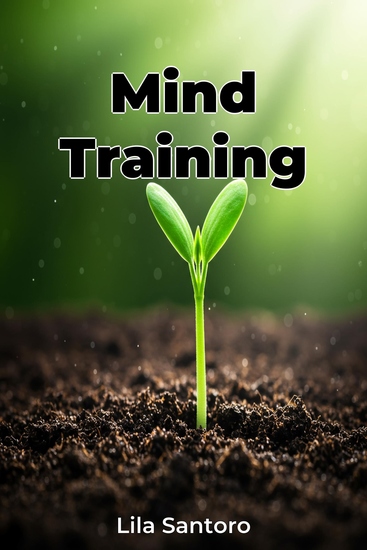
Mind Training - cover

Mind Training

Lila Santoro

Übersetzer A AI

Verlag: Publifye

  • 0
  • 0
  • 0

Beschreibung

"Mind Training" explores the science-backed methods for developing mental discipline, enhancing focus, and strengthening willpower. It challenges the notion that these attributes are innate, presenting them instead as trainable skills. Through targeted mental exercises and a structured approach, readers can learn to take control of their thoughts and actions, leading to increased productivity and improved stress management. Interestingly, modern neuroscience supports ancient philosophies on mental training, offering a deeper understanding of the brain mechanisms involved in attention and willpower. 

 
The book is uniquely valuable due to its emphasis on actionable strategies and practical exercises, providing a step-by-step guide applicable to diverse backgrounds. It progresses logically, beginning with the neuroscience and psychology behind attention, willpower, and cognitive control. It then introduces structured exercises, ranging from mindfulness to goal-setting, designed to strengthen these mental faculties. Finally, it integrates these techniques into daily life, offering methods for improving focus in various aspects, such as work and relationships.
Verfügbar seit: 14.03.2025.
Drucklänge: 96 Seiten.

Weitere Bücher, die Sie mögen werden

  • End of History and the Last Man The: Book Summary & Analysis - cover

    End of History and the Last Man...

    Briefly Summaries

    • 0
    • 0
    • 0
    This is a concise summary and analysis of The End of History and the Last Man, by  
    Francis Fukuyama.
     
    It is not the original book and is not affiliated with or endorsed by Francis Fukuyama.
     
    Ideal those seeking a quick and insightful overview.
    The End of History and the Last Man explores the profound idea that history, as a dynamic process driven by ideological conflict, may have reached its conclusion with the triumph of liberal democracy. Combining political philosophy, history, and sociology, this groundbreaking work examines how liberal democracy emerged as the dominant form of governance, its strengths and vulnerabilities, and whether human fulfillment can truly be achieved within this framework. The book delves into the implications of this "end of history," questioning whether material progress and individual freedoms are enough to satisfy the human desire for recognition, identity, and meaning.
    Zum Buch
  • Witness to Roswell 75th Anniversary Edition - Unmasking the Government's Biggest Cover-up - cover

    Witness to Roswell 75th...

    Thomas Carey, Donald Schmitt

    • 0
    • 0
    • 0
    "When I finished Witness to Roswell, I said to myself, 'Case closed!' for the very wealth and sheer weight of eyewitness testimony."—George Noory, host, Coast to Coast AM This classic in the field of UFOology is filled with hard-hitting eyewitness testimony of one of the most important events of all time: the actual recovery of a UFO outside of Roswell, New Mexico, in 1947. For more than 70 years, government authorities have led us to believe the wreckage was merely a very conventional weather balloon—but the witnesses who were there continue to tell a different story.Witness to Roswell once again provides a "can't put down" written account of what really transpired in Roswell decades ago. It pries loose the truth the government doesn't want us to know including the revelations of Walter Haut. This edition includes: •A growing litany of deathbed confessions describing the "little people" recovered at the crash site.•The most comprehensive time line of events ever published on this seminal event.•The identity of the Boeing engineer called in to examine the exotic wreckage from the crash.•What really took place at the Roswell base hospital and what nurse actually ordered the children's caskets.•The story of the soldier who wore gloves at the dinner table after guarding the "bodies."Clearly, the implications of this information are foreboding. One need only look at the fact that officials now have four explanations for this historic event—but to which one do all the witnesses testify on their deathbeds?Witness to Roswell once again demonstrates to the world that no statute of limitation applies to the truth: We are not alone. This anniversary edition includes a new introduction by the authors and additional material.
    Zum Buch
  • Ottoman Empire The: An Enthralling Guide to One of the Mightiest and Longest-Lasting Dynasties in World History - cover

    Ottoman Empire The: An...

    Billy Wellman

    • 0
    • 0
    • 0
    From a small Turkish principality to a global superpower, the Ottoman Empire’s role in world history is certainly undeniable.  
    For over six centuries, the empire was arguably the world’s strongest Muslim empire, dominating its rivals in Europe and Asia for many years. 
    Spanning three continents and controlling lands in the Balkans, the Caucasus, Crimea, Anatolia, the Middle East, the Levant, Egypt, and North Africa, the Ottoman Empire was one of the most menacing powers at the height of its power in the 16th century. It was feared by other great empires of Europe. But how exactly did the Ottomans achieve this great power, and how did they lose it by the early 20th century? 
    This audiobook will cover these and other important topics from the history of the Ottoman Empire. 
    In this audiobook, you will discover the following:      The emergence of the Ottoman state under its first leader, Osman      The different sultans of the empire and their reigns      The fall of Constantinople and the Golden Age of the Ottoman Empire      Different wars and political processes that shaped the empire’s history      Factors responsible for the gradual Ottoman decline      The social, economic, and political policies of the empire throughout the ages      The dissolution of the empire in the 20th century      And much, much more! 
    Scroll up and click the “add to cart” button to learn about the Ottoman Empire!
    Zum Buch
  • Structuralism - Philosophy and Patterns in Human Culture - cover

    Structuralism - Philosophy and...

    Hector Davidson

    • 0
    • 0
    • 0
    Structuralism is an intellectual movement that emerged in the early to mid-20th century, primarily influenced by the works of linguists, anthropologists, and philosophers. Its foundational premise is that human culture, including language, myths, and social institutions, can be understood through underlying structures that govern them. These structures are not always immediately visible but influence how individuals and societies behave, think, and organize themselves. 
    At its core, structuralism asserts that elements of human culture must be studied in relation to one another within a larger system. For example, language can only be fully understood when the relationships between words and their meanings are considered. This perspective contrasts with earlier intellectual traditions that focused on individual elements, seeking meaning through isolated concepts. Instead, structuralism emphasizes the interconnections and patterns that form the basis of human existence. 
    The intellectual origins of structuralism can be traced back to the work of Swiss linguist Ferdinand de Saussure. In his work, Saussure argued that language is a system of signs, each of which acquires meaning not by its inherent qualities but through its relationship to other signs. His concept of the "signifier" (the word or symbol) and the "signified" (the concept or meaning) set the stage for structuralist thought. Saussure’s approach highlighted the importance of studying language as a system of differences, where meanings are produced not in isolation but in opposition to other meanings.
    Zum Buch
  • Self-Discipline - The Controlled Self - Cultivating Habits of Integrity and Focus - cover

    Self-Discipline - The Controlled...

    Esther Jameson

    • 0
    • 0
    • 0
    Self-discipline is the cornerstone of personal development and success. It is the ability to control one’s emotions, behaviors, and actions in the face of temptations and impulses. In a world filled with distractions and instant gratification, self-discipline becomes increasingly important. It is what allows individuals to make decisions that align with their long-term goals, even when immediate desires may try to pull them off course. 
    At its core, self-discipline is about the ability to focus on what is important, not just what is easy. It involves a deep understanding of personal values and the determination to act according to those values, regardless of external influences. People who possess self-discipline are able to say "no" to short-term pleasures and distractions in favor of achieving their greater objectives. Whether it’s choosing to exercise, staying on top of work deadlines, or resisting the temptation to procrastinate, self-discipline helps maintain the balance between immediate gratification and long-term success. 
    One of the key aspects of self-discipline is understanding that it is not an inherent trait, but rather a skill that can be developed over time. While some individuals may have a natural tendency toward discipline, anyone can cultivate this ability with practice and persistence. The first step in building self-discipline is recognizing the areas in life where improvement is needed and then committing to making changes. This often involves setting clear goals, developing strategies, and following through on commitments, even when it feels difficult or inconvenient.
    Zum Buch
  • The Struggle of Struggles - cover

    The Struggle of Struggles

    Vera Pigee

    • 0
    • 0
    • 0
    From 1955 to 1975, Vera Pigee (1924–2007) put her life and livelihood on the line with grassroots efforts for social change in Mississippi, principally through her years of leadership in Coahoma County's NAACP. Known as the "Lady of Hats," coined by NAACP executive secretary Roy Wilkins, Pigee was a businesswoman, mother, and leader. Her book, The Struggle of Struggles, offers a detailed view of the daily grind of organizing for years to open the state's closed society. Fearless, forthright, and fashionable, Pigee also suffered for her efforts at the hands of white supremacists and those unwilling to accept strong women in leadership. She wrote herself into the histories, confronted misinformation, and self-published one of the first autobiographies from the era. Women like her worked, often without accolade or recognition, in their communities all over the country, but did not document their efforts in this way. 


    The Struggle of Struggles, originally published in 1975, spotlights the gendered and generational tensions within the civil rights movement. It outlines the complexity, frustrations, and snubs, as well as the joy and triumphs that Pigee experienced and witnessed in the quest for a fairer and more equitable nation.
    Zum Buch