Join us on a literary world trip!
Add this book to bookshelf
Grey
Write a new comment Default profile 50px
Grey
Subscribe to read the full book or read the first pages for free!
All characters reduced
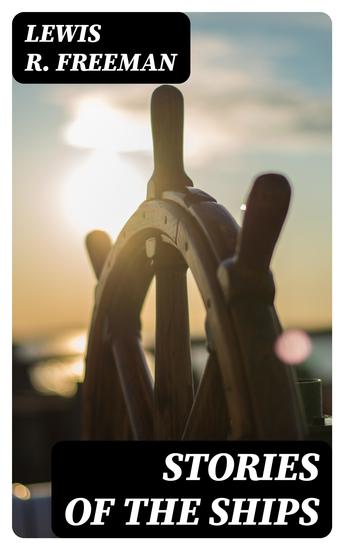
Stories of the Ships - cover

Stories of the Ships

Lewis R. Freeman

Publisher: DigiCat

  • 0
  • 0
  • 0

Summary

In "Stories of the Ships," Lewis R. Freeman masterfully weaves a tapestry of maritime tales that span diverse genres, including adventure, tragedy, and romance. The book employs eloquent prose and vivid imagery, immersing readers in the life and lore associated with seafaring vessels. Freeman's literary style combines an engaging narrative structure with historical authenticity, echoing the tradition of seafaring literature while innovatively showcasing the psychological depths of his characters. Each story offers a glimpse into the souls of both ships and their crews, illuminating the complex relationship humans forge with their maritime environments. Lewis R. Freeman, a seasoned sailor and passionate storyteller, draws deeply from his own experiences at sea and the rich history of maritime exploration. His extensive knowledge of naval history and folklore informs every page, allowing him to infuse authenticity into his narratives. Freeman's career as both a journalist and maritime historian has profoundly shaped his perspective, compelling him to document the trials and tribulations of ships and their passengers through compelling storytelling. "Stories of the Ships" is a must-read for anyone intrigued by the ocean's mysteries or the human experience. Whether you are an avid maritime enthusiast or a casual reader, Freeman's evocative tales will not only entertain but also provoke thought about humanity's enduring connection to the sea.
Available since: 09/15/2022.
Print length: 180 pages.

Other books that might interest you

  • Michael Faraday - Theories about Electromagnetism and Electrochemistry - cover

    Michael Faraday - Theories about...

    Kelly Mass

    • 0
    • 0
    • 0
    Michael Faraday was born in Newington Butts, Surrey, on September twenty-second, 1791. (which is now part of the London District of Southwark). He grew up in a bad home. His dad, James, was a Christian who came from the Glasite sect. At the time of the winter season of 1790, James Faraday moved his marriage partner and 2 kids from Outhgill, Westmorland, where he had been an apprentice to the town blacksmith. In the fall of that year, Michael was born. Michael Faraday, the 3rd of 4 kids, needed to inform himself after getting just a primary school education. 
    He started working as an apprentice to George Riebau, a regional bookbinder and bookseller on Blandford Street, when he was fourteen years of age. 
    Faraday read a lot of literature throughout his seven-year apprenticeship, and that includes Isaac Watts' “The Improvement of the Mind”, which he actively adopted the concepts and recommendations in. He also ended up being intrigued by physics, specifically electrical power. Jane Marcet's book Discussions on Chemistry was specifically motivating to Faraday. 
    Let’s see what else he did. In this comprehensive guide, you will find out more.
    Show book
  • Meditations - cover

    Meditations

    Marcus Aurelius

    • 0
    • 0
    • 0
    "Meditations"is a series of personal writings by Marcus Aurelius, Roman Emperor from AD 161 to 180, recording his private notes to himself and ideas on Stoic philosophy. The philosopher-king wrote the 12 books of the "Meditations" as a source for his own guidance and self-improvement. Now brought to the current generation, this classic work offers up timeless wisdom and insights into both the mind and the soul.
    Show book
  • Kidnapped at Sea - The Civil War Voyage of David Henry White - cover

    Kidnapped at Sea - The Civil War...

    Andrew Sillen

    • 0
    • 0
    • 0
    THE TRUE STORY OF DAVID HENRY WHITE, A FREE BLACK TEENAGE SAILOR ENSLAVED ON THE HIGH SEAS DURING THE CIVIL WAR, WHOSE LIFE STORY WAS FALSELY AND INTENTIONALLY APPROPRIATED TO ADVANCE THE LOST CAUSE TROPE OF A CONTENTED SLAVE, HAPPY AND SAFE IN SERVILITY. 
     
    David Henry White, a free Black teenage sailor from Lewes, Delaware, was kidnapped by Captain Raphael Semmes of the Confederate raider Alabama on October 9, 1862, from the Philadelphia-based packet ship Tonawanda. White remained captive on the Alabama for over 600 days, until he drowned during the Battle of Cherbourg on June 19, 1864. 
     
    In a best-selling postwar memoir, Semmes falsely described White as a contented slave who remained loyal to the Confederacy. In Kidnapped at Sea, archaeologist Andrew Sillen uses a forensic approach to describe White’s enslavement and demise and illustrates how White’s actual life belies the Lost Cause narrative his captors sought to construct. 
     
    Kidnapped at Sea is the first book to focus on White’s actual life, rather than relying on Semmes and other secondary sources. Until now, Semmes’s appropriation of White’s life has escaped scrutiny, thereby demonstrating the challenges faced by disempowered, illiterate people—and how well-crafted, racist fabrications have become part of Civil War memory. 
     
    “In this fast-paced narrative, Andrew Sillen uncovers the astounding story of David Henry White, a free Black teenager kidnapped from a US ship and forced to accompany the Confederate raider Alabama. Through a haunting account, Sillen restores White’s humanity and, in doing so, provides a timely examination of the necessity for addressing historical crimes.”—Caroline E. Janney, author of Ends of War: The Unfinished Fight of Lee’s Army after Appomattox
    Show book
  • Medieval Bosnia: The Turbulent History of Bosnia and the Region during the Middle Ages - cover

    Medieval Bosnia: The Turbulent...

    Editors Charles River

    • 0
    • 0
    • 0
    Much has been written about Western intervention during the breakup of Yugoslavia, and whether it made matters worse, prevented worse atrocities, or was simply ineffective. In early 1992, however, what was clear was that Europe was hopelessly divided over the best course of action to take towards Yugoslavia, and after several years of fighting, the Bosnian War was one of the most violent conflagrations in Europe since the end of World War II.  
    That war had been the byproduct of centuries of tensions in the Balkans, and an attempt in the wake of World War I to redraw the political boundaries of Europe and the Middle East. That included forming the Kingdom of Yugoslavia, initially known as the Kingdom of Serbs, Croats and Slovenes, a particularly fragile enterprise, and there was almost constant tension between the majority Serbs and the other Yugoslav nationalities, especially the Croats.  
    Depending on the source, many authors have focused on different catalysts for Yugoslavia’s demise, but Vesna Drapac may have succinctly summed the situation up when he wrote that by the end, the state “lacked a reason to exist.” There is certainly something in this sentiment, but the disintegration came at an enormous cost. 
    Given what happened in Yugoslavia, it should be little surprise that Bosnia did not have its fully-established borders until the 19th century, and even in modern times, in many respects the people distinguished and defined Bosnia as a polity more than its shifting borders, and regardless of whether Bosnia operated as an independent state or kingdom. It was during the Middle Ages that Bosnia’s culture and ethnic makeup truly began to coalesce, despite the politically rocky nature of the era in the Balkans. 
    Show book
  • Celtic Hedge Witchery—A Modern Approach - cover

    Celtic Hedge Witchery—A Modern...

    Joey Morris

    • 1
    • 0
    • 0
    “An invaluable tool for anyone wanting to deepen their connection not only to themselves but also to nature and the spirits that are all around. Joey Morris provides practical advice and techniques that offer a diverse and different way of connecting to the three worlds that are associated with Celtic beliefs.” —Jane Matthews, director of the World Divination Association   A revolutionary take on hedge witchery that focuses on what it means to reconnect with the sacred hedge in a modern world, Celtic Hedge Witchery—A Modern Approach teaches the ways, ideas, and methods of the hedgerow, so they become accessible even to those who cannot visit the physical locations themselves. Delving into secret liminal spaces, Morris expands the knowledge and understanding of what it means to truly embody the witchcraft life. She connects readers to the wildcrafting elements of plants and natural remedies, realigning the soul to the vibrations of the spiritual ecosystem to reconnect with the Earth and all her spirits. In a time when modernity, technology, and disconnection from the land has caused so many of us to feel lost and disheartened, Morris helps foster our kinship with the land.   Weaving together Morris’s personal witchcraft gnosis, Celtic Hedge Witchery focuses on embracing the shadows within ourselves as a reflection of sacred spaces. Morris offers a revolutionary take on what it means to be a hedge witch in the modern era and empowers us to “come home” to both the Earth and to ourselves. Spell work, recipes, meditative guides, and evocative poetry help guide us in connecting with Celtic deities of land, sea, and sky and in crossing the hedge into the Otherworld. Learn how to connect to your own natural witchcraft.Find the sacred landscape within yourself. Connect with plant and animal spirit allies within the hedge and benefit from their spiritual power.
    Show book
  • Body Language Secrets - The Complete Guide to Understand Non-Verbal Communication How to Analyze People Speed Reading Their Hidden Thoughts and Improve Your Social Skills to Win in Business and Life - cover

    Body Language Secrets - The...

    Scott Habits

    • 0
    • 0
    • 0
    Do you want to become a master of non-verbal communication? Interested in learning how subconscious cues influence our interactions every day? Are you looking for a powerful, profound way of boosting your communication skills with subtle body language tweaks? Then this book is for you. 
    Whether you want to improve your confidence, become a better leader and communicator, or become the master of any social situation, body language is a vital tool which we use every day – even if you don’t know it. 
    Inside this detailed guide, you’ll explore the art of body language, uncovering the secrets of speed reading people and learning how to harness this essential skill to drastically improve your communication with others. Covering how the body “speaks”, the best way to read emotions, and the top mistakes to avoid, here’s what you’ll find inside:Why Body Language Is a Must-Know Skill For Any Leader or Effective CommunicatorThe BEST Places To Look For Body-Language Cues (and How To Work Out What They Mean)Understanding How The Body Speaks and Making Sense of Non-Verbal CuesTop Ways To Improve Your People-Reading SkillsHow To Harness Body Language For Work, Interviews, Dating, Flirting and MoreA Detailed Guide To Faking Your Body Language – and Spotting When People Are Doing It To YouCommon Body Language Mistakes To Avoid!And So Much More… 
    Even if you’re a complete beginner to the world of body language, this guide breaks down everything you need to know in a simple, easy-to-understand way. Now it’s never been easier to understand non-verbal communication, read people effortlessly, and harness the art of body language to transform your communication skills! 
    So what are you waiting for? Download this audiobook now to uncover the secrets of body language today!
    Show book