Junte-se a nós em uma viagem ao mundo dos livros!
Adicionar este livro à prateleira
Grey
Deixe um novo comentário Default profile 50px
Grey
Assine para ler o livro completo ou leia as primeiras páginas de graça!
All characters reduced
Gycia - A Tragedy in Five Acts - cover
LER

Gycia - A Tragedy in Five Acts

Lewis Morris

Editora: DigiCat

  • 0
  • 0
  • 0

Sinopse

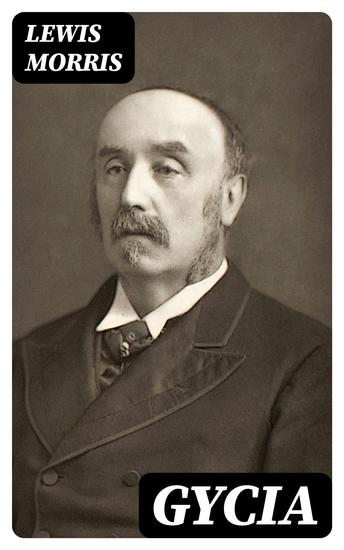
Lewis Morris's "Gycia" is a profound exploration of human emotions and societal structures, woven through the lens of a compelling narrative reminiscent of classical Greek tragedy. The text delves into themes of love, sacrifice, and the complexity of moral decisions against the backdrop of ancient mythos, presenting a rich tapestry of character development and philosophical inquiry. Morris's poetic style combines lyrical elegance with dramatic tension, inviting readers into a world that challenges the boundaries of duty and desire, indicative of the broader literary movements of the late 19th century, as he draws upon both Classical influences and Victorian sensibilities. As a noted Welsh poet and playwright, Lewis Morris was deeply influenced by his background in classical literature and philosophy, which is clearly reflected in "Gycia." His passion for intricately layered narratives and his aspiration to elevate Welsh literature informed his craft. This work stands as a testament to his intellectual engagement with both the pressures of modernity and the timeless nature of human experience, making his insights particularly resonant during a period of significant cultural change. "Gycia" is recommended for readers who cherish introspective literature that provokes thought and evokes empathy. Morris's elegant prose and the poignant dilemmas faced by his characters create a lasting impact, making this work not only a literary treasure but also an essential read for those interested in the intersections of ethics, emotion, and drama.
Disponível desde: 16/09/2022.
Comprimento de impressão: 75 páginas.

Outros livros que poderiam interessá-lo

  • Death on the Docks - cover

    Death on the Docks

    Wendy M. Wilson

    • 0
    • 0
    • 0
    The resurgence of the Irish brotherhood. An unidentified woman's body spilling out of a steamer trunk with freezer burn on her arms. The beginning of a new export industry for New Zealand that brought the country out of recession. An untimely earthquake. And a case with too many threads for Mr. Hardy. 
    Sent to the Wellington docks to watch for members of the Irish Brotherhood, Constable Foster narrowly avoids death -- twice in one day. But when a body spills from a broken steamer trunk bound for Napier, and Foster's mate dies from a poisoned pie intended for Foster, Mr. Hardy is sent down to Wellington to investigate. The mustering on sheep from the north east, the slaughterhouse near the docks, and the new technology for freezing meat to transport it by sea, all have his attention. 
    Mr. Hardy now has several mysteries to investigate. Who is trying to kill Constable Foster, and who killed the young woman in the sea chest? Who was the young woman in the chest? Meanwhile, Beatrice and Aroha bond over a mysterious kidnapping, but will never agree on the issue of clothing.
    Ver livro
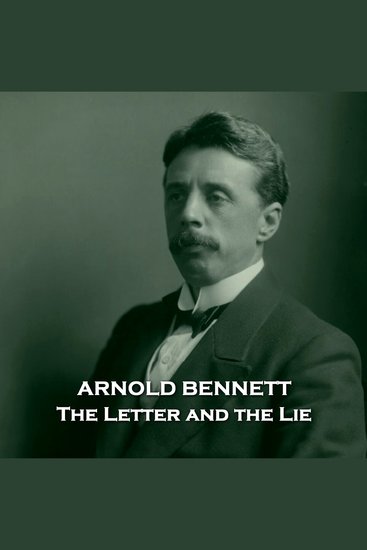
  • The Letter and the Lie - Story from a master of English realism author of The Old Wives Tale - cover

    The Letter and the Lie - Story...

    Arnold Bennett

    • 0
    • 0
    • 0
    Arnold Bennett was born in 1867 in Hanley one of the six towns that formed the Potteries that later joined together to become Stoke on Trent; the area in which most of his works are located. For a short time he worked for his solicitor father before realising that to advance his life he would need to become his own man. Moving to London at twenty-one he obtained work as a solicitor’s clerk and gradually moved into a career of journalism. At the turn of the century he turned full time to writing and shortly thereafter in 1903 he moved to Paris and in 1908 published to great acclaim The Old Wives Tale. With this his reputation was set. Clayhanger and The Old Wives Tale are perhaps his greatest and most lauded novels.
    Ver livro
  • Awakening The (Unabridged Version) - cover

    Awakening The (Unabridged Version)

    Kate Chopin

    • 0
    • 0
    • 0
    Immerse yourself in the captivating world of "The Awakening (Unabridged Version)" by Kate Chopin, expertly narrated for your listening pleasure. This groundbreaking novel takes you on a transformative journey alongside Edna Pontellier as she defies societal norms and embarks on a quest for self-discovery and liberation.With a crisp and clear narration that breathes life into every sentence, this audiobook allows you to fully immerse yourself in the poignant prose of Kate Chopin. The talented narrator's voice transports you to the sultry atmosphere of 19th-century New Orleans, where Edna's longing for independence clashes with the constraints of her era.This faithful adaptation remains loyal to the original text, ensuring that you experience the full impact of Chopin's powerful storytelling. Delve into the complexities of human desires, societal expectations, and the struggle for personal freedom in this masterful work that continues to resonate with readers across generations.Perfect for fans of literary classics and those seeking thought-provoking narratives, "The Awakening (Unabridged Version)" yearns to captivate your imagination and leave you pondering the boundaries of self-discovery and societal norms.
    Ver livro
  • Candide - cover

    Candide

    Voltaire

    • 0
    • 0
    • 0
    "Candide, or Optimism" is a satirical novella written by the French philosopher Voltaire, first published in 1759. It follows the adventures of the young Candide, who is raised in a utopian world and taught that “all is for the best.” The narrative takes him through a series of misfortunes, exposing him to the harsh realities of the world, ultimately leading him to question his optimistic beliefs. Voltaire uses Candide’s journey to satirize religion, governments, the military, and the philosophy of optimism, particularly as espoused by Leibniz. "Candide" is considered one of the greatest achievements of Western literature
    Ver livro
  • The Death Room - Former soldier and journalist that became a revered author and screenwriter - cover

    The Death Room - Former soldier...

    Edgar Wallace

    • 0
    • 0
    • 0
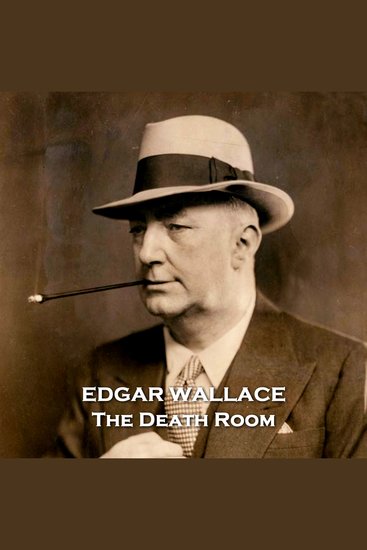
    Richard Horatio Edgar Wallace was born on the 1st April 1875 in Greenwich, London.  Leaving school at 12 because of truancy, by the age of fifteen he had experience; selling newspapers, as a worker in a rubber factory, as a shoe shop assistant, as a milk delivery boy and as a ship’s cook.  
     
    By 1894 he was engaged but broke it off to join the Infantry being posted to South Africa. He also changed his name to Edgar Wallace which he took from Lew Wallace, the author of Ben-Hur.  
     
    In Cape Town in 1898 he met Rudyard Kipling and was inspired to begin writing. His first collection of ballads, The Mission that Failed! was enough of a success that in 1899 he paid his way out of the armed forces in order to turn to writing full time.  
     
    By 1904 he had completed his first thriller, The Four Just Men. Since nobody would publish it he resorted to setting up his own publishing company which he called Tallis Press. 
      
    In 1911 his Congolese stories were published in a collection called Sanders of the River, which became a bestseller. He also started his own racing papers, Bibury’s and R. E. Walton’s Weekly, eventually buying his own racehorses and losing thousands gambling.  A life of exceptionally high income was also mirrored with exceptionally large spending and debts.  
     
    Wallace now began to take his career as a fiction writer more seriously, signing with Hodder and Stoughton in 1921. He was marketed as the ‘King of Thrillers’ and they gave him the trademark image of a trilby, a cigarette holder and a yellow Rolls Royce. He was truly prolific, capable not only of producing a 70,000 word novel in three days but of doing three novels in a row in such a manner. It was estimated that by 1928 one in four books being read was written by Wallace, for alongside his famous thrillers he wrote variously in other genres, including science fiction, non-fiction accounts of WWI which amounted to ten volumes and screen plays. Eventually he would reach the remarkable total of 170 novels, 18 stage plays and 957 short stories. 
     
    Wallace became chairman of the Press Club which to this day holds an annual Edgar Wallace Award, rewarding ‘excellence in writing’.  
     
    Diagnosed with diabetes his health deteriorated and he soon entered a coma and died of his condition and double pneumonia on the 7th of February 1932 in North Maple Drive, Beverly Hills. He was buried near his home in England at Chalklands, Bourne End, in Buckinghamshire.
    Ver livro
  • Forgotten Authors The - Volume 3 - Louis Couperus to Ricardo Fernandez Garcia - cover

    Forgotten Authors The - Volume 3...

    James Joyce

    • 0
    • 0
    • 0
    Throughout the long centuries of human history is the want, and the need, to share information, to exchange ideas and for that knowledge and experience, for curiosity and learning, to be the basis of a civil society. 
    In literature the ambition is much narrower.  In order to be known, to be popular, you had to be published.  And for that people had to know you existed and your ideas worth reading.  Obviously for most of humanity’s time people couldn’t read and texts couldn’t be published in any great number. 
    In the 15th Century Gutenberg’s printing press began the revolution to address the second and by the 19th century had gathered pace with startling speed and mass distribution.  Education for the many was brought in to help people understand more of their world and, with new skills, how to have a better place within it.  Now, if the powers that owned the presses and means of distribution agreed an audience would now be able to avail themselves of your ideas, your printed words.  
    Sadly, in the thirst for the new, the recent and the past fell from sight, relegated to dark corners and dusty shelves.   
    But the printed word is rarely without someone, somewhere busying themselves through piles of papers and books rediscovering what a good story is, whatever its age. 
    Sadly, in the thirst for the new, the recent and the past fell from sight, relegated to dark corners and dusty shelves.    
    But the printed word is rarely without someone, somewhere busying themselves through piles of papers and books rediscovering what a good story is, whatever its age. 
    In this volume we offer up a small selection of those talents whose time has now come again.
    Ver livro