¡Acompáñanos a viajar por el mundo de los libros!
Añadir este libro a la estantería
Grey
Escribe un nuevo comentario Default profile 50px
Grey
Suscríbete para leer el libro completo o lee las primeras páginas gratis.
All characters reduced
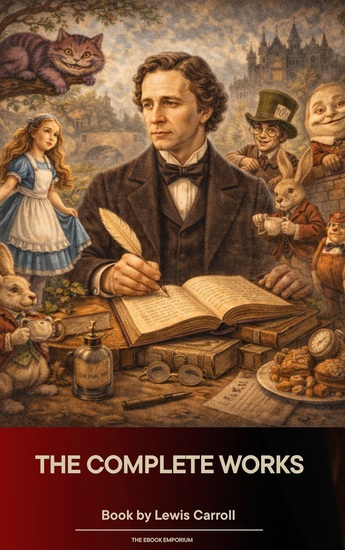
The complete works of Lewis Carroll - cover

The complete works of Lewis Carroll

Lewis Carroll

Editorial: The Ebook Emporium

  • 0
  • 0
  • 0

Sinopsis

What if imagination had no rules—and logic learned how to play?

The Complete Works of Lewis Carroll brings together the full literary legacy of one of the most imaginative writers in world literature. Best known for Alice's Adventures in Wonderland and Through the Looking-Glass, Lewis Carroll created worlds where nonsense reveals truth, language bends reality, and curiosity leads to wonder.

This comprehensive collection includes Carroll's beloved fantasy novels, whimsical poetry, and inventive short works—blending wordplay, satire, mathematics, and childlike imagination into stories that delight readers of all ages.

Beneath the playful surface lies sharp wit and intellectual depth, making Carroll's writing as fascinating to adults as it is enchanting to children. His works continue to influence fantasy, children's literature, and modern storytelling.

Inside this eBook, you'll explore:

The complete Alice books and related writings

Whimsical poems such as "Jabberwocky" and "The Hunting of the Snark"

Inventive short fiction and playful essays

A cornerstone collection of fantasy and nonsense literature

Read aloud in families, studied in classrooms, and cherished worldwide, Lewis Carroll's works remain timeless celebrations of imagination and creativity.

Step into worlds where logic dances and dreams speak. Buy now and experience the complete works of Lewis Carroll.
Disponible desde: 26/01/2026.
Longitud de impresión: 1396 páginas.

Otros libros que te pueden interesar

  • Tales Of The Divine Lila Sri Krishna - The Dark Blue Lord Of Vraj - cover

    Tales Of The Divine Lila Sri...

    Jagannatha Dasa

    • 0
    • 0
    • 0
    "If a person hears about, glorifies, meditates upon, worships, or simply offers great respect to the Supreme Lord Krishna, who is situated within the heart, the Lord will remove from his mind the contamination accumulated during many thousands of lifetimes." A.C. Bhaktivedanta Swami Prabhupada Krishna - the name itself is somehow transcendental and evokes a certain distant familiarity and evocative longing. In fact, it is said the name of Krishna is non-different from Himself. The ancient Vedic Scriptures also confirm that Krishna, as the Supreme Personality Of Godhead, is therefore present in the sound vibration of His holy name. If Krishna's name, and indeed Sanskrit itself, has this non-dual nature wherein that which is named and the name is one and the same, then the aspiring devotional yogi, can, by simply chanting Krishna's name, either by itself or via the iconic Maha Mantra: HARE KRISHNA HARE KRISHNA KRISHNA KRISHNA HARE HARE HARE RAMA HARE RAMA RAMA RAMA HARE HARE actually associate eternally with the Lord via this unique transcendental sound vibration. This has been the way of Bhakti Yoga in the Vaishnava tradition for over five thousand years. To further extrapolate this mystical ideal, it is said by sages everything relating to Sri Sri Radha Krishna has the same liberating potency including Their transcendental pastimes on this earth in Their many forms. This inspirational, devotional, entertaining, one of a kind, genuinely mystical audiobook presents Bhagavan Sri Krishna in his many alluring and mystifying incarnations (known as Das Avatar) accompanied by an amazing production of sound effects, music, and other talented performers which help tell these ancient fascinating tales so well. 
    Ver libro
  • The Telegram - cover

    The Telegram

    Konstantin Paustovsky, Marlene...

    • 0
    • 0
    • 0
    Konstantin Paustovsky was a Russian writer nominated for the Nobel Prize for literature in 1965, 1966,1967,1968.
    Paustovsky began writing while still in Gymnasium. His first works were imitative poetry but he restricted his writing to prose after Ivan Bunin wrote in a letter to him: "I think that your sphere, your real poetry, is prose. It is here, if you are determined enough, that I am sure you can achieve something significant."
    Paustovsky's prose, steeped in nostalgia and quiet sorrow, reaches its finest expression in The Telegram—a story of distance, both physical and emotional, and the irreversible weight of unsaid words.
    The Telegram is not merely a story; it is a whisper across time, a plea too late, a love unspoken until the silence swallows it whole. In Paustovsky's world, distance is more than geography—it is the fragile thread between duty and regret, between those who leave and those who wait. The past lingers in unmailed letters, in the hush of an empty house, in the shadow of a mother's gaze.
    His words do not shout—they murmur, they breathe, they break the heart with a tenderness that lingers long after the final sentence.
    Ver libro
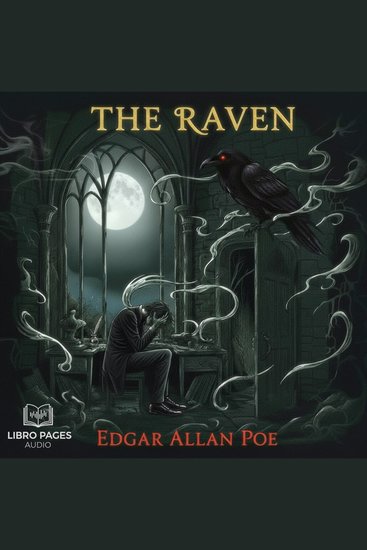
  • The Raven - cover

    The Raven

    Edgar Allan Poe

    • 0
    • 0
    • 0
    This audiobook is narrated by an AI Voice.   
    The Raven, first published in 1845, is Edgar Allan Poe’s most famous and haunting poem. With its hypnotic rhythm, gothic imagery, and refrain of “Nevermore,” it explores grief, obsession, and the descent into madness. The story follows a bereaved narrator who, late one stormy night, is visited by a mysterious raven that seems to echo his deepest despair. Blending the supernatural with psychological torment, Poe creates one of the most iconic works in American literature. This audiobook edition captures the dark atmosphere and lyrical intensity of Poe’s masterpiece, making it a perfect listen for lovers of classic poetry, gothic tales, and timeless literature. 
    Keywords/Tags: gothic poetry, classic literature, American poetry, gothic horror, madness, grief, haunted tales, psychological gothic
    Ver libro
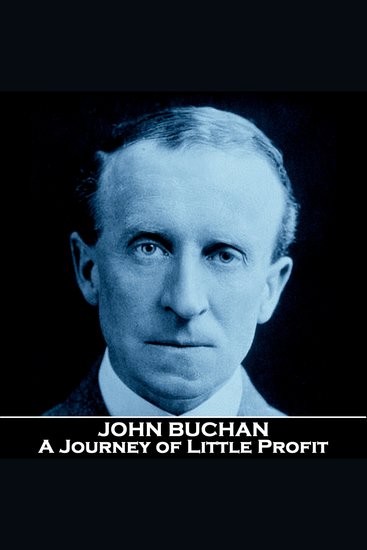
  • A Journey of Little Profit - From their pens to your ears genius in every story - cover

    A Journey of Little Profit -...

    John Buchan

    • 0
    • 0
    • 0
    The Scottish novelist John Buchan enjoyed a remarkable career as politician, historian and Governor General. He was born John Buchan on 26th August 1875 and later added 1st Baron Tweedsmuir PC GCMG GCVO CH to his name.  
    Buchan studied at Hutchesons’ Grammar School, Glasgow and at seventeen won a scholarship to the University of Glasgow to study classics. There he began to write poetry. In 1895 he transferred to Oxford to continue his study of Classics and in 1896 ‘Sir Quixote of the Moors’ was published followed by the non-fiction ‘Scholar-Gipsies’. His prolific literary output now hardly faltered. 
    He graduated in 1900 and became the private secretary to Alfred Milner, the High Commissioner for Southern Africa and other colonies. Buchan found the same inspiration in the African landscape as he had in the Scottish Borders, and would later set many works here. Returning to London he became a partner in a publishing house, and garnered an editorial role at The Spectator. He also completed his law studies. He was called to the bar in 1901 but never practiced.  
    On 15th July 1907 Buchan married Susan Charlotte Grosvenor, the cousin of the Duke of Westminster. In 1910 he wrote ‘Prester John’, the first of a series set in South Africa.  
    In 1911 Buchan entered politics as a Unionist candidate in the Scottish Borders advocating the support of free trade, women’s suffrage, national insurance, and reducing the power of the House of Lords.  
    The Great War saw Buchan writing for the War Propaganda Bureau and as Times correspondent in France. In 1915, he published ‘The Thirty-Nine Steps’, his most famous book and a follow-up Richard Hannay novel, ‘Greenmantle’, in 1916.  
    In 1916 Buchan enlisted in the Intelligence Corps which included writing speeches for Sir Douglas Haig. By 1917 he was Director of Information under Lord Beaverbrook. Buchan called it “the toughest job he ever took on”. He somehow found time to assist in a history of the war magazine. This was later published in 24 volumes: Nelson’s History of the War. 
    After the war his writing focused on historical studies. In 1927 Buchan became the Unionist Party Member of Parliament for the Combined Scottish Universities. In a speech to Parliament he said “I believe every Scotsman should be a Scottish nationalist. If it could be proved that a Scottish parliament were desirable… Scotsmen should support it.”  
    Over the next decade he continued to distinguish himself politically and in literature.  On the 1st June 1935 he became 1st Baron Tweedsmuir of Elsfield in the County of Oxford.  
    He was now also given the position of Governor General in Canada and resolved to travel all over Canada to gain a better insight of the country. Having crossed both length and breadth he saw the cultural shift between areas and their common ground and helped bring about a clear national Canadian identity. 
    On the 6th February 1940 he collapsed from a stroke and sustained a very serious head injury in falling. Two rounds of surgery to stabilise his condition were unsuccessful and Buchan died on the 11th February. After a state funeral in Ottawa his ashes were returned to his estate in Oxfordshire.
    Ver libro
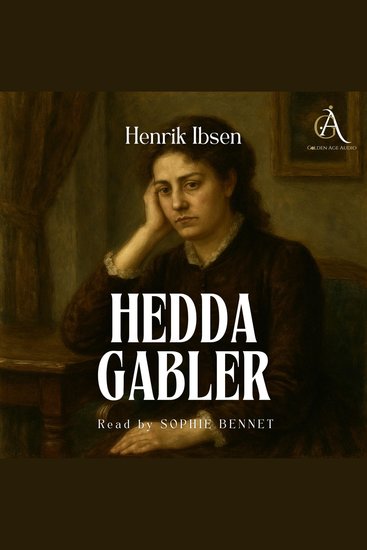
  • Hedda Gabler - Audiobook - cover

    Hedda Gabler - Audiobook

    Henrik Ibsen, Classic...

    • 0
    • 0
    • 0
    Hedda Gabler is a four-act play by Henrik Ibsen that explores the psychological struggles of its complex heroine, Hedda—a woman trapped in a life of societal expectations and personal frustration. Intelligent but deeply dissatisfied, Hedda manipulates those around her, leading to tragedy.Known for its rich character study and emotional intensity, the play examines power, repression, and despair with brutal honesty. Hedda Gabler remains one of Ibsen's most powerful and haunting works—a masterpiece of modern drama.
    Ver libro
  • Star The (Unabridged) - cover

    Star The (Unabridged)

    H. G. Wells

    • 0
    • 0
    • 0
    "The Star" is an 1897 apocalyptic short story by H.G. Wells. In January (about 1900, presumably), the people of Earth awaken to the news that a strange luminous object has erupted, into the Solar System, after disturbing the normal orbit of the planet Neptune. The object is a celestial body whose luminosity is distinguishable on the sky about the constellation of Leo.
    Ver libro