¡Acompáñanos a viajar por el mundo de los libros!
Añadir este libro a la estantería
Grey
Escribe un nuevo comentario Default profile 50px
Grey
Suscríbete para leer el libro completo o lee las primeras páginas gratis.
All characters reduced
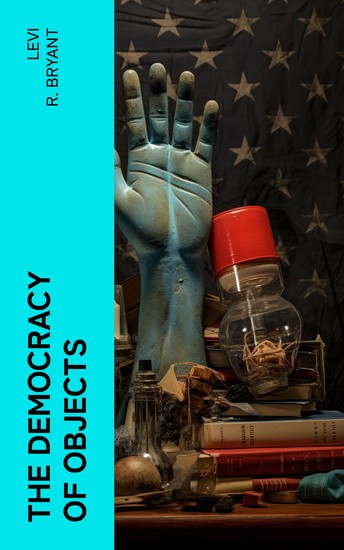
The Democracy of Objects - cover

The Democracy of Objects

Levi R. Bryant

Editorial: e-artnow

  • 0
  • 0
  • 0

Sinopsis

Since Kant, philosophy has been obsessed with epistemological questions pertaining to the relationship between mind and world and human access to objects. In The Democracy of Objects, Bryant proposes that we break with this tradition and once again initiate the project of ontology as first philosophy. Drawing on the object-oriented ontology of Graham Harman, as well as the thought of Roy Bhaskar, Gilles Deleuze, Niklas Luhman, Aristotle, Jacques Lacan, Bruno Latour and the developmental systems theorists, Bryant develops a realist ontology that he calls "onticology". This ontology argues that being is composed entirely of objects, properties, and relations such that subjects themselves are a variant of objects. Drawing on the work of the systems theorists and cyberneticians, Bryant argues that objects are dynamic systems that relate to the world under conditions of operational closure. In this way, he is able to integrate the most vital discoveries of the anti-realists within a realist ontology that does justice to both the material and cultural. Onticology proposes a flat ontology where objects of all sorts and at different scales equally exist without being reducible to other objects and where there are no transcendent entities such as eternal essences outside of dynamic interactions among objects. Contents:  Towards a Finally Subjectless Object  Grounds For a Realist Ontology  The Paradox of Substance  Virtual Proper Being  The Interior of Objects Regimes of Attraction, Parts, and Structure  The Four Theses of Flat Ontology
Disponible desde: 19/12/2023.
Longitud de impresión: 242 páginas.

Otros libros que te pueden interesar

  • The Hitchhike - cover

    The Hitchhike

    Mark Paul Smith

    • 0
    • 0
    • 0
    Mark Paul Smith graduated college on an Air Force scholarship with dreams of becoming a pilot. He had some downtime after graduation and before reporting for duty so he decided to hitchhike the world. A decision that would change his life forever.As he traveled, his approach to life and his future decisions changed. He hitchhiked through the Iron Curtain and worked on a collective farm in Hungary only to find that communism wasn't our real enemy. He met people from North Vietnam who showed him the real enemy was the U.S. war machine. Being an American was not popular in those days, but the people of the world showed Smith kindness and kept him alive when he ran out of money. The long road to decision showed him that people everywhere want peace, not war.Mark Paul Smith's hitchhike from Indiana to India in 1972 changed him from being an Air Force Officer into a conscientious objector. His faith in the United States of America was restored when he sued the government and won his case in federal court.His journey is one of faith, contemplation, and awakening, mixed with the freedom and abandonment of the 70s.
    Ver libro
  • Body of Knowledge Card Deck - Sensorimotor Practices for Awareness Regulation and Expansion - cover

    Body of Knowledge Card Deck -...

    Pat Ogden

    • 0
    • 0
    • 0
    Our bodies hold a wealth of knowledge that, with the right tools, we can tap into at any time. 


    Our physical habits—of sensation, posture, and movement—reflect implicit knowledge of our histories of trauma, relationships, and resources, as well as our future possibilities. However, this wealth of information often eludes our awareness. The intention of the somatic practices in this card deck is to experientially illuminate the innate and unique knowledge that resides in our bodies, and to nurture a more deeply embodied connection with ourselves, others, and the world. 


    The cards are divided into fifteen themes: ancestors and community, body connection, body sensation, boundaries, breath, containment, culture, five fundamental movements, grounding, mindfulness, movement, posture, the senses, positivity, resources, and the future. Our bodies have different lessons to teach us at different points in our lives, so listeners are encouraged to revisit these enlightening, somatic exercises time and again to glean new insights.
    Ver libro
  • The Age of Reason - The Influences and Legacies of the Founding Fathers of Modern Philosophy Rousseau Kant & Voltaire Adam Smith Descartes and John Locke - cover

    The Age of Reason - The...

    History Retold

    • 0
    • 0
    • 0
    Welcome to a comprehensive history of Enlightenment thinkers! 
    Covering some of the most influential figures in modern Western philosophy, including Descartes, John Locke, Rousseau, Kant, Voltaire, and Adam Smith. 
    This book offers a detailed analysis of the key ideas and theories of each philosopher, providing readers with a deeper understanding of the philosophical landscape of the 17th and 18th centuries. 
    Here are some of the highlights of this book:Descartes' emphasis on reason and skepticism, which had a profound impact on modern philosophy and scienceLocke's ideas on government and individual rights, which helped shape democratic societies around the worldRousseau's social contract theory, which influenced political thought and inspired the French RevolutionKant's moral philosophy, which provided a new framework for ethical decision-makingVoltaire's views on religion and tolerance, which championed freedom of thought and expressionAdam Smith's economic theories, which laid the groundwork for modern capitalism and influenced economic policy around the world. 
    Through careful analysis and exploration of each philosopher's life and work, this book provides readers with a comprehensive overview of the Enlightenment era and its major themes.  
    Whether you are a student of philosophy, a history buff, or simply someone interested in learning more about the ideas that shaped our modern world, this book is a must-read. 
    Join us on a journey through the Enlightenment era and discover the enduring legacy of these great thinkers.
    Ver libro
  • Not Now Please - Living Through Ableism Racism and Grief - cover

    Not Now Please - Living Through...

    Elizabeth Horlemann

    • 0
    • 0
    • 0
    In "Not Now Please: Living through Racism, Ableism, and Grief," Elizabeth takes you on an intimate journey through the intersecting worlds of adversity, resilience, and transformation. This compelling narrative is a candid exploration of personal experiences that touch upon the deep-rooted issues of racism, ableism, and the complexities of grief. 
    The book invites readers to navigate the author's life, sharing in moments of vulnerability and strength. Through powerful storytelling, it lays bare the often-unspoken challenges faced by individuals who encounter discrimination on multiple fronts. Elizabeth's reflections offer insights into how racism and ableism intersect, shaping lives and experiences in profound ways. 
    As you delve into these pages, you'll witness the impact of systemic biases, cultural prejudices, and personal struggles. The author's voice is a testament to the resilience of the human spirit, reminding us that even in the face of adversity, there is hope, strength, and the potential for change. 
    "Not Now Please" is not just a book; it's a call to action. It encourages readers to confront societal norms, challenge assumptions, and advocate for a more inclusive and compassionate world. The stories within these pages will provoke thought, spark conversation, and inspire empathy. 
    This is a book that transcends boundaries and speaks to the universal human experience. It's a reminder that we all have a role to play in dismantling discrimination and fostering a society where every individual's worth is recognized and celebrated. 
    Join the author on a journey of self-discovery, resilience, and the pursuit of justice. "Not Now Please" is a book that will stay with you long after you've turned the final page, leaving you with a renewed sense of purpose and a commitment to be the change we all wish to see in the world.
    Ver libro
  • Breathe In Breathe Out - Putting Things Right When It's All Gone Wrong - cover

    Breathe In Breathe Out - Putting...

    Alex Norton

    • 0
    • 0
    • 0
    Trapped in a life that doesn’t feel like your own? Going through the motions but sensing something’s missing? 
    You’re not alone. 
    “Breathe In, Breathe Out” offers a practical pathway to break free from societal expectations and rediscover authentic living. 
    Through five fundamental rules and real-world exercises, you’ll learn to see through the illusions keeping you stuck, take meaningful action towards change, and build the resilience needed to craft a life that truly matters. 
    This isn’t about quick fixes - it’s about sustainable transformation. Whether you’re feeling lost in a career that drains your soul or simply know there must be more to life, these pages contain the tools you need to find your way. 
    Your journey towards genuine fulfillment begins with a single breath.
    Ver libro
  • Litigating the Pandemic - Disaster Cascades in Court - cover

    Litigating the Pandemic -...

    Susan M. Sterett

    • 0
    • 0
    • 0
    As officials scrambled in 2020 to manage the spread of COVID, the reverberations of the crisis reached well beyond immediate public health concerns. The governance problems that emerged in the pandemic would be problems in other climate-related disasters, too. 


    Many of these governance problems wound up in court. Businesses filed insurance claims for lost commerce; when the claims were denied, some companies sued. As state governments ordered closures and otherwise tried to adapt, interest organizations that had long sought to limit government authority challenged them in court. Political officials railed against litigation they argued would stop businesses from reopening. The United States, like other countries, governs partly through litigation, and litigation is one way of seeing the multiple governance failures during the pandemic. 


    Drawing on databases of cases filed, news reports, and other sources, Susan M. Sterett argues that governing during the pandemic must include the human institutions intertwined with the effects of the virus. Those institutions reveal problems well beyond the reach of technical expertise. Failures in private insurance as a way of governing risk, conflicts about the primacy of religion, government authority, and health, are problems that predated the pandemic and will persist in future disasters.
    Ver libro