¡Acompáñanos a viajar por el mundo de los libros!
Añadir este libro a la estantería
Grey
Escribe un nuevo comentario Default profile 50px
Grey
Suscríbete para leer el libro completo o lee las primeras páginas gratis.
All characters reduced
The Greatest Short Stories of Leo Tolstoy - cover

The Greatest Short Stories of Leo Tolstoy

Lev Tolstói, Book Center

Editorial: CDED

  • 1
  • 12
  • 0

Sinopsis

The Russian novelist and moral philosopher Leo Tolstoy (1828-1910) ranks as one of the world's great writers, and his "War and Peace" has been called the greatest novel ever written. The purpose of all true creative art, he believed, is to teach. But the message in all his stories is presented with such humour that the reader hardly realises that it is strongly didactic.

The seven parts into which this book is divided include the best known Tolstoy stories. "God Sees the Truth, but Waits" and "A Prisoner in the Caucasus" which Tolstoy himself considered as his best; "How Much Land Does a Man Need?" depicting the greed of a peasant for land; the most brilliantly told parable, "Ivan the Fool" – these are all contained in this volume.

Contents: 

The Godson
The Empty Drum
How Much Land does a Man Need?
The Repentant Sinner
The Three Hermits
A Grain as Big as a Hen's Egg
The Imp and the Crust
Too Dear!
The Coffee-House of Surat
The Prisoner of the Caucasus
The Bear-Hunt
God Sees the Truth, but Waits
Ivan The Fool
Work, Death and Sickness
Esarhaddon, King of Assyria
Three Questions
Ilyás
Evil Allures, but Good Endures
Little Girls Wiser than Men
A Spark Neglected Burns the House
Two Old Men
Where Love is, God is
What Men Live by
Disponible desde: 14/08/2017.

Otros libros que te pueden interesar

  • The Unreliable Nature Writer - cover

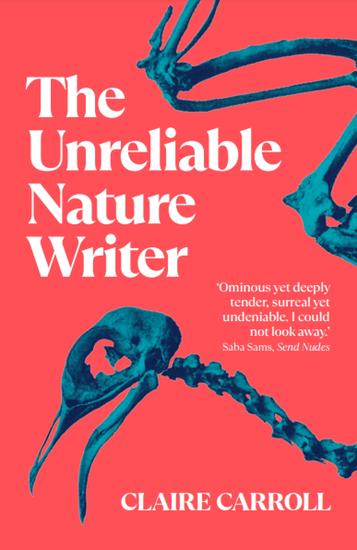
    The Unreliable Nature Writer

    Claire Carroll

    • 0
    • 0
    • 0
    The Unreliable Nature Writer is the eagerly-awaited debut collection of exhilarating, macabre and dreamy short stories from Claire Carroll. Shortlisted for The White Review Prize and winner of the Short Fiction Wild Writing Prize, Carroll portrays an unsettlingly hot, vaguely familiar world of humans facing the strain of intimate and global anxieties – trying to live alongside new technologies, failing environments and unknowable natural crises. Delightful to read and unsettling to imagine, these are haunting stories about love, loss, strangely-exposing housing applications and cows.
    Ver libro
  • Bruises - cover

    Bruises

    Kurt Newton

    • 0
    • 0
    • 0
    A collection of 23 stories from Kurt Newton, including: 
    The Pit, Puppies For Sale, Bruises, Under the Bridge, Thumbin ', Something Profound, The Whittling, creak!, Angels of Mercy, Angels of Grief, Skins, The Banana Man, Dead Dogs, Trunk Story, Nature Walk, The Dog Park, B - Side, Lost Dog, Periphery, Post Mortem, The Stagnant Ponds, Thirty-Two Scenes from A Dead Hooker's Mouth, Lump and The Golden Door. 
    “For dark and cerebral writing, read Kurt Newton, a purveyor of tragedies of both the human condition and of the supernatural; to wit, his latest—a collection that is not just 23 short stories, but 23 sharp and shocking BRUISES to the psyche!”—Eric J. Guignard, multiple award-winning author and editor, including That Which Grows Wild and Doorways to the Deadeye
    Ver libro
  • The Criminal From Lost Honour - cover

    The Criminal From Lost Honour

    Frederick Schiller

    • 0
    • 0
    • 0
    Johann Christoph Friedrich Schiller was born on 10th November 1759, in Marbach, Württemberg, the sole son of six children, into a very religious family. 
     
    During his childhood his father was away, engaged in the Seven Years War and contact was sporadic until with the War’s end in 1763. His father became a recruiting officer and the family moved to Lorch. 
     
    It was here that Schiller received his early education, the quality of which was poor, not helped by the child’s frequent truancy.  His parents sought a clerical career for him and a local priest was engaged to teach him Latin and Greek. As a boy, Schiller was excited by the idea of becoming a cleric and often wore black robes and pretended to preach. 
     
    In 1766, the family left Lorch. Schiller's father had not been paid for three years, and the family’s savings were depleted, so his father Kaspar, joined the garrison in Ludwigsburg for the Duke of Württemberg. 
     
    There the boy Schiller came to the attention of the Duke. He entered the elite military academy, the Karlsschule Stuttgart, in 1773, and eventually studied medicine, which led him to frequently attempt cures for his various illnesses. 
     
    At the academy, he wrote his first play, ‘The Robbers’, which dramatizes the conflict between two aristocratic brothers. The play's themes of social corruption and proto-revolutionary republican ideals astounded its original audience. Schiller became an overnight sensation.  
     
    In 1780, he obtained a post as regimental doctor in Stuttgart. In order to attend the first performance of ‘The Robbers’ in Mannheim, Schiller left his regiment without permission. As a result, he was arrested, sentenced to 14 days imprisonment, and forbidden from publishing any further works. 
     
    He fled Stuttgart in 1782, going via Frankfurt, Mannheim, Leipzig, and Dresden to Weimar. Along this journey he had an affair with an army officer's wife, Charlotte von Kalb. She was at the centre of an intellectual circle and known for her cleverness and instability.  
     
    Schiller settled in Weimar in 1787. Two years later he was appointed professor of History and Philosophy in Jena, where he wrote only historical works. 
     
    On 22nd February 1790, he married Charlotte von Lengefeld who bore him two sons and two daughters. 
     
    Schiller returned with his family to Weimar from Jena in 1799. There Johann Wolfgang von Goethe convinced him to return to playwriting and together they founded the Weimar Theater, which led to a renaissance of drama now referred to as Weimar Classicism. They also worked together on Xenien, a collection of short satirical poems in which they challenged opponents of their philosophical vision. 
     
    For his achievements, Schiller was ennobled in 1802 by the Duke of Saxe-Weimar, adding the nobiliary particle ‘von’ to his name.  
     
    Schiller died on 9th May 1805, at age 45, from tuberculosis, at Weimar. 


    Although primarily admired for his plays Schiller also wrote histories, poetry and some notable translations.   
     
    In his short story ‘The Criminal from Lost Honour’ the layers of a man’s life are examined as perhaps only Schiller and his literary genius can.
    Ver libro

  • Witch's Daughter - An Erotic Short Story - cover

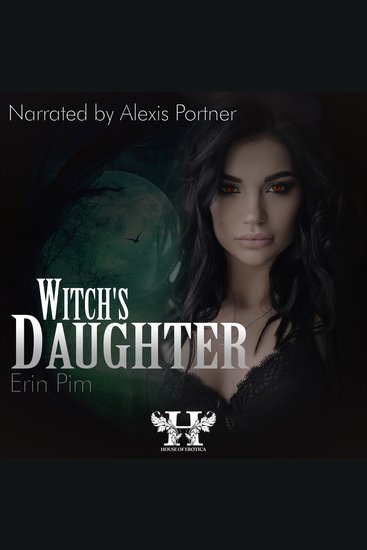
    Witch's Daughter - An Erotic...

    Erin Pim

    • 0
    • 0
    • 0
    In this erotic forest fantasy we find ourselves acquainted with Wisteria, a beautiful if somewhat naïve orphan, forced to live with her domineering grandmother - the all-knowing Forest Witch. When our sweet young heroine falls deeply in love with a boy from a nearby village of elves, granny does everything in her power to stop him from taking the young girl’s virginity. With hormones raging, will Wisteria escape the clutches of her wicked guardian? And if so, how will she react to the ecstasy of the sacred rights of hymen? 
    This erotic short story from Erin Pim contains highly sexualised language and graphically descriptive passages of an adult nature. It is therefore intended solely for a mature, open-minded audience.
    Ver libro
  • Arch Rascal An - From their pens to your ears genius in every story - cover

    Arch Rascal An - From their pens...

    Knut Hamsun

    • 0
    • 0
    • 0
    Knud Pedersen was born in Lom in the Gudbrandsdal valley of Norway on the 4th of August, 1859 in what was then the United Kingdoms of Sweden and Norway.  He was the fourth son of seven children born to poor parents who, when he was three, were invited to an uncle’s farm to work his land. 
    When he was nine he moved away from his family to help another uncle who ran a post office.  Whilst with him he was beaten and starved which manifested in a series of chronic nervous difficulties.  The treatment endured for six years until he managed to escape back to Lom. 
    For some time he now took any job that was available to him, including store clerk, peddler, shoemaker's apprentice, sheriff's assistant, elementary-school teacher and ropemaker's apprentice.  At about the same time, with the wealth of these gained experiences, he began to explore his literary talents. 
    In 1877 he published his first book ‘The Enigmatic Man: A Love Story from Northern Norway’, others soon followed but real success only came in 1890 with ‘Hunger’, an influential work for later novelists with its internal monologue and bizarre logic.  His work is often associated with Pantheism; where nature and mankind are unified in a strong and often mystical bond.   
    His work was so influential that in 1920 he was awarded the Novel Prize for Literature. 
    Shortly after this point his works became fewer and his interests darker.  During World War II he became a fervent admirer of the Nazi’s, even meeting Hitler, even though German armies had overrun Norway.  With the war’s end he was detained on charges of treason.  His old age was apparently the primary reason given for Hamsun receiving only a fine.  Other reasons also sought to excuse his abhorrent behaviour but it was clear that whilst he was loved for his literature he was detested for his politics and morals. 
    His literary canon includes more than 20 novels, a poetry collection, short stories, plays, a travelogue, other works of non-fiction and essays. 
    Knut Hamsun died on the 19th February 1952 in Grimstad. He was 92.
    Ver libro
  • Notes from Underground - cover

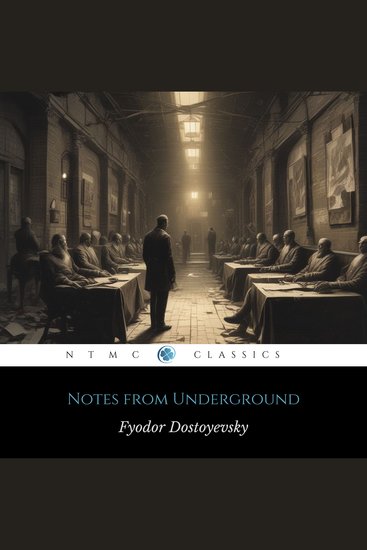
    Notes from Underground

    Fyodor Dostoyevsky

    • 0
    • 0
    • 0
    Notes from Underground also translated as Notes from the Underground or Letters from the Underworld) is a novella by Fyodor Dostoevsky, first published in the journal Epoch in 1864. It is a first-person narrative in the form of a "confession": the work was originally announced by Dostoevsky in Epoch under the title "A Confession".The novella presents itself as an excerpt from the memoirs of a bitter, isolated, unnamed narrator (generally referred to by critics as the Underground Man), who is a retired civil servant living in St. Petersburg. Although the first part of the novella has the form of a monologue, the narrator's form of address to his reader is acutely dialogized. According to Mikhail Bakhtin, in the Underground Man's confession "there is literally not a single monologically firm, undissociated word". The Underground Man's every word anticipates the words of an other, with whom he enters into an obsessive internal polemic.
    Ver libro