¡Acompáñanos a viajar por el mundo de los libros!
Añadir este libro a la estantería
Grey
Escribe un nuevo comentario Default profile 50px
Grey
Suscríbete para leer el libro completo o lee las primeras páginas gratis.
All characters reduced
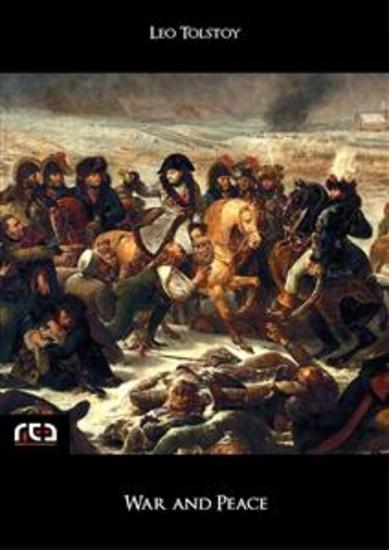
War and Peace - cover

War and Peace

Leo Tolstoy

Editorial: REA Multimedia

  • 0
  • 0
  • 0

Sinopsis

War and Peace is a literary work by Russian author Leo Tolstoy. Set during the Napoleonic Wars, the work mixes fictional narrative with chapters discussing history and philosophy. It is regarded, with Anna Karenina, as Tolstoy's finest literary achievement and remains an internationally praised classic of world literature.
The book chronicles the French invasion of Russia and its aftermath during the Napoleonic era. It uses five interlocking narratives following different Russian aristocratic families to illustrate Napoleon's impact on Tsarist society.
Tolstoy said that the best Russian literature does not conform to standards and hence hesitated to classify War and Peace, saying it is "not a novel, even less is it a poem, and still less a historical chronicle." Large sections, especially the later chapters, are philosophical discussions rather than narrative.
Disponible desde: 19/04/2024.

Otros libros que te pueden interesar

  • Lair of the White Worm The (Unabridged) - cover

    Lair of the White Worm The...

    Bram Stoker

    • 0
    • 0
    • 0
    The Lair of the White Worm is a horror novel by the Irish writer Bram Stoker. It was first published by Rider and Son of London in 1911 - the year before Stoker's death - with colour illustrations by Pamela Colman Smith. The story is based on the legend of the Lambton Worm. It has also been issued as The Garden of Evil.
    Ver libro
  • The Guilty River - cover

    The Guilty River

    Wilkie Collins

    • 0
    • 0
    • 0
    After spending some years abroad, Gerard Roylake returns to England to take up his inheritance at Trimley Deen. As he assumes his complicated new life amongst strangers, his encounter with Cristel Toller, the miller’s daughter, recalls happier childhood memories and brings him into contact with a strangely beautiful man known only as the Lodger.
    	Deaf and embittered by his isolation from the world, the Lodger, besotted with Cristel, exerts a powerful sway over those with whom he comes into contact. His envy of Gerard, his rival for Cristel’s affections, leads him to plot his removal, but will his malign scheming keep the lovers apart?
    	Written two years before the author’s death, The Guilty River touches on questions of social status and the darker side of human nature, while the plot exhibits Collins’s trademark twists and turns.
    Ver libro
  • Evening Guest An - From their pens to your ears genius in every story - cover

    Evening Guest An - From their...

    Alexander Kuprin

    • 0
    • 0
    • 0
    Alexander Kuprin was born in Narovchat, Penza in Russia on 7th September 1870. 
    At 3 his Father died and he and mother moved to Moscow. By 10 he was enrolled at the Second Moscow Military High School and there his interest in literature began. The Alexander Military Academy followed and two years later he was a sub-lieutenant and posted to an Infantry Regiment for a further four years. 
    Despite his duties he was a now a keen writer and published his first short story at this time. His military duties also garnered him experiences for his breakthrough work ‘The Duel’.  Leaving the military he left for Kiev to work for local newspapers.  He continued to publish both stories and novels and by 1901 he was in St Petersburg becoming part of a group that included Chekhov, Ivan Bunin, Maxim Gorky and Leonid Andreyev.  
    In the years that followed further controversial works and acclaim followed.  His comments on the regime meant he was also put under secret police surveillance.   
    As World War I erupted, Kuprin opened a military hospital but was then given command of an infantry company in Finland. He was soon discharged on grounds of ill health.  
    The October Revolution saw him praise Lenin, but he warned that the Bolsheviks threatened Russian culture and might cause further widespread suffering to the peasants.  As Civil War raged he took his family to Helsinki and then on to Paris. 
    Exile saw his talents decline further and his succumbing to alcoholism. He became lonely and withdrawn. The family's poverty increased his malaise.   
    In May 1937, the Kuprin’s returned to Moscow.  He now saw his work published but wrote almost nothing new.  In 1938 his health rapidly deteriorated.  Already suffering from a kidney problems and sclerosis, he had now developed cancer of the oesophagus.  
    Alexander Kuprin died on 25th August 1938.
    Ver libro
  • 3 Stories - Success at What Cost - A trio of classic tales perfect for a commute walk or quiet night in - cover

    3 Stories - Success at What Cost...

    Leo Tolstoy, Anthony Hope, Amy Levy

    • 0
    • 0
    • 0
    There is something about the number 3.    
     
    The Ancient Greeks believed 3 was the perfect number, and in China 3 has always been a lucky number, and they know a thing or two.   
     
    Most religions also have 3 this and 3 that and, of course, in these more modern times, three’s a crowd may be too many, except when it’s a ménage à trois.  It seems good things usually come in threes. 
     
    Whatever history and culture says WE think 3, a hat-trick of stories, is a great number to explore themes and literary avenues that classic authors were so adept at creating. 
     
    From their pens to your your ears.  
     
    01 - 3 Stories - Success At What Cost 
    02 - How Much Land Does A Man Need by Leo Tolstoy 
    03 - Cohen of Trinity by Amy Levy 
    04 - A Sucessful Rehearsal by Anthony Hope
    Ver libro
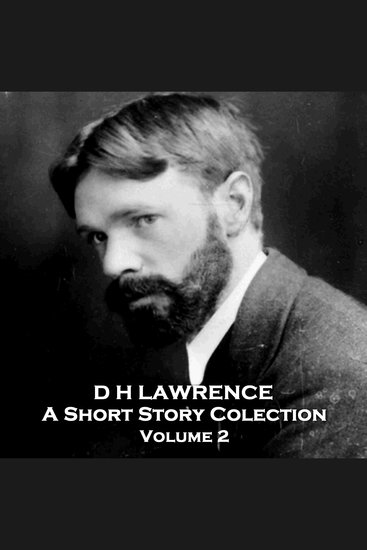
  • D H Lawrence - A Short Story Collection - Volume 2 - A titan of English literature that challenged ideas of romance and sexuality - cover

    D H Lawrence - A Short Story...

    D H Lawrence

    • 0
    • 0
    • 0
    David Herbert Lawrence was born on the 11th September 1885 in Eastwood, Nottinghamshire, a coal mining town where the reality of a harsh life was only useful as experiences for future literary works. 
     
    He was educated at Beauvale Board School and became the first local boy to receive a scholarship to attend Nottingham High School. After 3 years he became a junior clerk in Haywood’s surgical appliances factory. He was also attempting a literary career which, in the short term, led to a teacher training position in Eastwood and later a teaching qualification from University College, Nottingham.  
     
    Lawrence’s first efforts were poems, short stories and a draft of ‘The White Peacock’. Moving to London and a teaching position in Croydon his writing attracted the attention of Ford Madox Ford, editor of The English Review, and he commissioned him to write ‘Odour of Chrysanthemums’.  
     
    Wanting to write full-time he now began work on what would become ‘Sons and Lovers.   
     
    In 1912 he met the older and married mother-of-three Frieda Weekley. They eloped to Germany and here Lawrence could see for himself the growing tensions with France.  So keen was his interest that he was arrested and accused of being a British spy.  
     
    In early 1914 Frieda obtained her divorce and they returned to Britain to be married just days before the outbreak of war. Owing to her German parentage, and his own public dislike of militarism and violence, the couple were treated with contempt and suspicion throughout the war years.  
     
    Despite this he continued to write but his reputation in England was so tarnished and, mirrored by his own disdain for the country, he and Frieda left England in November 1919, first for Europe and then America via Ceylon and Australia. 
     
    They bought a ranch in Taos, New Mexico and visited Mexico several times. The third visit in March 1925 caused a near fatal attack of malaria. To convalesce they moved to Florence. Here he continued work on ‘Lady Chatterley’s Lover’ which for many years would cause controversy. A renewed interest in oil painting resulted in an exhibition in 1929 which was raided by the police and several works were confiscated.  
     
    D H Lawrence died of complications arising from a bout of tuberculosis on the 2nd of March 1930 in Vence, France.  He was 44. 
     
    1 - D H Lawrence - A Short Story Collection - Volume 2 - An Introduction 
    2 - The Rocking Horse Winner by D H Lawrence 
    3 - The Border Line by D H Lawrence 
    4 - A Fragment of Stained Glass by D H Lawrence 
    5 - Odour of Chrysanthemums by D H Lawrence 
    6 - The Horse Dealer's Daughter by D H Lawrence
    Ver libro
  • Tess of the d'Urbervilles - cover

    Tess of the d'Urbervilles

    Thomas Hardy

    • 0
    • 0
    • 0
     Tess of the d'Urbervilles by Thomas Hardy: "Tess of the d'Urbervilles" tells the tragic story of Tess Durbeyfield, a young woman from a poor rural family who discovers her aristocratic heritage. The novel explores themes of fate, morality, and the rigid social norms of Victorian England. As Tess's life is shaped by events beyond her control, including a tumultuous romance with the charismatic Alec d'Urberville and her relationship with the compassionate Angel Clare, Hardy's narrative examines the harsh consequences of society's judgment on female purity. With its powerful critique of societal double standards and its portrayal of a flawed yet resilient heroine, "Tess of the d'Urbervilles" remains a timeless classic in English literature.
    Ver libro