Junte-se a nós em uma viagem ao mundo dos livros!
Adicionar este livro à prateleira
Grey
Deixe um novo comentário Default profile 50px
Grey
Assine para ler o livro completo ou leia as primeiras páginas de graça!
All characters reduced
Tristram Shandy - cover
LER

Tristram Shandy

Laurence Sterne

Editora: DigiCat

  • 0
  • 0
  • 0

Sinopse

Laurence Sterne's "Tristram Shandy" is a groundbreaking work of 18th-century English literature that defies conventional narrative structure and explores the complexities of time, identity, and human folly. Written in an experimental and often digressive style, the novel meanders through the life of its protagonist, Tristram, presenting a rich tapestry of anecdotes, philosophical musings, and humorous asides. Sterne employs a conversational tone punctuated by typographical innovations, making the reading experience both playful and intellectually stimulating, thus positioning the novel as a precursor to the modernist narrative form. Laurence Sterne, an Anglican clergyman, turned to writing after a life marked by personal upheaval and a keen observation of human nature. His experiences in a turbulent society and the contrast between his clerical duties and artistic ambitions informed his distinctive literary voice. Sterne's ability to blend humor with deep philosophical inquiry reflects his background in the emerging Enlightenment thought, offering readers a unique perspective on identity and existence during a transformative period in English literature. "Tristram Shandy" is highly recommended for readers seeking an insightful and humorous examination of life's absurdities. Its unconventional style and profound themes invite readers to reflect on their experiences while appreciating the artistic liberties Sterne took to challenge narrative norms. This timeless work remains a vital exploration of how stories shape our understanding of ourselves.
Disponível desde: 11/10/2022.
Comprimento de impressão: 843 páginas.

Outros livros que poderiam interessá-lo

  • Scarecrow of Oz The [The Wizard of Oz series #9] - cover

    Scarecrow of Oz The [The Wizard...

    L. Frank Baum

    • 0
    • 0
    • 0
    Cap'n Bill and Trot journey to Oz and, with the help of the Scarecrow, the former ruler of Oz, overthrow the villainous King Krewl of Jinxland. This was allegedly L. Frank Baum's personal favourite Oz book.
    Ver livro
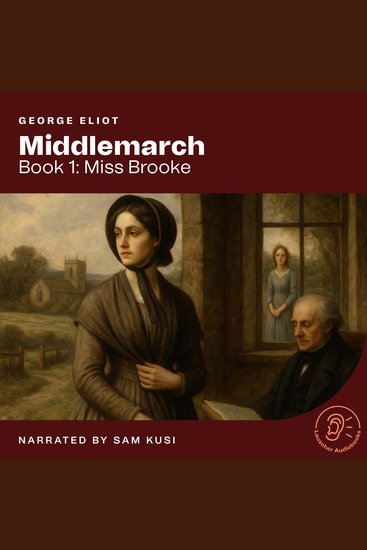
  • Middlemarch (Book 1: Miss Brooke) - cover

    Middlemarch (Book 1: Miss Brooke)

    George Eliot

    • 0
    • 0
    • 0
    Middlemarch (Book 1: Miss Brooke), A Study of Provincial Life is a novel by English author George Eliot, the pen name of Mary Ann Evans. It appeared in eight installments (volumes) in 1871 and 1872. Set in Middlemarch, a fictional English Midlands town, from 1829 to 1832, it follows distinct, intersecting stories with many characters. Issues include the status of women, the nature of marriage, idealism, self-interest, religion, hypocrisy, political reform, and education. Leavened with comic elements, Middlemarch approaches significant historical events in a realist mode: the Reform Act 1832, early railways, and the accession of King William IV. It looks at medicine of the time and reactionary views in a settled community facing unwelcome change. Eliot began writing the two pieces that formed the novel in 1869–1870 and completed it in 1871. Initial reviews were mixed, but it is now seen widely as her best work and one of the great English novels.
    Ver livro
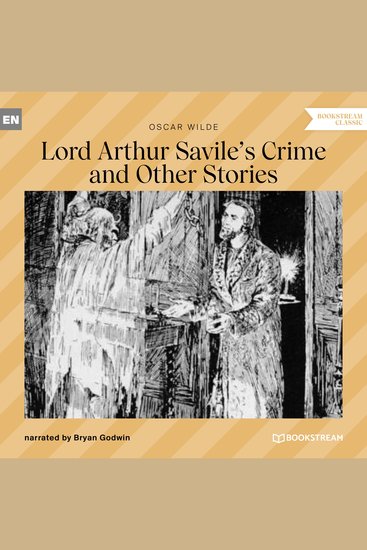
  • Lord Arthur Savile's Crime and Other Stories (Unabridged) - cover

    Lord Arthur Savile's Crime and...

    Oscar Wilde

    • 0
    • 0
    • 0
    Oscar Wilde (16 October 1854 - 30 November 1900) was an Irish poet and playwright. After writing in different forms throughout the 1880s, he became one of the most popular playwrights in London in the early 1890s.
    Lord Arthur Savile's Crime and Other Stories is a collection of short semi-comic mystery stories that were written by Oscar Wilde and published in 1891.
    Ver livro
  • At the Villa Rose - cover

    At the Villa Rose

    Edward Woodley Mason

    • 0
    • 0
    • 0
    ""At the Villa Rose" is a captivating detective novel written by the British author A. E. W. Mason in 1910. It marks the debut of his character, Inspector Hanaud. The story unfolds against the backdrop of Aix-les-Bains, a picturesque French town.    Here's a glimpse into the intriguing plot:    The Crime: A wealthy widow named Mme Dauvray is found murdered at the Villa Rose. Her valuable jewels have vanished, and her maid, Hélène Vauquier, lies unconscious, chloroformed, and bound.  The Suspects: Suspicion falls on Mme Dauvray's young English companion, Celia Harland, who has mysteriously disappeared. Celia is in love with a fellow Englishman, Harry Wethermill, who pleads with Inspector Hanaud to prove her innocence.  Spiritualism and Deception: Mme Dauvray was fascinated by spiritualism, and Celia's role included staging séances for her. But beneath the veneer of mediumship lies trickery.  The Cunning Criminal: Enter Adèle Tacé, a seasoned criminal who arrives in Aix with the intent to steal Mme Dauvray's jewels. She goads the widow into holding a séance, where Celia is expected to perform while bound hand and foot.  The Unexpected Twist: Celia becomes a prisoner during the séance, and her life takes a dark turn. The true identity of the murderer remains shrouded in mystery.  Abduction and Pursuit: Celia is abducted and taken to Geneva, kept alive only to reveal the hidden location of the stolen jewels.  The Unraveling: As the investigation unfolds, Inspector Hanaud navigates deception, love, and betrayal to unmask the killer.  "At the Villa Rose" weaves together elements of suspense, illusion, and human frailty, making it a compelling read. The novel's success led to adaptations as a stage play and several films."
    Ver livro
  • Gone Astray - cover

    Gone Astray

    Anton Chekhov

    • 0
    • 0
    • 0
    "Gone Astray" is one of Chekhov's earlier comedic short stories that is a light-hearted romp about two drunken lawyers trying to find their way home at night. Chekhov's masterful use of irony is present here as one of the lawyers, Kozyavkin, accidentally violates the law by breaking into a house he believes to be his own.
    Ver livro
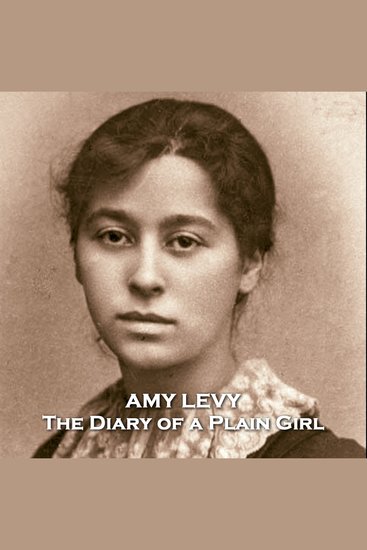
  • The Diary of A Plain Girl - A story that shows a glimpse into the mind of a low self esteem woman - cover

    The Diary of A Plain Girl - A...

    Amy Levy

    • 0
    • 0
    • 0
    Amy Levy was born in London, England in 1861, the second of seven in a fairly wealthy Anglo-Jewish family. The children of the family read and participated in secular literary activities becoming firmly integrated into Victorian life. 
     
    Amy was educated at Brighton High School, Brighton, and studied at Newnham College, Cambridge; she was the first Jewish student when she arrived in 1879, but left after four terms. 
     
    But her writing career was to begin early; her poem "Ida Grey" appearing when she was only fourteen. Her stories "Cohen of Trinity" and "Wise in Their Generation," were published by Oscar Wilde in his magazine “Women's World," and are considered among her best. 
     
    Her first novel Romance of a Shop, written in 1888 is based on four sisters who experience the pleasures and hardships of running a business in London during the 1880s. This was followed by Reuben Sachs (also 1888) and concerned with Jewish identity and mores in the England of her time and therefore somewhat controversial); 
     
    Her other writings reveal feminist concerns; Xantippe and Other Verses, from 1881 includes a poem in the voice of Socrates's wife; the volume A Minor Poet and Other Verse from 1884 has dramatic monologues and lyric poems. 
     
    In 1886, Levy began a series of essays on Jewish culture and literature for the Jewish Chronicle, including The Ghetto at Florence, The Jew in Fiction, Jewish Humour and Jewish Children. 
     
    That same year while travelling in Florence she met writer Vernon Lee. It is generally assumed they fell in love and this inspired the poem ‘To Vernon Lee’. 
     
    Her final book of poems, A London Plane-Tree from 1889, shows the beginnings of the influence of French symbolism. 
     
    Despite many friendships and active life, Amy had suffered for a long time with major depression and this, together with her growing deafness, led her to commit suicide by inhaling carbon monoxide on September 10, 1889, at the age of twenty-seven
    Ver livro