Unisciti a noi in un viaggio nel mondo dei libri!
Aggiungi questo libro allo scaffale
Grey
Scrivi un nuovo commento Default profile 50px
Grey
Iscriviti per leggere l'intero libro o leggi le prime pagine gratuitamente!
All characters reduced
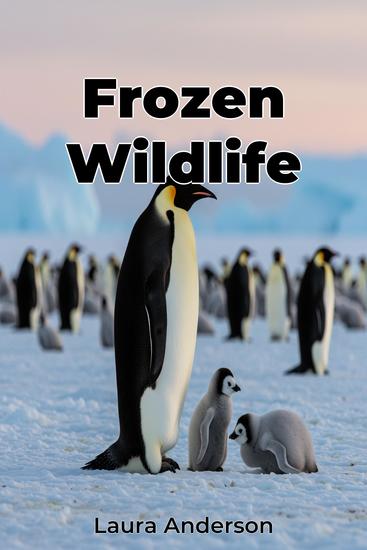
Frozen Wildlife - cover

Frozen Wildlife

Laura Anderson

Traduttore A AI

Casa editrice: Publifye

  • 0
  • 0
  • 0

Sinossi

Frozen Wildlife explores the remarkable survival strategies of animals thriving in Earth's coldest environments. It reveals how diverse species, from polar regions to high altitudes, exhibit unique physiological and behavioral adaptations to endure freezing temperatures. For example, the book examines how some animals have developed specialized circulatory systems to conserve heat, while others, like the wood frog, can withstand being frozen solid. The book delves into the ecological roles these animals play and the growing threats they face due to climate change and habitat loss, emphasizing the urgent need for conservation.

 
By synthesizing research across animal physiology, ecology, and climate science, Frozen Wildlife presents a comprehensive view of how these creatures adapt. The book progresses from introducing key species and habitats to examining their physiological and behavioral adaptations and then explores the ecological threats they face and potential conservation strategies.

 
What sets this book apart is its accessible approach, blending scientific detail with engaging storytelling, making complex concepts understandable for a broad audience interested in nature, biology, and life sciences. Through scientific literature, field studies, and data visualization, the book highlights the importance of understanding the intricate interplay between animal physiology, behavior, and ecology for effective wildlife conservation.
Disponibile da: 05/03/2025.
Lunghezza di stampa: 71 pagine.

Altri libri che potrebbero interessarti

  • The Allotment Keeper's Handbook - A down-to-earth guide to growing your own food - cover

    The Allotment Keeper's Handbook...

    Jane Perrone

    • 0
    • 0
    • 0
    The Allotment Keeper's Handbook is a no-nonsense guide to managing your own organic vegetable patch. Packed with invaluable advice, from how to choose an allotment and test its soil to knowing your chickweed from your chicory, it offers an enjoyable and inspiring shortcut through the trials, errors and frustrations of starting a kitchen garden. Dispensing with the strict calendar-based advice usually found in gardening manuals, Jane Perrone steers a carefree course through the gardener's year. Featuring a full chapter devoted to harvesting, a history of allotments, an exhaustive section on crop rotation, 'spotlights' on unusual vegetables, fun monthly projects and a glossary to cut through garden jargon, this book is all you will need to get growing.
    Mostra libro
  • Soil Health - Building and Maintaining Fertile Ground - cover

    Soil Health - Building and...

    Gertrude Harris

    • 0
    • 0
    • 0
    Soil structure is the physical arrangement of particles and aggregates that form the soil matrix, affecting everything from root growth to water retention and air circulation. The fundamental components of soil include sand, silt, and clay, each contributing unique properties that define the texture and function of the soil. Understanding soil structure is crucial for anyone looking to improve or maintain soil health, as it directly influences the soil’s ability to support plant life. 
    The size of soil particles determines its texture, which in turn affects its drainage and nutrient-holding capacity. Sand particles are the largest, with relatively little ability to retain nutrients or water, but they allow for excellent drainage. Silt particles are smaller and retain water better, though they may also become compacted more easily. Clay, the smallest of the soil particles, holds both water and nutrients but can create a dense, heavy structure that may not drain well, especially when wet. 
    Soil texture influences its ability to hold nutrients and support plant growth. A balanced mixture of sand, silt, and clay—known as loam—is ideal for most plants, as it combines the drainage properties of sand with the nutrient and water retention capabilities of silt and clay. Loam provides the necessary balance of aeration, moisture, and nutrient availability for healthy root systems. 
    The way these particles aggregate into clusters—known as soil structure—is just as important as texture. Soil aggregates, or clumps of soil particles bound together by organic matter, create small spaces for air and water to flow through. This porosity is essential for maintaining soil health. Well-aggregated soil has good permeability and
    Mostra libro
  • Finding Grace - The Inspiring True Story of Therapy Dogs Bringing Comfort Hope and Love to a Hurting World - cover

    Finding Grace - The Inspiring...

    Larry Randolph, Jennifer...

    • 0
    • 0
    • 0
    After a devastating series of personal losses, Larry Randolph finally had things under control. Then one morning while praying, he felt God speak two simple words to his heart: "Therapy dogs." 


    There was only one problem. Larry didn't have a dog, and hadn’t since the loss of his beloved basset hound, Gus. Why would God say that? Could Larry even open himself up to loving a dog again? He had far more questions than answers. But then came Grace. 


    Together, Larry and his beloved yellow lab Gracie brought hope and healing to hundreds of sick and lonely people. But when Larry's own life takes a shocking and terrifying turn, it's up to Gracie to rescue Larry and his family too. 


    ● Perfect for those looking for gifts for dog lovers and fans of animal stories 


    ● Told with humor and heart 


    ● Full of life lessons 


    Written by Jennifer Marshall Bleakley (Joey and Pawverbs) and Larry Randolph, Finding Grace is the inspiring true story of a man willing to take a leap of faith and the four-legged companions by his side.
    Mostra libro
  • Cape Town To Kilimanjaro - The Third World As Seen From The Saddle - cover

    Cape Town To Kilimanjaro - The...

    Eric George de Jong

    • 0
    • 0
    • 0
    It is never too late to do something crazy wonderful. 'Your mid-life crisis doesn't have to be boring'. Eric De Jong, aged 60, took up mountain biking. The next thing he was making ‘pinky-promises’ with a fellow rider to ride from Cape Town to the summit of Mount Kilimanjaro. Detouring off highways in search of roads less traveled, Cape Town to Kilimanjaro is about having fun, doing good and doing epic. Join Eric on his jaw dropping, foot cramping adventures through Africa and he’ll make you laugh, cry and will hopefully inspire.
    Mostra libro
  • Daily Life in Ancient Egypt - Society Culture and Customs - cover

    Daily Life in Ancient Egypt -...

    Omar Khalil

    • 0
    • 0
    • 0
    Ancient Egyptian society was highly structured, with a rigid hierarchy that defined people’s roles and responsibilities. At the top of this social order was the pharaoh, considered both a political ruler and a divine figure. Below the pharaoh were the nobility and officials who managed the kingdom’s affairs. The middle class consisted of scribes, artisans, and merchants, while the majority of the population comprised farmers, laborers, and slaves. Each social group played a crucial role in maintaining Egypt’s stability and prosperity. 
    The pharaoh was the central authority in Egypt, believed to be the living embodiment of a god. His rule was absolute, and his primary duty was to maintain ma’at, the divine balance of order and justice. He oversaw military campaigns, religious ceremonies, and massive building projects, including temples and pyramids. The royal court and government officials assisted the pharaoh in administration. These officials, often chosen from the nobility, held positions such as viziers, tax collectors, and governors, ensuring the kingdom functioned efficiently. 
    Scribes, artisans, and merchants formed the middle class, contributing to Egypt’s economy and culture. Scribes were essential for maintaining records, writing official documents, and preserving religious texts. Their education was rigorous, requiring years of training in hieroglyphic writing. Artisans, including sculptors, painters, and metalworkers, created the intricate decorations found in tombs and temples. Merchants facilitated trade both within Egypt and with foreign lands, bringing valuable goods such as gold, spices, and precious stones. Although they did not hold political power, the middle class enjoyed a stable livelihood and social respect.
    Mostra libro
  • Ink Sketches for Wellness - Poems on My Life with Invisible Disabilities - cover

    Ink Sketches for Wellness -...

    Susan Montgomery

    • 0
    • 0
    • 0
    Noisy eyeballs, fatigue, brain fog, digestive distress... symptoms and conditions that no one can see. 
    Do chronic health conditions have you living in a dark place? 
    The poems within tell a story of anger, struggle, sadness, and hope. 
    Susan paints a picture of her life with chronic medical conditions and invisible disabilities that will take you on a wild journey. Dark humor, creative rhyming, repetition, and rhythm are combined to create expressive verses. 
    Imagine being able to "fix" yourself with twine or silly putty. Picture what your confused brain looks like with bandages and scuff marks. Laughter and silliness have helped Susan get through some of her most difficult times. She explores everything from her rare ear condition to her autoimmune disease. 
    It is her hope that readers will see that humor can be found in the darkest of places, situations, and feelings. She shows that even with challenges and struggles, it is possible to find a path to wellness, whatever that may look like…You may just have to sketch your way there.
    Mostra libro