Junte-se a nós em uma viagem ao mundo dos livros!
Adicionar este livro à prateleira
Grey
Deixe um novo comentário Default profile 50px
Grey
Assine para ler o livro completo ou leia as primeiras páginas de graça!
All characters reduced
Fire Rainbow Science - cover
LER

Fire Rainbow Science

Lara Anderson

Tradutor A AI

Editora: Publifye

  • 0
  • 0
  • 0

Sinopse

Fire Rainbow Science explores the mesmerizing world of circumhorizontal arcs, often mistaken for rainbows. These vibrant displays of light occur when sunlight refracts through hexagonal ice crystals in cirrus clouds, painting the sky with spectral colors. The book delves into the atmospheric optics behind this phenomenon, revealing how specific conditions, like temperature and sunlight angle, must align for these "fire rainbows" to appear.

 
The book progresses from fundamental meteorological principles to advanced concepts like ice crystal morphology and atmospheric radiative transfer. By analyzing observational data, satellite imagery, and computer simulations, it reveals the predictable nature of these seemingly rare events.

 
Discover how climate change may influence the frequency and distribution of circumhorizontal arcs, and gain practical skills for observing and photographing these breathtaking displays. This unique resource offers a comprehensive synthesis of scientific literature and visual representations, making complex light interactions accessible to weather enthusiasts, photographers, and anyone curious about atmospheric phenomena. It bridges earth science, climate science, and even art, providing a holistic understanding of this stunning natural spectacle.
Disponível desde: 01/05/2025.
Comprimento de impressão: 66 páginas.
Outros livros que poderiam interessá-lo

  • The Anatomy of Deception - Conspiracy Theories Distrust and Public Health in America - cover

    The Anatomy of Deception -...

    Sara E. Gorman

    • 0
    • 0
    • 0
    In the aftermath of the COVID-19 pandemic, trust in the healthcare system seems to be at an all-time low. Conspiracy theories are now mainstream, and distrust of government health agencies is common among private citizens. Yet many of those same individuals still profess trust in their doctors. What, then, is driving the general mistrust in medicine, and how can the public's faith be restored? 


    The Anatomy of Deception investigates the cause behind this seeming uptick in distrust by tracing the unexpected connection between medical mistrust and the move toward far right ideology in the United States. Drawing on personal qualitative research and interviews, health writer and expert Sara Gorman challenges traditional concepts of medical mistrust and argues that the loss of institutional trust in American health care signals a larger breakdown in democracy as a whole. In six short chapters, Gorman advances the idea of medical mistrust not as a byproduct of personal or historical abuses but as a direct result of bias, miscommunication, and lack of access that has slowly eroded trust in the public health system over time. She argues that we can build back trust in medicine through investments in health equity as a first step towards healing the schisms present in modern American society.
    Ver livro
  • Childhood Unplugged - Practical Advice to Get Kids Off Screens and Find Balance - cover

    Childhood Unplugged - Practical...

    Katherine Martinko

    • 0
    • 0
    • 0
    Ditch the devices and bring back the magic of being a kid 
     
    Screens are everywhere. Children spend an average of 7.5 hours on digital devices every day with profoundly negative consequences. While some tech may "amplify" real-life experience, the vast majority undermines it by limiting physical activity, creating anxiety, or damaging self-esteem. Childhood Unplugged takes a bold approach to creating healthy boundaries around the use of digital media.
     
    Drawing on her own family's experience, plus interviews with digital minimalists, educators, and child development experts, Katherine Martinko presents:
    Meticulously researched analysis of the impacts of excessive screen time on children's physical, neurological, emotional, and social development
    Specific pathways to reduced screen exposure, naturally leading to more time spent outdoors, increased confidence and empathy, and more creative and active play
    Inspiration for caregivers overwhelmed by the thought of severing ties with the digital babysitter
    Age-appropriate advice for parents of babies and toddlers, school-aged children, and adolescents.
    
     
    Taking a calming, nonjudgmental approach, Childhood Unplugged is a lifeline for parents, caregivers, educators, and anyone who questions the role of digital media and yearns for the young people in their life to experience the profound beauty and magic of childhood.
    Ver livro
  • Sitting Duck - The phone call you don't want to receive - cover

    Sitting Duck - The phone call...

    Leigh Kefford

    • 0
    • 0
    • 0
    Imagine coming back from a vacation. And discovering $18,000 had been stolen from your business bank account… No matter what your turnover is, that scenario would be a total nightmare, wouldn’t it. Leigh Kefford IT Data Security Expert and Author of Sitting Duck writes about a fictitious company, that is happening in real life every day. But it's not been written to scare you; rather to show you the realities of cyber security these days. Hackers really are targeting all businesses, all the time, using clever automated tools. And it really does take only one click on a bad link to let them in. When was the last time you had a cyber security review on your business?
    Ver livro
  • The Neanderthals - A History from Beginning to End - cover

    The Neanderthals - A History...

    Hourly History

    • 0
    • 0
    • 0
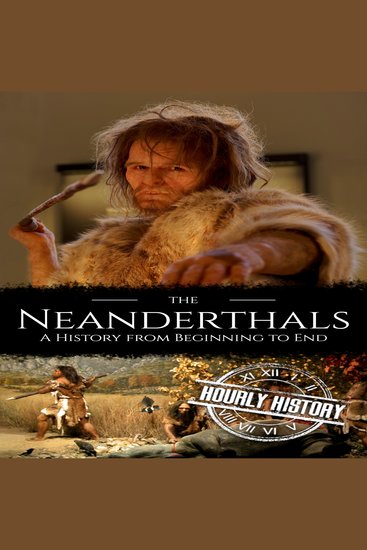
    In August 1856, mine workers were excavating the Feldhofer Grotto in the western part of Germany. The cave was one of many in a narrow gorge cut by the Düssel River through limestone outcrops. Here, workers discovered what they believed were human bones. An amateur naturalist from the nearby town of Elberfeld, Johann Carl Fuhlrott, heard about the find and decided to take a look at the remains, which were said to be very old. This discovery would ultimately reshape our understanding of human evolution, though that realization would take many decades to unfold. 
    Fuhlrott examined the bones, which were many thousands of years old. They were similar to human bones, but also notably different. Fuhlrott took the bones to a professor of anatomy at the University of Bonn, Hermann Schaaffhausen, who agreed that these appeared to be the remains of a primitive human. In 1857, the two men announced their find and identified the remains as Homo neanderthalensis (after the Neander Valley in which they had been found). Their discovery was initially greeted with indifference and even hostility. The scientific community's resistance reflected the prevailing worldview of the era, where the biblical account of human creation still held considerable sway. However, as more similar remains were found in the decades that followed, it became accepted that the Neanderthal was a hominid that predated modern humans, Homo sapiens. 
    At first, it was generally accepted that the Neanderthals were primitive, brutish beings who were superseded by more advanced humans. It is only relatively recently that we have discovered that Neanderthal people had an advanced culture, and that most people today carry traces of Neanderthal DNA! This is the fascinating and surprising story of the Neanderthals.
    Ver livro
  • AI Everywhere Volume 2 - How Women Are Using AI In Business - cover

    AI Everywhere Volume 2 - How...

    Karen Smiley, She Writes AI...

    • 0
    • 0
    • 0
    Every organization is hearing “adopt AI.” Few are hearing how to do it well, or who pays when it’s done badly. 
    AI Everywhere, Volume 2 brings you straight answers from people doing the work: 12 women & nonbinary authors who use AI in drug labs, hospitals, tax agencies, marketing teams, business schools, and mission-driven organizations, and know when not to use it. It’s part of our series of human-centered guides to living and working well in an age of intelligent machines. 
    What you’ll learn: 
    - Keep humans meaningfully in charge. Learn the conditions that make AI oversight real rather than ceremonial, and how to build ethical guardrails into high-stakes automated decisions like tax administration. (Ch. 1, 9) 
    - Lead AI adoption by working with people, not around them. Understand why resistance to AI is often about identity rather than skills, and see how one business school models the human+AI collaboration it teaches. (Ch. 3, 8) 
    - Use AI where it earns its place in science and healthcare. Cut through the hype to see what AI can & can’t do in drug discovery and patient care, including the risks that come with the opportunities. (Ch. 5, 10) 
    - Bring human context to AI-driven marketing. Discover why the most valuable AI skill in marketing isn’t technical, and how a human-centered approach makes AI work harder for your brand & your audience. (Ch. 2) 
    - Decide whether and how to use AI for social good. Weigh the benefits & costs of AI in organizations whose mission is to improve the world, and see how neurodivergent perspectives are reshaping human-centered technology. (Ch. 4, 7) 
    - See the hidden human cost of AI. Understand the labor practices behind today’s AI systems so you can make more ethical choices as a buyer, builder, or leader. (Ch. 6) 
    Our 12 authors from 7 countries bring decades of combined hands-on experience with AI tools. Volume 2 will help you see the pitfalls & upsides of business AI applications so you can make better decisions in your professional life.
    Ver livro
  • Magic Plants - Being a Translation of a Curious Tract Entitled De Vegetalibus Magicis - cover

    Magic Plants - Being a...

    M.J.H. Heucher

    • 0
    • 0
    • 0
    Brought to you by Altrusian Grace Media and narrated by Matthew Schmitz 
    Privately printed at Edinburgh in 1886, this is a translation of a Latin text written by M.J.H. Heucher in the late seventeenth century. This is a short pamphlet recounting the use of numerous botanical applications with regard to ancient medicine and magic and religion. Appended to the title-work is a text entitled "Confessions of Witches under Torture".
    Ver livro